

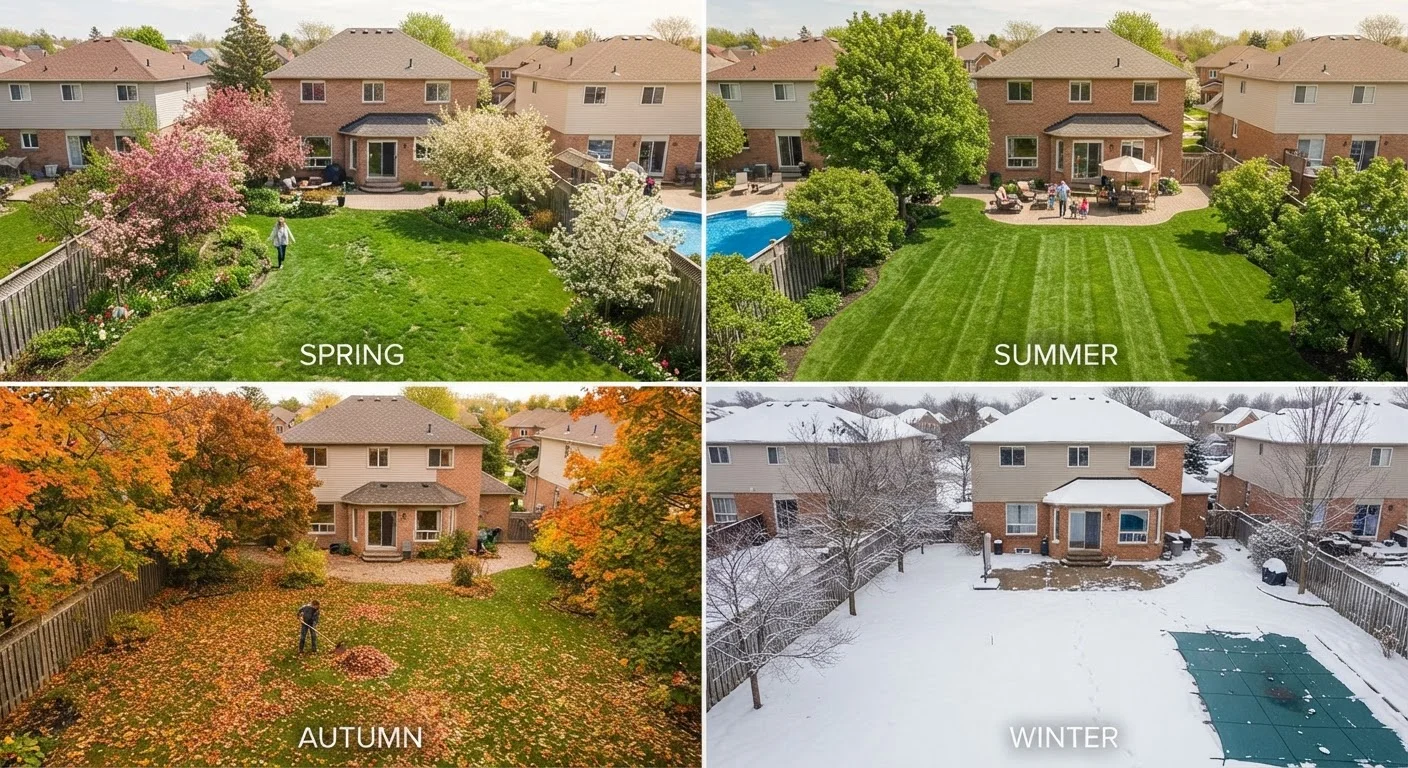
How to Use This Seasonal Guide
Most lawn problems don't start in the season you notice them - they start one or two seasons earlier. A patchy summer lawn often traces back to missed spring feeding; a muddy fall yard sometimes reflects summer compaction. This month-by-month reference is designed to help busy families get ahead of those patterns, not just react to them.
Task timing below follows general U.S. temperate-climate patterns. Adjust by two to four weeks earlier if you're in the South or Pacific Coast, and later if you're in the Upper Midwest or Northeast. When in doubt, watch soil temperature and local plant cues rather than the calendar date.
For a broader picture of everything your outdoor space needs year-round, see this full-year backyard overview.
Spring (March-May): Establish the Foundation
Spring is the most consequential lawn season. Decisions made here shape how your yard performs all summer. Before planting anything, run through a basic yard-readiness check - the spring yard readiness checklist covers soil, tools, and irrigation assessment.
- March: Rake out matted grass and winter debris. Inspect for bare patches - note locations so you can reseed or overseed in April. Don't rush mowing until grass is actively growing.
- April: Apply a slow-release, balanced lawn fertilizer once soil temperature consistently reaches 55°F. Overseed thin areas and keep seeded zones lightly moist. Test soil pH if you haven't done so in the last two to three years - grass struggles to absorb nutrients outside the 6.0-7.0 pH range. See what soil pH and organic matter really mean for practical guidance.
- May: Begin regular mowing at the right height for your grass type - generally 2.5 to 4 inches. Never remove more than one-third of the blade in a single mowing. Apply a layer of mulch to garden beds to lock in spring moisture; mulching pays dividends all season.
Summer (June-August): Manage Stress
Heat and drought are your lawn's biggest summer threats. The goal shifts from growth to resilience.
- June: Water deeply but infrequently - roughly one inch per week, ideally in the early morning. Shallow daily watering encourages shallow roots. Raise your mower height by half an inch to shade soil and reduce moisture loss.
- July: Avoid fertilizing cool-season grasses during peak heat - it pushes growth the plant can't sustain. Warm-season grasses (Bermuda, Zoysia) can receive a mid-summer feeding. Spot-check for dead patches; dead patches have many causes and diagnosing correctly before treating saves wasted effort.
- August: If compaction is visible - water pooling, soil that's hard to a finger-poke - plan for aeration next month. Begin planning fall overseeding so materials are on hand.
Core aeration
A process of removing small plugs of soil from the lawn to relieve compaction, improve drainage, and allow air, water, and nutrients to reach grassroots more effectively.
Overseeding
Spreading grass seed over an existing lawn without tearing it up, used to fill thin areas, improve density, or introduce a more resilient grass variety.
Soil pH
A measure of how acidic or alkaline your soil is, on a scale of 0-14. Most lawn grasses thrive between pH 6.0 and 7.0, where nutrients are most available to roots.
Dormancy
A natural resting state where grass slows or stops visible growth, typically in response to extreme heat or cold. The grass is alive but conserving energy.
Slow-release fertilizer
A fertilizer formulated to break down gradually over weeks or months, delivering nutrients steadily rather than all at once, which reduces the risk of burning grass or causing rapid unsustainable growth.
Fall (September-November): Invest in Next Year
Fall is the second-most important lawn season, especially for cool-season grasses. Roots grow vigorously even after top growth slows, making this the ideal window for repair and soil improvement.
- September: Aerate compacted areas using a core aerator (rentable at most equipment centers). Overseed thin spots immediately after aeration so seed falls into the channels. Apply a fall-formula fertilizer higher in potassium to support root hardening.
- October: Continue mowing until grass stops growing - don't let it go into winter too long (over 4 inches) or too short (under 2 inches). Shred fallen leaves with a mower rather than bagging; the fragments break down and feed soil microbes. ground covers can replace any areas where grass persistently struggles.
- November: Drain and winterize irrigation systems before the first hard freeze. Clean and store mowers and trimmers properly - tool maintenance trade-offs vary depending on whether your equipment is manual or powered.
Winter (December-February): Rest and Plan
Winter demands are minimal for the lawn itself, but it's a productive planning window for the rest of the year.
- December-January: Avoid heavy foot traffic on dormant or frost-covered grass - grass blades are brittle and can be physically damaged. Review what worked and what didn't in the prior growing season. Order seeds, amendments, or tools while selection is typically wider.
- February: As temperatures begin to moderate, check stored equipment. Have mower blades sharpened before spring rush. A sharp blade cuts cleanly; a dull blade tears grass, increasing disease vulnerability.
For parallel seasonal upkeep around the rest of your home, a season-by-season home maintenance calendar rounds out the full picture. And for quick, recurring tasks that keep everything running, see monthly home maintenance tasks worth doing.
The content provided on our blog site traverses numerous categories, offering readers valuable and practical information. Readers can use the editorial team’s research and data to gain more insights into their topics of interest. However, they are requested not to treat the articles as conclusive. The website team cannot be held responsible for differences in data or inaccuracies found across other platforms. Please also note that the site might also miss out on various schemes and offers available that the readers may find more beneficial than the ones we cover.