

Do a soil test before adding any amendments in spring - it tells you exactly what's needed and prevents wasted effort or money on nutrients your soil already has in excess.
Many homeowners apply lime or fertilizer by habit rather than need. Soil tests, available through cooperative extension services, typically cost under $20 and remove guesswork entirely.
Mulch newly planted trees and shrubs immediately after planting - don't wait until the following season.
The first growing season after transplant is the most stressful period for woody plants. Mulch moderates soil temperature and retains moisture at the root zone when the plant is least able to cope with drought stress.
Thinking About Your Backyard as a System
Most families approach backyard maintenance reactively - mowing when the grass gets too tall, watering when plants look droopy. That approach works for a while, but it tends to lead to bigger problems: compacted soil, stressed trees, clogged irrigation lines, and garden beds that underperform year after year.
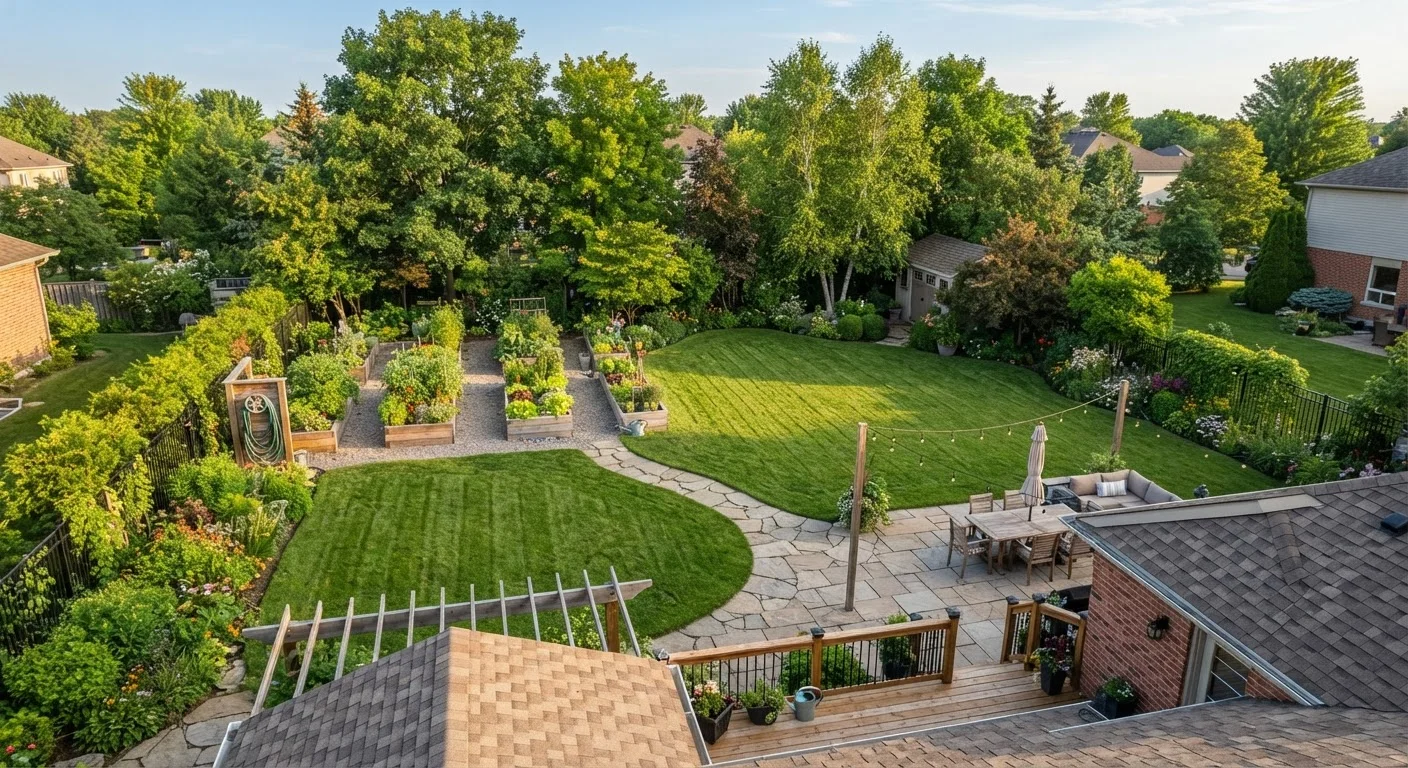
A more effective mindset is to treat your outdoor space as a living system where lawn, soil, garden beds, trees, and water all interact. Healthy soil supports strong grass, which crowds out weeds. Well-mulched beds retain moisture, reducing irrigation demands. Thriving trees moderate ground temperature and reduce evaporation. Each element influences the others.
This overview is designed to help busy families understand what's involved across a full calendar year - and to make informed decisions about what to handle themselves and when to call a professional. For a broader view of home upkeep, see our season-by-season home maintenance calendar.
Start with a Simple Backyard Audit
Before tackling any specific task, spend 20 minutes walking your backyard and noting problem areas: standing water after rain, bare lawn patches, overcrowded beds, dead branches. A written list helps you prioritize and avoid buying supplies or plants before you understand the underlying issues.
Lawn Care Through the Seasons
Grass type determines your lawn's schedule. Cool-season grasses (like fescue and bluegrass, common in northern states) grow most actively in spring and fall. Warm-season grasses (like Bermuda and zoysia, typical in southern regions) peak in summer. Matching your care timing to your grass type makes a significant difference in results.
- Mowing: Keep grass at the upper end of its recommended height range. Taller grass shades soil, retains moisture, and develops deeper roots. Never remove more than one-third of the blade in a single mow.
- Fertilizing: Feed cool-season lawns primarily in fall; warm-season lawns in late spring and summer. Soil testing every two to three years tells you exactly what nutrients are lacking.
- Aeration: Core aeration - pulling small plugs of soil - relieves compaction and improves root penetration. Most lawns benefit from annual or biennial aeration.
- Overseeding: Thin or patchy lawns can be overseeded in early fall (cool-season) or late spring (warm-season) to thicken turf and crowd out weeds naturally.
1/3
Max grass blade to remove per mow
Turfgrass extension services consistently recommend the one-third rule to reduce stress and maintain root depth.
2-3 years
Recommended soil testing frequency
Regular soil testing helps homeowners apply only what nutrients are actually needed, reducing waste and cost.
If bare patches or struggling grass are recurring issues, consider whether grass is the right plant for that area. Our guide to low-maintenance ground covers explores alternatives that can reduce long-term effort.
Garden Beds: Soil, Planting, and Upkeep
Productive garden beds - whether for vegetables, flowers, or mixed plantings - start underground. Soil structure matters more than most families realize. Dense, clay-heavy soil suffocates roots; sandy soil drains too quickly. Amending beds annually with compost improves structure, adds nutrients, and supports beneficial soil organisms.
A practical annual rhythm for beds looks like this:
- Early spring: Pull back mulch, assess soil, and add 1-2 inches of compost worked into the top few inches.
- Planting time: Transplant starts or direct-sow seeds after last frost (check your USDA Hardiness Zone for local timing).
- Mid-season: Monitor for pests, deadhead flowering plants, and side-dress vegetables with additional compost if growth slows.
- Fall: Remove spent annuals, cut back perennials as needed, and apply a fresh layer of mulch before winter to protect roots and suppress weeds.
Before investing time and money in a new growing season, use the spring yard readiness checklist to evaluate soil, tools, and bed condition first.
Trees and Shrubs: Long-Term Investments
Trees and mature shrubs are the most valuable plants in a backyard - and the most overlooked until something goes wrong. A few consistent habits protect that investment.
- Annual inspection: Walk the yard each spring and look for dead branches, bark damage, signs of pest activity (sawdust-like frass, unusual holes), and leaning. Catching problems early is far less costly than emergency removal.
- Mulching: Keep a 2-4 inch layer of mulch around tree and shrub bases, pulled back a few inches from the trunk itself to prevent rot. This retains moisture and moderates soil temperature.
- Pruning: Light pruning - removing crossing branches, deadwood, or suckers - can be done by homeowners with the right tools. Significant structural pruning, work near power lines, or removal of large branches should be handled by a certified arborist.
When to Call a Certified Arborist
Any tree work involving large limbs, a tree near a structure, or work at significant height should be handled by a certified arborist - not attempted as a DIY project. The International Society of Arboriculture (ISA) maintains a directory of certified professionals. Improper cuts can permanently damage a tree's structure and increase the risk of future failure.
Young trees often need supplemental watering for the first two to three years after planting, even if your lawn is irrigated. Tree root systems develop slowly and are slower to recover from drought stress than grass.
Irrigation and Water Management
Watering is one of the most consequential - and most commonly mismanaged - aspects of backyard health. Both overwatering and underwatering create stress that weakens plants and invites disease.
General principles for smarter watering:
- Water deeply and infrequently to encourage deep root growth. Shallow, frequent watering creates shallow roots that are vulnerable to heat and drought.
- Water in the early morning when possible. Evening watering leaves foliage wet overnight, increasing fungal disease risk.
- Group plants with similar water needs together (a principle called hydrozoning) to avoid over- or underwatering any single area.
- Check irrigation heads or drip emitters at the start of each season for clogs, misalignment, or leaks.
Rainwater catchment through rain barrels is a practical way to reduce water use for garden beds. Check your local regulations first, as some jurisdictions have rules around collection.
Seasonal Task Overview
Spreading tasks across the year prevents overwhelm and keeps the yard in good condition without marathon weekend sessions. Here's a simplified framework:
| Season | Priority Tasks |
|---|---|
| Spring | Assess lawn and beds, aerate if needed, apply pre-emergent weed control, start irrigation, inspect trees |
| Summer | Mow consistently, water deeply, monitor for pests and disease, deadhead and harvest |
| Fall | Overseed if needed, fertilize cool-season lawns, mulch beds, shut down irrigation before first freeze |
| Winter | Service tools and equipment, review soil test results, plan changes for next year |
If you grow or keep houseplants alongside your outdoor garden, the transition indoors in fall needs its own attention. See our guidance on bringing plants indoors successfully for a realistic approach. For a full view of home upkeep that ties outdoor and indoor maintenance together, the home maintenance hub is a useful reference point.
No two backyards are identical, but the underlying principles - healthy soil, appropriate water, timely attention - apply broadly. Building a rhythm that fits your family's schedule is ultimately more effective than any single technique.
The content provided on our blog site traverses numerous categories, offering readers valuable and practical information. Readers can use the editorial team’s research and data to gain more insights into their topics of interest. However, they are requested not to treat the articles as conclusive. The website team cannot be held responsible for differences in data or inaccuracies found across other platforms. Please also note that the site might also miss out on various schemes and offers available that the readers may find more beneficial than the ones we cover.