

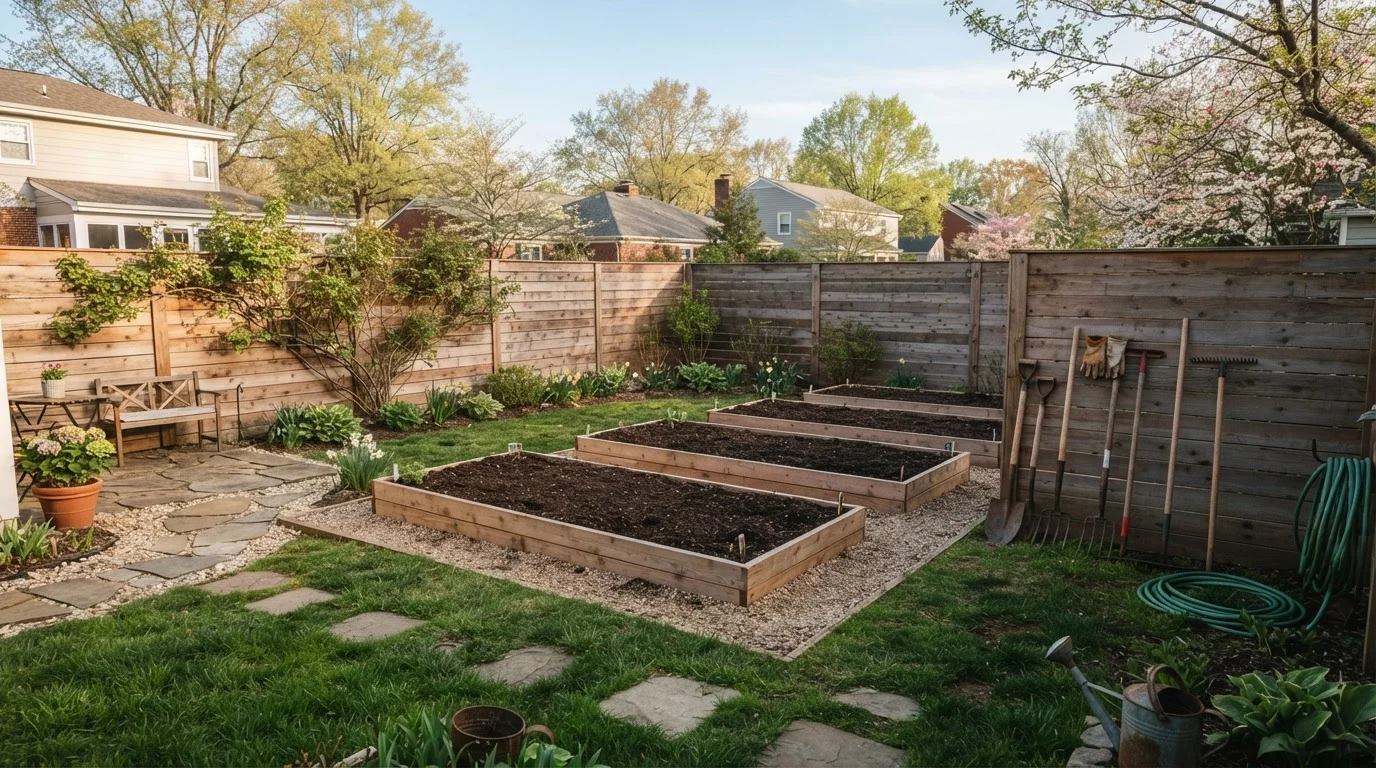
Summary
22 items · 45 minutes to 2 hours
Why a Pre-Planting Walkthrough Matters
Most planting mistakes happen before a single seed goes in the ground - not because of bad plant choices, but because the yard wasn't ready to support them. A short spring assessment helps families catch small problems (compacted soil, a cracked hose bib, an overwintered weed patch) before they turn into expensive setbacks.
This checklist walks you through the four areas that matter most: soil and beds, tools and supplies, irrigation, and your yard's overall layout. Work through it at your own pace - some families knock it out on a Saturday morning; others spread it across a weekend. Either way, the time you invest now pays back all season long.
For a broader view of what your outdoor space needs month to month, see our full-year backyard overview - it pairs well with this checklist as an ongoing reference.
Soil and Bed Preparation
Tools and Equipment Audit
Irrigation and Water Access
Yard Layout and Planning
Tools, Supplies, and What to Gather First
Before heading outside, gather what you'll need to complete the assessment. You don't need to buy anything new at this stage - the goal is to know what you have, what works, and what needs replacing or replenishing.
Soil test kit or cooperative extension service
Measures pH and basic nutrients so you know exactly what amendments your beds need.
Garden gloves
Protects hands during debris removal, soil work, and tool handling throughout the assessment.
Screwdriver or soil probe
Used to check soil compaction by pushing into the ground and gauging resistance.
Pruning shears and hand trowel
Needed for cutting back dead growth, testing bed accessibility, and light soil work.
Hose and spray nozzle
Used to test water pressure, check for leaks, and inspect irrigation coverage.
Notepad or phone notes app
Helps you record observations, problem spots, and supply needs as you walk the yard.
Compost or aged organic matter
Replenishes depleted beds when you spot nutrient-poor or compacted growing areas.
Don't Amend Soil Before You Test It
Adding fertilizer or lime without knowing your soil's current pH and nutrient levels can do more harm than good - over-fertilizing leads to salt buildup and can damage roots. A simple soil test, available through most local cooperative extension offices, gives you a precise starting point and prevents wasted money on amendments your soil doesn't need.
Once you've confirmed your tools are in working order and your soil picture is clear, you'll be in a strong position to plan what to plant and where. If your lawn is patchy or thinning, our guide on grass seed vs. sod can help you decide the most practical approach for your yard's condition. And once beds are prepped, don't skip mulch - it's one of the highest-return habits in the yard, as explained in our guide to mulching.
The content provided on our blog site traverses numerous categories, offering readers valuable and practical information. Readers can use the editorial team’s research and data to gain more insights into their topics of interest. However, they are requested not to treat the articles as conclusive. The website team cannot be held responsible for differences in data or inaccuracies found across other platforms. Please also note that the site might also miss out on various schemes and offers available that the readers may find more beneficial than the ones we cover.