

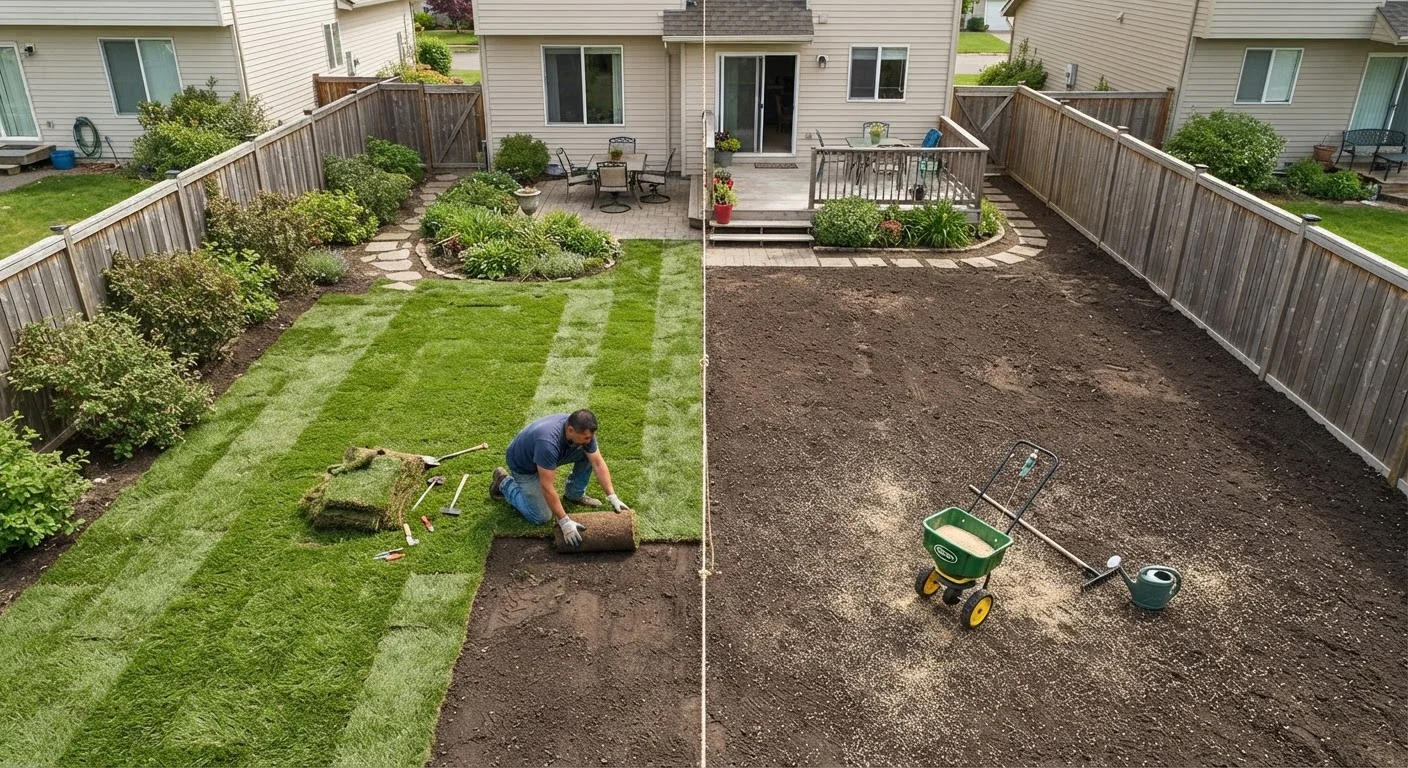
Option A
Grass Seed
The patient, budget-friendly path to a custom lawn.
Best for: Homeowners with time to nurture growth and who want lower upfront costs.
Option B
Sod
The fast, ready-to-use lawn solution.
Best for: Families who need usable turf quickly or are managing erosion-prone slopes.
Cost and Upfront Investment
Budget is usually the first factor families weigh. Grass seed is the clear winner on upfront cost. A bag covering several thousand square feet typically runs a fraction of what equivalent sod costs. Sod is priced by the square foot or pallet, and once you factor in delivery and professional installation - which many homeowners opt for given the physical labor involved - the total can be three to eight times higher than a comparable seeded project.
That said, seed comes with hidden costs of its own: more frequent watering during germination (which can affect water bills), possible reseeding if coverage is patchy, and a longer window during which the lawn must be protected from foot traffic and weeds. Sod's higher price buys you speed and reduced babysitting time.
| Criterion | Grass Seed | Sod |
|---|---|---|
| Upfront Cost | Low - cents to dollars per sq ft | Higher - several dollars per sq ft installed |
| Time to Usable Lawn | Several weeks to a full season | 2-3 weeks for light use |
| Installation Effort | Moderate; DIY-friendly | Labor-intensive; often professional |
| Grass Variety Selection | Wide variety available | Limited to supplier stock |
| Slope and Erosion Control | Poor until established | Immediate root mat stability |
| Watering Demands | High during germination phase | High in first few weeks, then moderate |
| Best Timing | Species-dependent seasonal windows | Most seasons; avoid extreme temps |
Timeline: When Will You Actually Have a Lawn?
Grass seed germination varies by species - anywhere from 7 days for ryegrass to 30 or more days for Kentucky bluegrass. A full, established lawn typically takes one full growing season before it can handle regular use. Sod, on the other hand, looks finished the day it goes down. Roots typically knit into the soil within two to three weeks, after which light activity is generally fine.
If you have young children or pets who need yard access soon, the sod timeline is hard to argue with. For those planning ahead - say, establishing a new lawn in early fall for next summer - seed's longer lead time becomes manageable. Month-by-month lawn care guidance can help you plan seeding around the right seasonal window.
7-30 days
Typical grass seed germination window
Germination time varies widely by grass species - ryegrass sprouts within a week while Kentucky bluegrass may take a month under good conditions.
3-8×
Sod cost relative to seeding
General industry estimates suggest sod installation can cost several times more per square foot than seeding the same area, including labor and materials.
2-3 weeks
Sod rooting time before light foot traffic
Most turfgrass sod knits into prepared soil within two to three weeks, after which light activity is generally tolerated.
Installation Effort and Soil Preparation
Both methods demand solid soil prep - this step cannot be skipped. You'll need to remove existing weeds and dead grass, loosen compacted soil, amend as needed, and grade the area for drainage. Skipping prep is the most common reason either approach fails.
After that, the work diverges. Seeding is physically lighter: broadcast or rake seed in, make good soil contact, then water consistently. Sod installation is heavier labor - pallets are dense, rolls must be laid tightly with staggered seams, and the surface needs to be level to avoid air pockets beneath the turf. Many homeowners hire landscapers for sod; seeding is more DIY-friendly.
If you're exploring lower-effort alternatives for problem areas, our guide on low-maintenance ground covers covers options that may reduce long-term yard work in spots where grass persistently struggles.
Which Choice Fits Your Yard?
Beyond cost and timeline, your yard's specific conditions should guide the decision. Shady areas often need specialized seed mixes - not all sod varieties tolerate low light. Slopes benefit from sod's immediate erosion control; seed on a slope can wash away before it establishes. Large, flat open areas favor seed for cost efficiency. Small high-profile spots - a front yard, an entryway strip - are strong candidates for sod because appearance matters immediately.
Climate and season matter too. Cool-season grasses (fescue, bluegrass, ryegrass) are best seeded in early fall when soil is warm and air is cooling. Warm-season grasses (Bermuda, zoysia, St. Augustine) establish better in late spring and early summer. Sod is more forgiving of timing but should still be installed when temperatures allow the roots to settle before extreme heat or cold arrives.
Once your lawn is in - by either method - ongoing care determines whether it thrives. Consistent mowing, seasonal feeding, and smart watering habits carry equal weight regardless of how you started. For a full seasonal approach, see our lawn care through the seasons guide.
The content provided on our blog site traverses numerous categories, offering readers valuable and practical information. Readers can use the editorial team’s research and data to gain more insights into their topics of interest. However, they are requested not to treat the articles as conclusive. The website team cannot be held responsible for differences in data or inaccuracies found across other platforms. Please also note that the site might also miss out on various schemes and offers available that the readers may find more beneficial than the ones we cover.