

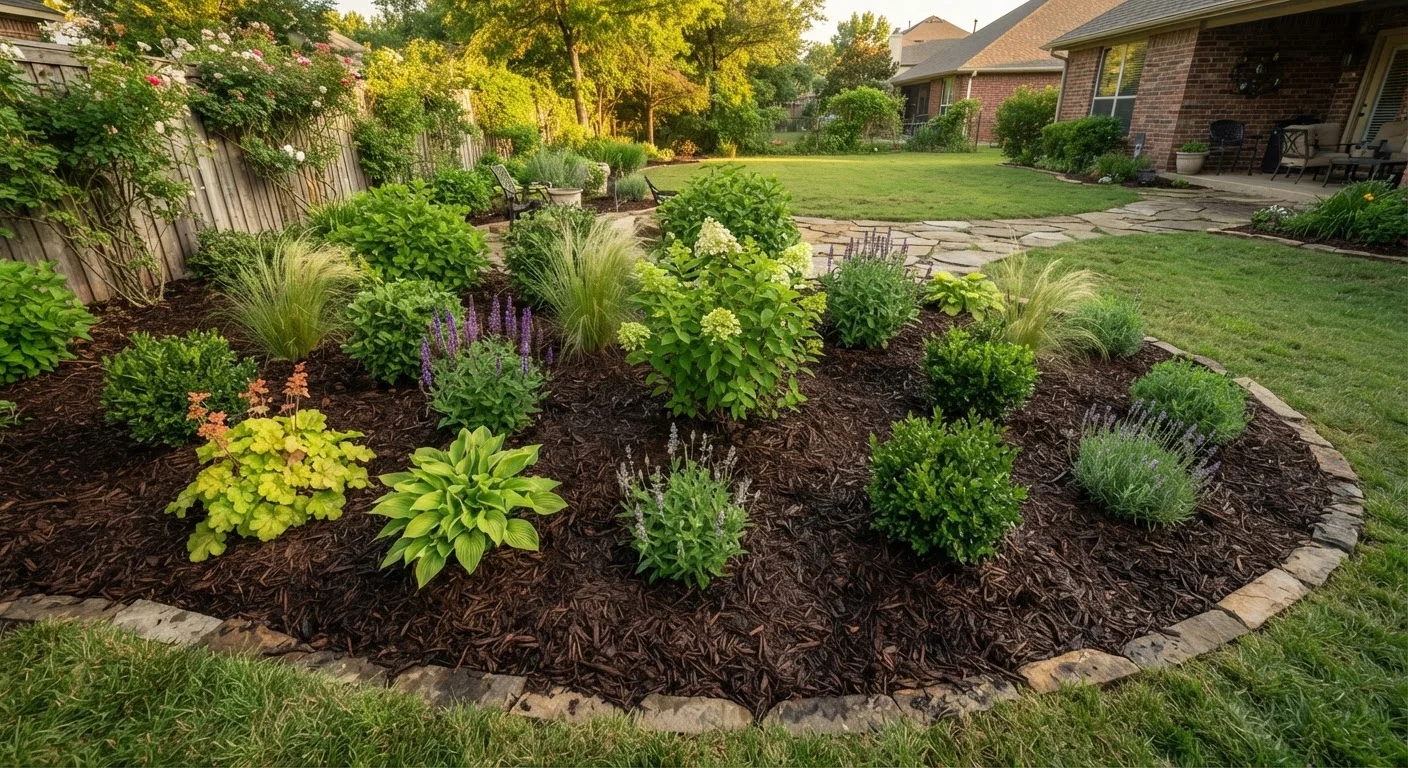
Why Mulch Earns Its Place in Every Yard
If there's one yard habit that delivers consistent returns for minimal ongoing effort, it's mulching. A properly applied layer of mulch does three jobs at once: it holds moisture in the soil so plants don't dry out between waterings, it blocks sunlight from reaching weed seeds, and it insulates roots against temperature swings in summer and winter.
For busy families, that combination is genuinely useful. Less frequent watering, fewer weeds to pull, and more resilient plants - all from a single task done once or twice a year. Mulching also connects naturally to other yard work: it pairs well with composting, supports smarter irrigation habits, and fits into a broader seasonal routine. See our month-by-month lawn care guide for where mulching fits in the larger picture.
“Mulch is one of the best things a home gardener can use. It moderates soil temperature, conserves water, and improves soil as it decomposes - it does a lot of the work for you.”
— Extension Horticulture Educators, University cooperative extension services across the U.S.
Choosing the Right Mulch Material
Not all mulch is the same, and the best choice depends on where you're using it and what you want it to do.
- Shredded wood or bark chips are the most common choice for garden beds and around trees. They break down slowly, look tidy, and are widely available. Finely shredded varieties decompose faster and add organic matter to the soil sooner.
- Straw or hay works well in vegetable gardens. It's inexpensive, breaks down within a season, and is easy to work around edible plants. Avoid hay with seed heads, which can introduce new weeds.
- Grass clippings are free and effective in thin layers, but can mat together and block water if piled too deep. Use a layer no thicker than an inch or two.
- Gravel or stone is a low-maintenance, long-lasting option for pathways or drought-tolerant plantings. It doesn't improve soil, but it's nearly permanent and requires little upkeep.
- Shredded leaves are an underused free resource. Run fall leaves through a mower or shredder and you have excellent mulch that adds nutrients as it breaks down - a natural complement to home composting.
25-50%
Reduction in soil moisture loss
Research from university extension programs suggests a proper mulch layer can reduce evaporation from soil by roughly 25-50%, depending on climate and mulch depth.
2-4 inches
Recommended mulch depth for most beds
This range is widely cited by cooperative extension services as the practical sweet spot for weed suppression without restricting water and air movement.
Best Practices for Applying Mulch
The difference between mulch that helps and mulch that causes problems usually comes down to how it's applied. Follow these practices to get the most out of every bag or truckload.
Apply mulch at a depth of 2-4 inches for garden beds
Too little mulch - under 2 inches - won't reliably suppress weeds or retain moisture. Too much - over 4 inches - can prevent water and air from reaching roots and may create conditions favorable to mold or pests.
Keep mulch pulled back 2-3 inches from stems and tree trunks
Mulch piled against trunks - sometimes called a 'mulch volcano' - traps moisture against the bark, which can lead to rot, fungal disease, and pest damage over time. Maintaining a gap lets the base breathe.
Weed beds thoroughly before laying mulch
Mulch slows new weed growth but won't reliably kill established weeds already in the soil. Starting with a cleared bed gives the mulch layer its best chance to do its job all season. For persistent weed problems, see our guide on practical weed control.
Refresh mulch in spring and check depth in fall
Organic mulches break down over the growing season. A spring top-up restores weed suppression heading into the busiest growing months, while a fall check ensures roots are insulated before winter sets in.
Use mulch to protect bare soil in new or replanted areas
Bare soil is vulnerable to erosion, compaction from rain, and rapid moisture loss. Covering it with mulch immediately after planting protects seeds and young roots during the establishment phase.
Quick Wins: Start Mulching Today
You don't need a perfect plan to benefit from mulching. Even a modest effort this weekend can make a real difference in how your yard holds up through the rest of the season. If you're also rethinking areas where grass struggles to grow, low-maintenance ground covers can work hand-in-hand with mulching to fill those spots more sustainably.
For a broader look at what a healthy yard needs throughout the year, explore our full-year backyard overview.
The content provided on our blog site traverses numerous categories, offering readers valuable and practical information. Readers can use the editorial team’s research and data to gain more insights into their topics of interest. However, they are requested not to treat the articles as conclusive. The website team cannot be held responsible for differences in data or inaccuracies found across other platforms. Please also note that the site might also miss out on various schemes and offers available that the readers may find more beneficial than the ones we cover.