

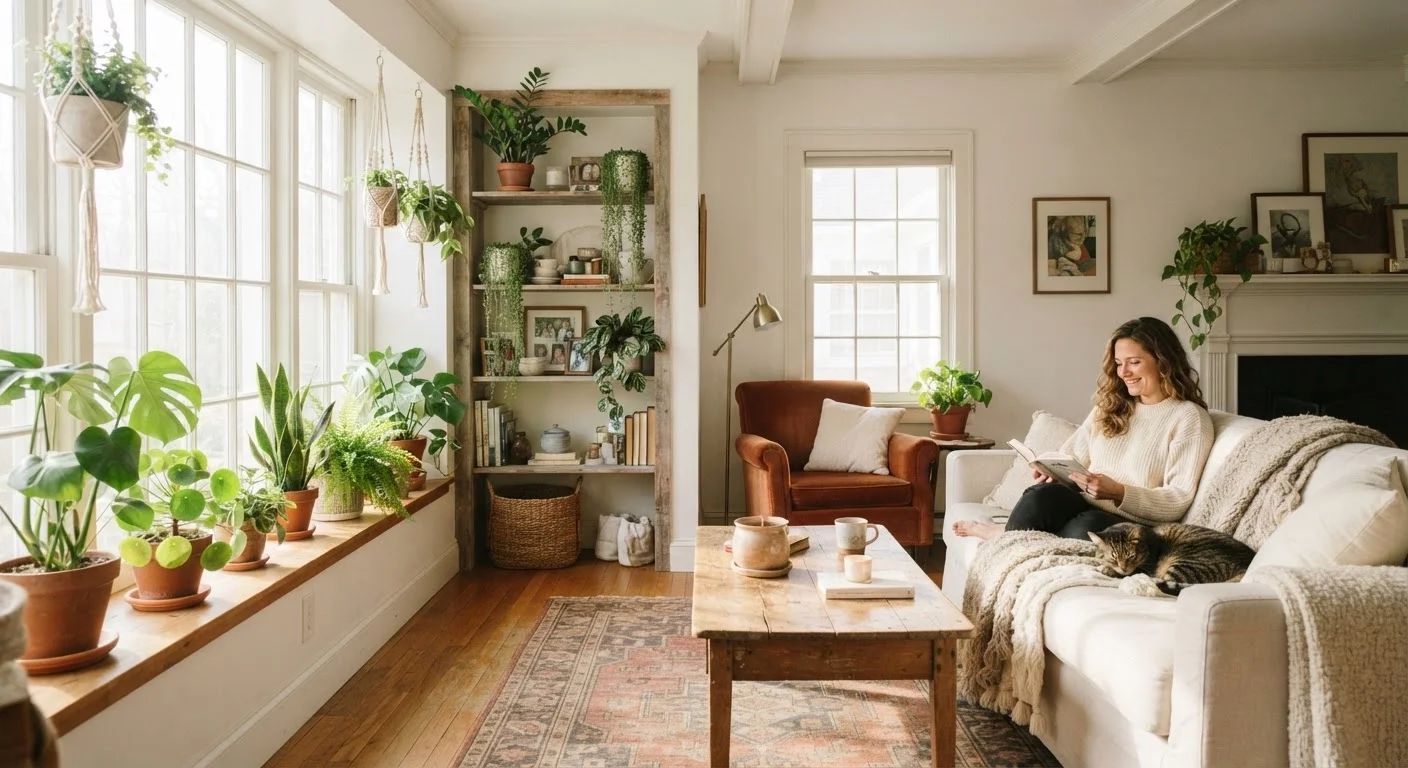
Why Most Indoor Plants Struggle (and It's Not What You Think)
Families who want greenery indoors often assume they lack a "green thumb." In most cases, the real issue is simpler: the wrong plant in the wrong spot. Houseplants fail not because of inattention, but because their fundamental needs - light, appropriate watering, and suitable soil drainage - aren't being met.
Understanding this shifts the whole approach. Rather than working harder at plant care, the goal is to choose plants that naturally fit your household's rhythms and physical environment. A busy home can absolutely support thriving plants, provided the setup is right from the start.
“The single best thing most plant owners could do is water less. Most houseplants are adapted to periodic drought, not constant moisture.”
— Christopher Satch, Plant scientist and educator, formerly of The Sill
Choosing Plants That Fit Your Real Life
The most common mistake families make is selecting plants based on appearance rather than compatibility. Some species are forgiving of irregular watering and lower light; others demand consistent humidity and bright indirect sun - conditions most American homes don't reliably provide.
Genuinely low-maintenance options include pothos, snake plants, ZZ plants, spider plants, and heartleaf philodendrons. These tolerate a range of light conditions and bounce back from occasional missed waterings. Succulents and cacti work well if you have a genuinely sunny south- or west-facing window and tend to forget watering altogether.
Houseplants and Pets: A Safety Note
Some common houseplants - including pothos, philodendron, and certain lilies - are toxic to cats and dogs if ingested. Before bringing any new plant home, check its toxicity against the animals in your household. The ASPCA maintains a publicly searchable list of toxic and non-toxic plants. See our guide to matching your home environment to the right pet for more on creating a safe shared space.
For context on how your plant decisions might interact with your wider outdoor garden planning, the Yard & Garden hub offers a range of practical guidance for families managing both indoor and outdoor growing spaces.
The Core Practices That Actually Make a Difference
Once you've matched plant to environment, a handful of consistent habits will keep most houseplants healthy with minimal time investment. The practices below address the most common failure points in busy households.
Choose plants based on your home's actual light levels, not the plant tag's ideal scenario.
Plant tags often describe best-case conditions. Most rooms - especially those with north-facing windows or overhead artificial lighting only - offer far less light than a plant needs to thrive. Matching plant choice to real conditions prevents the frustrating cycle of replacing dying plants.
Water based on soil moisture, not a fixed schedule.
Watering on a calendar ignores what the plant actually needs, and overwatering is the leading cause of houseplant death. Checking the top inch or two of soil before watering gives you a reliable, plant-specific signal. Our guide on smarter watering covers this in detail for outdoor plants, but the same principle applies indoors.
Use pots with drainage holes and appropriately sized containers.
Excess water needs somewhere to go. Pots without drainage holes trap water at the root zone, creating the wet, anaerobic conditions that cause root rot. Oversized pots also hold more moisture than a small root system can use, compounding the problem.
Group plants together to create a more stable microclimate.
Clustering plants raises local humidity slightly through transpiration and makes watering rounds faster and more efficient. It also makes it easier to spot early signs of pests or stress before they spread.
Adjust plant placement as seasons shift indoor light.
The sun's angle changes significantly between summer and winter, meaning a spot that worked well in July may leave a plant light-starved by November. Being aware of this prevents slow, puzzling decline during colder months.
Feed plants sparingly and only during active growth periods.
Fertilizing in fall and winter when most houseplants are dormant or slowing down can cause salt buildup in the soil and stress roots. A light feed during spring and summer growing months is generally sufficient for most indoor varieties.
Building a Low-Effort Care Routine
The families who keep houseplants alive long-term aren't necessarily spending more time on them - they've simply built care into existing routines. Tying a weekly soil check to another habit, like Sunday morning coffee or emptying the dish rack, makes it easy to stay consistent without adding a separate task to the mental load.
Self-watering pots and moisture-retaining potting mixes can extend the gap between waterings, which helps during travel or particularly hectic weeks. These aren't shortcuts - they're practical tools that account for real family life. For a broader look at seasonal home maintenance priorities, see our Home Maintenance hub.
Finally, give yourself permission to start small. Two or three well-placed, well-matched plants maintained confidently will do far more for your home environment - and your confidence - than a dozen struggling ones.
The content provided on our blog site traverses numerous categories, offering readers valuable and practical information. Readers can use the editorial team’s research and data to gain more insights into their topics of interest. However, they are requested not to treat the articles as conclusive. The website team cannot be held responsible for differences in data or inaccuracies found across other platforms. Please also note that the site might also miss out on various schemes and offers available that the readers may find more beneficial than the ones we cover.