

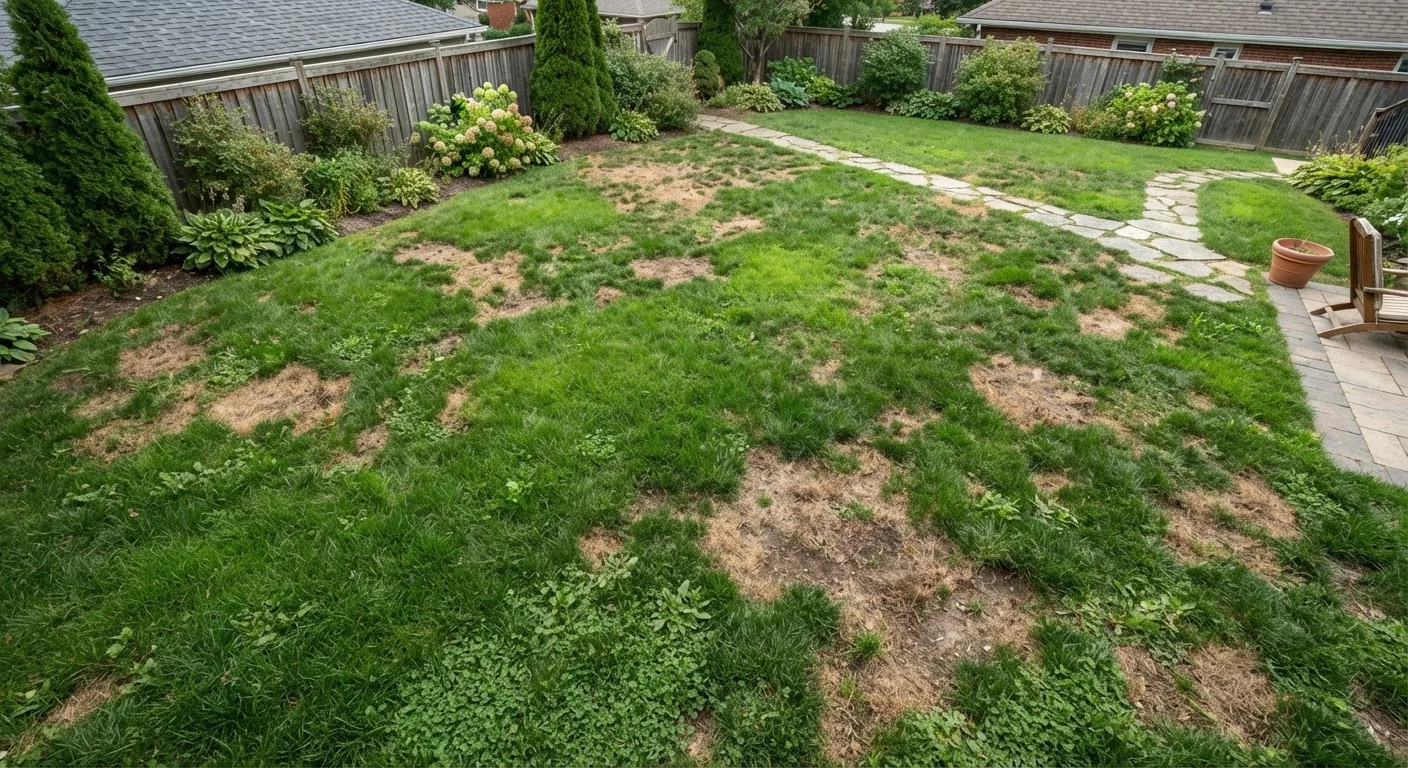
Why Diagnosing First Actually Matters
It's tempting to grab a bag of seed or fertilizer the moment you spot a brown patch in the yard. But applying the wrong remedy - say, extra water to a patch that's already drowning, or fertilizer to a fungal outbreak - can deepen the problem rather than fix it.
Dead patches have a surprisingly wide range of causes: soil issues, watering habits, pest activity, disease, or even the behavior of household pets. Before spending a weekend on repairs, take ten minutes to observe the shape of the patch, its location, and how it progressed. That context is your most useful diagnostic tool. For a broader view of what your yard needs at different times of year, see our month-by-month lawn care guide.
Common Mistakes Homeowners Make with Dead Patches
The following errors come up repeatedly among homeowners dealing with lawn trouble. Each one is fixable - but only once you recognize it for what it is.
Assuming drought stress when the real problem is overwatering.
Why it happens: Brown grass looks the same whether it's too dry or too wet, so homeowners often respond by adding more water - which makes root rot and fungal conditions worse.
Mowing too short, scalping the lawn and exposing roots to heat stress.
Why it happens: Many people mow on a fixed schedule regardless of grass height, or set the blade very low hoping to mow less frequently. Cutting more than one-third of the blade at once weakens the grass significantly.
Misidentifying pet urine damage as a disease or pest problem.
Why it happens: Pet urine creates small, roughly circular brown patches - sometimes with a green ring at the edge - that closely resemble fungal disease spots. Homeowners frequently apply fungicide when the actual cause is nitrogen burn from urine.
Ignoring soil compaction as a cause of thinning or dying grass.
Why it happens: Compacted soil develops gradually - especially in high-traffic areas - so the connection between foot traffic and dead patches isn't obvious. Grass roots can't penetrate dense soil to access water and nutrients.
Applying fertilizer at the wrong time or in excessive amounts, causing fertilizer burn.
Why it happens: More fertilizer can seem like a logical fix for struggling grass, and bags often get applied unevenly or during hot, dry weather when grass is already stressed.
Overlooking fungal disease until it has spread significantly.
Why it happens: Early-stage lawn fungus - such as brown patch or dollar spot - can resemble general heat stress or drought damage, so treatment is delayed until the pattern becomes unmistakable.
If your patches are widespread or recurring despite your best efforts, a basic soil test (available through many cooperative extension services) can reveal pH imbalances or nutrient deficiencies that visual inspection alone won't catch. You can also explore a full-year backyard care overview to see how lawn health fits into the bigger picture of yard maintenance.
When Reseeding or Replacing Grass Is the Next Step
Once you've identified and corrected the underlying cause, you may need to repair the bare area itself. For small patches, reseeding is usually the most practical approach - loosen the top inch of soil, apply seed appropriate for your climate and sun exposure, keep the area consistently moist, and avoid foot traffic until the new grass is established.
For larger damaged areas, or when repeated seeding hasn't taken hold, sod may be worth considering. Our article on grass seed vs. sod walks through the trade-offs in cost, effort, and timeline to help you decide. In spots where grass consistently struggles - dense shade, heavy foot traffic, or poor drainage - low-maintenance ground covers may be a more sustainable long-term solution than fighting to grow turf.
Don't Skip the Cause - Fix It First
Reseeding or laying sod over an unresolved problem is unlikely to produce lasting results. If the original cause - whether poor drainage, compaction, disease, or shade - isn't addressed, the new grass is likely to fail in the same pattern. Repair the condition first, then restore the turf.
The content provided on our blog site traverses numerous categories, offering readers valuable and practical information. Readers can use the editorial team’s research and data to gain more insights into their topics of interest. However, they are requested not to treat the articles as conclusive. The website team cannot be held responsible for differences in data or inaccuracies found across other platforms. Please also note that the site might also miss out on various schemes and offers available that the readers may find more beneficial than the ones we cover.