

Why Soil Is the Starting Point for Any Garden
Most gardening problems that look like plant problems are actually soil problems. Yellowing leaves, stunted growth, persistent pest pressure, and plants that just never seem to thrive often trace back to what's happening beneath the surface. Before adjusting sunlight exposure or changing your watering schedule, it's worth understanding what your soil is actually made of - and what it might be missing.
Garden soil is a mix of mineral particles, organic matter, water, air, and billions of living microorganisms. Each of those components plays a distinct role. When they're in balance, roots establish easily, water moves through at the right pace, and nutrients stay available. When one element is out of range, the whole system can struggle. Understanding the basics puts you in a much stronger position - whether you're growing vegetables, native plants, or just a dependable lawn.
For a broader view of what goes into maintaining your outdoor space across the year, see our full-year backyard overview.
~1 billion
Microorganisms in a teaspoon of healthy soil
Soil scientists estimate that a single teaspoon of healthy garden soil contains roughly one billion bacteria, in addition to fungi, protozoa, and other organisms that support plant growth.
1%
Increase in water-holding capacity per 1% rise in organic matter
Research from the USDA Natural Resources Conservation Service indicates that each 1% increase in soil organic matter helps soil hold approximately 20,000 additional gallons of water per acre.
6.0-7.0
Ideal pH range for most vegetable gardens
Most cooperative extension services recommend a soil pH between 6.0 and 7.0 for the widest range of common vegetables and flowering plants.
The Big Three: pH, Organic Matter, and Drainage
Soil pH is a measure of acidity or alkalinity on a scale of 0 to 14, with 7.0 being neutral. Most common garden plants prefer a slightly acidic range - roughly 6.0 to 7.0. When pH strays too far in either direction, plants can't absorb nutrients that are physically present in the soil. This is why fertilizing without knowing your pH can be wasteful. Lime raises pH in overly acidic soils; sulfur lowers it in alkaline ones. A simple soil test will tell you where you stand.
Organic matter is decomposed plant and animal material - and it's arguably the single most important thing you can add to struggling soil. It improves water retention in sandy soils, loosens dense clay soils, feeds soil microbes, and supplies slow-release nutrients. Compost is the most practical source for home gardeners. To learn how to make your own, see our guide on composting kitchen and yard waste.
Drainage describes how quickly water moves through soil. Poor drainage - where water pools and sits - starves roots of oxygen and encourages rot. Over-fast drainage - common in sandy or gravelly soils - means water and nutrients flush away before plants can use them. Both problems are manageable, and both respond well to increased organic matter content over time.
Start With a Soil Test, Not Amendments
It's tempting to add lime, sulfur, or fertilizer based on what your plants look like, but guessing can make imbalances worse. A soil test from your local cooperative extension service typically costs very little and tells you exactly what your soil needs - saving you time and money. Most results come with specific amendment recommendations based on what you plan to grow.
Soil Texture and Structure: What You're Actually Working With
Soil texture refers to the proportion of sand, silt, and clay particles in your soil. Sand particles are the largest - they drain fast but hold little. Clay particles are the smallest - they hold water and nutrients but compact easily. Silt falls in between. The ideal garden soil, often called loam, balances all three. You can get a rough sense of your soil's texture by squeezing a moist handful: sandy soil crumbles apart immediately, clay soil holds a firm shape and smears, and loam holds together briefly then breaks apart.
Soil structure - distinct from texture - describes how those particles clump together into aggregates. Good structure creates a network of pores that hold both water and air, giving roots room to grow and microorganisms room to thrive. Compaction collapses that structure. Common causes include heavy foot traffic on wet soil, repeated tilling, and leaving soil bare over winter. Covering beds with mulch or cover crops during the off-season protects soil structure without much ongoing effort.
If you're deciding between raised beds and in-ground planting, your existing soil texture is one of the most important factors. Our article on raised beds vs. in-ground gardens walks through how to weigh that decision.
Simple Steps to Start Improving Your Soil
Soil improvement doesn't require expensive products or a complete garden overhaul. The most effective strategies are consistent and low-cost:
- Get a soil test first. Your local cooperative extension office often provides them at low or no cost. Results will tell you pH, nutrient levels, and sometimes organic matter content - giving you a clear direction rather than guesswork.
- Add compost regularly. Even a one- to two-inch layer worked into the top few inches of soil each season makes a meaningful difference over time. It improves nearly every soil type.
- Minimize bare soil. Cover empty beds with mulch, straw, or cover crops. This reduces erosion, retains moisture, moderates temperature, and feeds soil life.
- Avoid unnecessary tilling. While initial tilling can break up compaction, repeated tilling disrupts fungal networks and can degrade structure over time. Work amendments in gently where possible.
- Limit foot traffic on garden beds. Walking on soil - especially when wet - compacts it quickly. Defined paths and stepping stones protect the areas where plants grow.
Soil health builds gradually. Most gardeners notice meaningful improvement after one to two full growing seasons of consistent care. For a seasonal breakdown of when to tackle soil tasks alongside other yard work, see our month-by-month lawn and garden guide.
Frequently Asked Questions
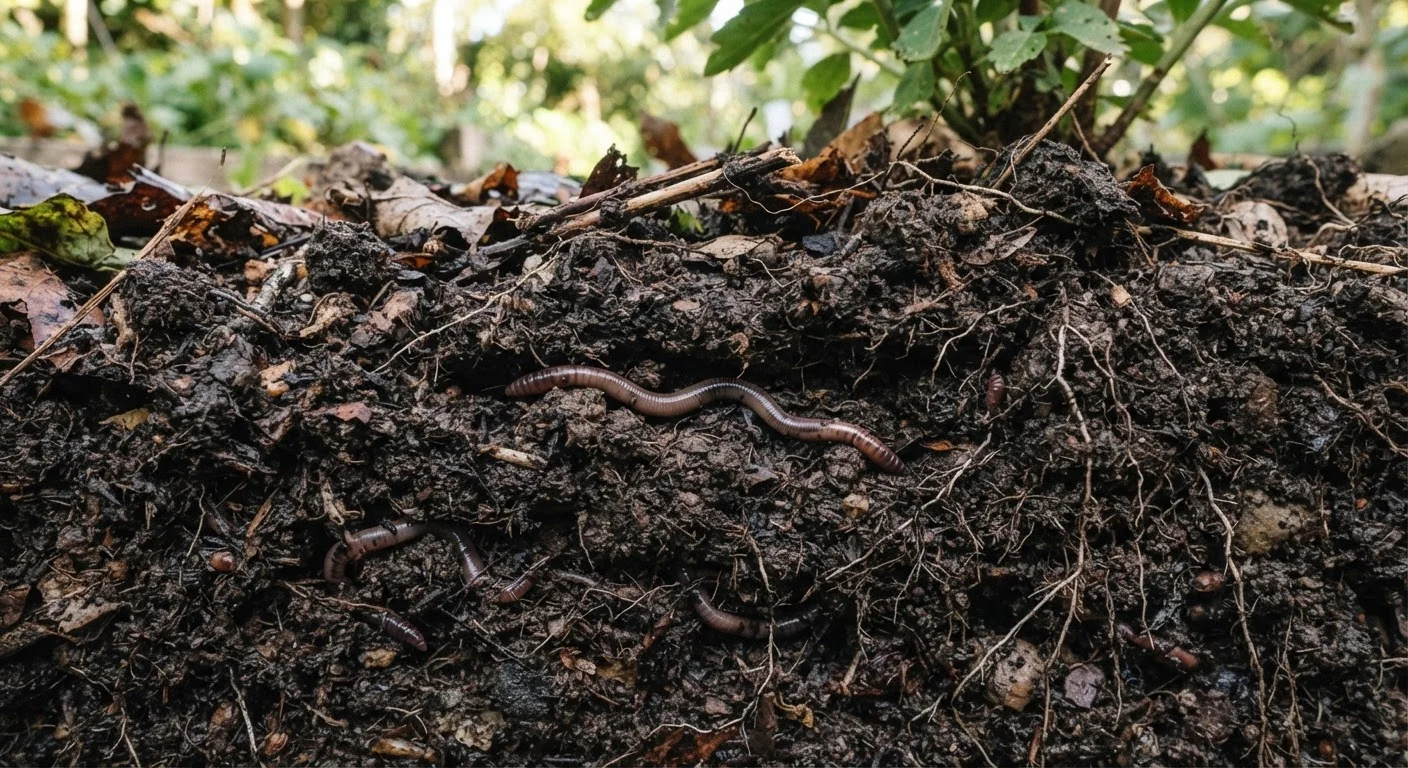
Healthy soil is dark, crumbly, and has an earthy smell. You'll often see earthworms when you dig, and water will soak in rather than pool on the surface. A basic soil test from a local cooperative extension office will give you a clearer picture of pH and nutrient levels.
pH is a scale from 0 to 14 measuring how acidic or alkaline your soil is. Most vegetables and flowers grow best between 6.0 and 7.0. When pH is off, plants can't absorb nutrients even if those nutrients are present - leading to poor growth or yellowing leaves.
Compost is the most practical option for home gardeners - it's affordable, widely available, and improves nearly every soil type. Aged wood chips, leaf mold, and well-rotted manure are other good sources. Work organic matter into the top several inches of soil each season.
Yes. Adding compost, growing deep-rooted cover crops, and simply avoiding foot traffic on garden beds all reduce compaction over time. Earthworms naturally aerate soil as populations recover. Tilling can help in the short term but may disrupt soil structure and microbial networks if done repeatedly.
Testing every two to three years is generally sufficient for established gardens. Test more frequently if you've made significant amendments or if plants consistently underperform despite good care. Soil tests are low-cost and available through most local cooperative extension services.
It matters a lot. Sandy soil drains quickly but doesn't hold nutrients well. Clay soil retains water and nutrients but can become waterlogged and compacted. Loamy soil - a balanced mixture - is ideal for most plants. Fortunately, both sandy and clay soils improve significantly with regular additions of organic matter.
The content provided on our blog site traverses numerous categories, offering readers valuable and practical information. Readers can use the editorial team’s research and data to gain more insights into their topics of interest. However, they are requested not to treat the articles as conclusive. The website team cannot be held responsible for differences in data or inaccuracies found across other platforms. Please also note that the site might also miss out on various schemes and offers available that the readers may find more beneficial than the ones we cover.