

Our Verdict
Raised beds are generally a stronger fit for families dealing with poor soil, limited mobility, or weed-heavy yards, while in-ground gardens reward those with workable native soil and more space to cultivate. There's no single winner - the best setup is the one that aligns with your specific yard conditions, time budget, and long-term gardening goals.
| Best for | Recommended |
|---|---|
| Yards with compacted, rocky, or heavily clay-based soil | Raised Beds |
| Gardeners who want to minimize bending or kneeling | Raised Beds |
| Families with naturally loamy, well-draining soil and larger plots | In-Ground Gardens |
| Those working within strict time or cost constraints at startup | In-Ground Gardens |
The Core Trade-Off: Control vs. Cost
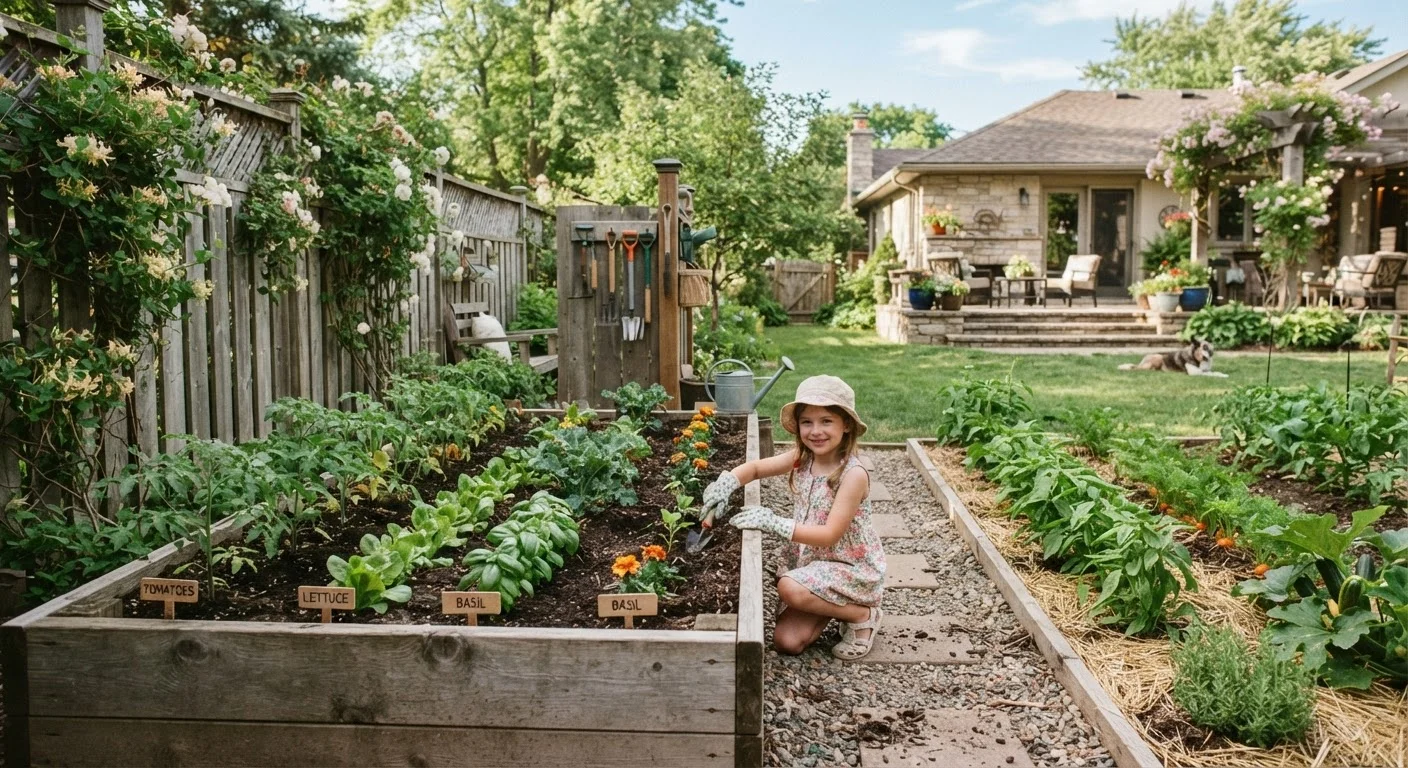
Raised beds and in-ground gardens represent two fundamentally different philosophies. Raised beds give you almost complete control over your growing environment - you fill them with a mix you choose, you define the drainage, and you set the boundaries. In-ground gardens ask you to work with what you have, amending and improving native soil over time.
That control comes at a price. A basic wooden raised bed, materials and quality soil included, typically runs anywhere from $50 to several hundred dollars depending on size and depth. In-ground preparation, by contrast, may cost little more than a bag of compost and a few hours of labor - though it can also require significant soil remediation if your ground is compacted or contaminated.
For families thinking through the full picture of their outdoor space, our full-year backyard overview is a useful companion to this decision.
When Raised Beds Make Sense
Raised beds shine in specific circumstances. If your yard soil is heavy clay, full of rocks, or has a history of contamination (common in older urban lots), building up from the ground is often more practical than attempting years of amendment. You fill the frame with a blend of topsoil, compost, and other amendments, and your plants never have to fight the native ground at all.
Drainage is another strong argument. Raised beds naturally drain faster than flat ground, which reduces the risk of root rot in wet climates or low-lying yards. They also warm up more quickly in spring, which can extend your growing season by several weeks in cooler regions.
From a maintenance standpoint, raised beds tend to accumulate fewer weeds - and the ones that do appear are easier to pull from loose, loamy fill. The defined structure also makes it simpler to install row covers, netting, or simple irrigation systems.
Build Up for Better Accessibility
If anyone in your household has difficulty bending or kneeling, consider building raised beds to at least 18-24 inches in height. This brings the planting surface closer to waist level and makes regular watering, weeding, and harvesting far more comfortable. Wider beds should still be reachable from the side - aim for no more than 4 feet across so you never have to step in.
Accessibility matters too. A bed built to 24 inches or higher can be tended from a chair or with minimal bending, making it a meaningful consideration for family members with back issues or limited mobility.
When In-Ground Gardening Wins
If you're fortunate enough to have naturally rich, well-draining soil - common in many parts of the Midwest and Pacific Northwest - digging directly in has real advantages. Plant roots can travel as deep as they need to, which matters for long-season crops like tomatoes, squash, and corn. In-ground beds can also handle drought better, since deeper roots reach moisture that raised beds can't hold.
Scalability is a major plus. Want to double your growing area? Extend the edge of your plot and till. With raised beds, every square foot of expansion means more lumber and more soil. For families who want to grow a lot of food with a modest startup budget, in-ground gardening is typically the more economical path.
| Raised Beds | In-Ground Gardens | |
|---|---|---|
| Startup cost | Moderate to high | Low to moderate |
| Soil control | Full control over fill mix | Depends on native soil quality |
| Drainage | Excellent, drains quickly | Variable, can waterlog |
| Weed pressure | Generally lower | Higher, especially early on |
| Scalability | Costly to expand | Easy and inexpensive to expand |
| Root depth | Limited by bed depth | Unrestricted |
| Accessibility | Can be built for easy access | Requires bending to ground level |
| Season length | Warms up faster in spring | Slower to warm, longer in drought |
In-ground gardens also give you flexibility to experiment over a larger footprint - you can rotate crops across a wide area, try sprawling plants like melons or pumpkins, and add new sections as your confidence grows. Before digging in, the spring yard readiness checklist can help you assess your soil and tools before you invest in the season.
Practical Factors to Weigh Before You Decide
A few targeted questions can narrow your decision quickly:
- What does your soil test show? An inexpensive test from a local cooperative extension office reveals pH, nutrients, and texture. Poor results push you toward raised beds; strong results favor in-ground.
- How much time can you realistically commit? In-ground gardens typically require more weeding and soil maintenance each season. Raised beds front-load the work but often run leaner in subsequent years.
- Are there any physical limitations to consider? Kneeling on hard ground for extended periods isn't feasible for everyone.
- What's your budget? If cash is tight now but you plan to garden for many years, in-ground may be the smarter starting point, with raised beds added gradually.
You might also consider how your garden fits with the rest of your yard strategy. Families exploring ground cover alternatives will find useful parallels in our guide to low-maintenance ground covers, and those curious about plant selection should check out our piece on native vs. non-native ornamentals for context on choosing plants suited to your region.
Many families land on a hybrid: a raised bed or two for vegetables and herbs that benefit from controlled soil, alongside in-ground space for perennials, fruit bushes, or sprawling annuals. That combination spreads risk and lets you learn both methods before committing fully to either.
The content provided on our blog site traverses numerous categories, offering readers valuable and practical information. Readers can use the editorial team’s research and data to gain more insights into their topics of interest. However, they are requested not to treat the articles as conclusive. The website team cannot be held responsible for differences in data or inaccuracies found across other platforms. Please also note that the site might also miss out on various schemes and offers available that the readers may find more beneficial than the ones we cover.