

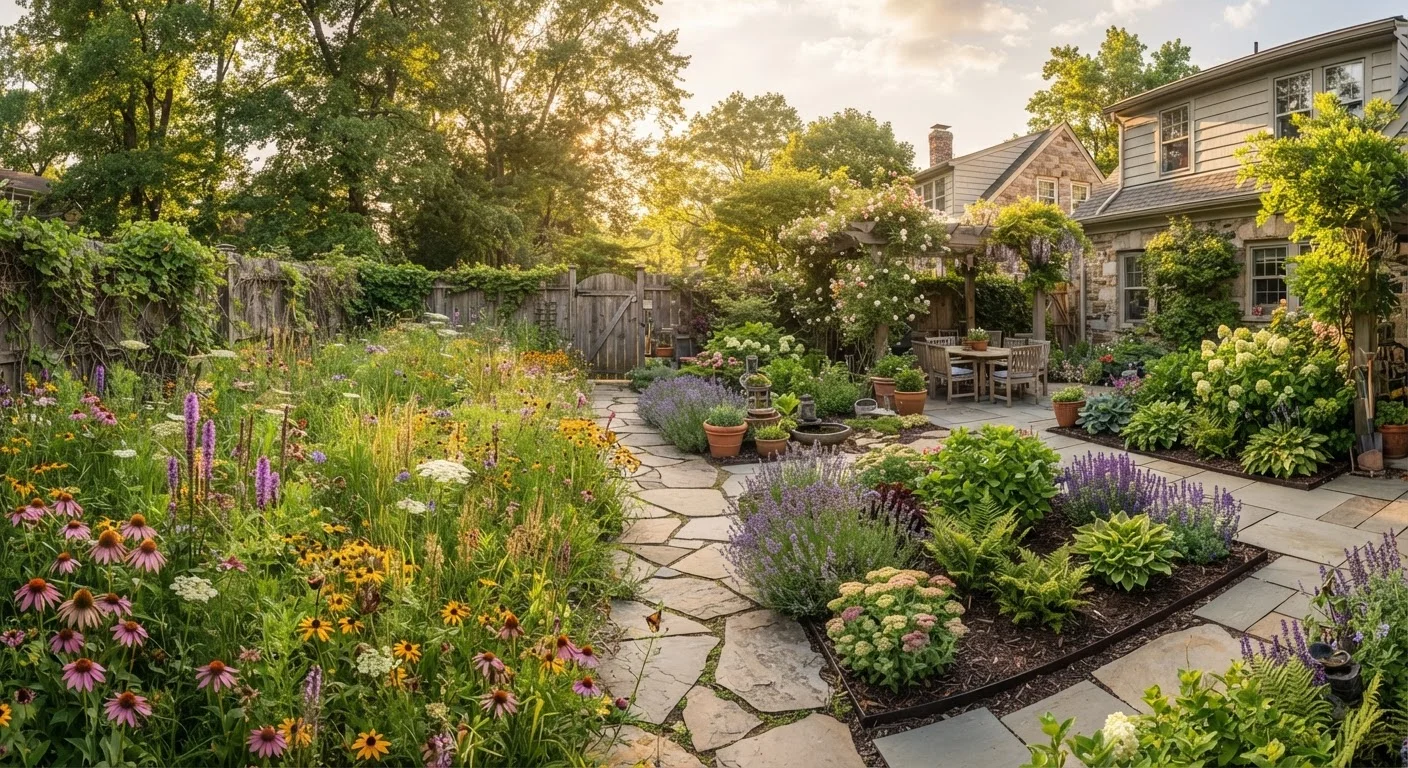
Option A
Native Plants
The locally adapted, ecologically connected choice.
Best for: Families who want lower long-term maintenance, reduced watering, and a yard that supports local wildlife.
Option B
Non-Native Ornamentals
The design-forward, broadly available alternative.
Best for: Families who prioritize curb appeal, specific aesthetics, or seasonal color that native species may not always provide.
What Sets Native and Non-Native Plants Apart
A native plant is one that naturally occurs in a specific region without human introduction - shaped by local soils, rainfall, temperatures, and wildlife over thousands of years. A non-native ornamental is a plant introduced from another region or country, selected and often bred for visual appeal.
Both have genuine value in a home landscape. The difference lies in what each demands from you - and what each gives back to the local environment. For families managing a busy yard, understanding these trade-offs helps turn plant selection from guesswork into a smarter, more deliberate decision. For a wider picture of what your outdoor space involves across the year, see our full-year backyard overview.
| Criterion | Native Plants | Non-Native Ornamentals |
|---|---|---|
| Water needs (established) | Low - adapted to local rainfall | Moderate to high - varies by species |
| Fertilizer requirements | Minimal - suited to native soils | Often needed for best performance |
| Wildlife support | High - supports local insects, birds | Low to moderate - varies widely |
| Design flexibility | Moderate - regional species range | Very high - global species available |
| Invasive risk | None by definition | Possible - varies by species |
| Establishment period | 1-3 seasons to full establishment | Often faster with regular inputs |
| Long-term maintenance | Generally low once established | Ongoing care often required |
Maintenance, Water, and Soil Needs
Native plants have a significant advantage when it comes to establishment and long-term upkeep. Because they evolved alongside local conditions, most are drought-tolerant once their root systems mature - typically after one to three growing seasons. They generally don't require regular fertilizing because they're suited to native soil chemistry.
Non-native ornamentals, by contrast, are often bred for looks rather than resilience. Many perform beautifully in ideal conditions but need consistent watering, periodic fertilizing, and sometimes soil amendments to thrive. This isn't a dealbreaker, but it is a realistic time and cost consideration for busy households.
~50%
Potential reduction in landscape water use
The EPA estimates that replacing high-water-demand landscaping with regionally adapted plants can cut outdoor water use by approximately half in many climates.
29%
Of U.S. outdoor water used on landscapes
According to the EPA, nearly a third of all residential outdoor water use goes to landscape irrigation, much of which is applied inefficiently.
If ground coverage is your goal - filling bare patches or reducing mowing - both natives and ornamentals have candidates worth exploring. Our guide to low-maintenance ground covers highlights options across both categories.
Ecological Impact: What's Happening Below the Surface
This is where the two categories diverge most sharply. Native plants support an interconnected web of local life - from native bees and butterflies that depend on specific host plants, to birds that rely on native insects as a food source. Research from entomologist Doug Tallamy and others has highlighted how native oaks, for example, support hundreds of caterpillar species, while many ornamentals support very few.
Non-native ornamentals are not inherently harmful - many are benign additions that simply don't participate much in local ecology. The concern arises with invasive species: non-natives that spread aggressively and crowd out native vegetation. Before planting any non-native species, it's worth checking your state's or region's invasive plant list, available through cooperative extension services and state environmental agencies.
How to Check for Invasive Species in Your Area
The U.S. Department of Agriculture and most state cooperative extension services maintain free, searchable invasive plant lists. The National Invasive Species Information Center (NISIC) at invasivespeciesinfo.gov is a useful starting point. Searching by your state or ecoregion will give you the most relevant guidance before purchasing any non-native species.
A practical middle ground many families find workable: anchor your landscape with native trees and shrubs as a backbone, then use well-chosen, non-invasive ornamentals for color and seasonal interest in beds and borders.
Choosing What Works for Your Yard and Family
There's no universal right answer - the best plant mix depends on your region, yard conditions, time available, and goals. A few questions worth asking before you plant:
- What's your local climate and soil type? Native plants sourced from your ecoregion (not just your country) will adapt most readily.
- How much time do you realistically have? If weekly watering isn't feasible, lean toward natives or drought-tolerant ornamentals.
- Do you have children or pets using the yard? Some ornamentals have toxic foliage or berries - check before planting. Our article on matching your home environment to the right animal touches on how yard plantings interact with pet safety.
- What's your planting goal? If you're filling a raised bed or structured kitchen garden, see our raised beds vs. in-ground gardens guide for setup considerations.
Both native and non-native plants can contribute to a yard your family genuinely enjoys. The key is going in with clear expectations about what each type needs - and what it offers in return.
The content provided on our blog site traverses numerous categories, offering readers valuable and practical information. Readers can use the editorial team’s research and data to gain more insights into their topics of interest. However, they are requested not to treat the articles as conclusive. The website team cannot be held responsible for differences in data or inaccuracies found across other platforms. Please also note that the site might also miss out on various schemes and offers available that the readers may find more beneficial than the ones we cover.