

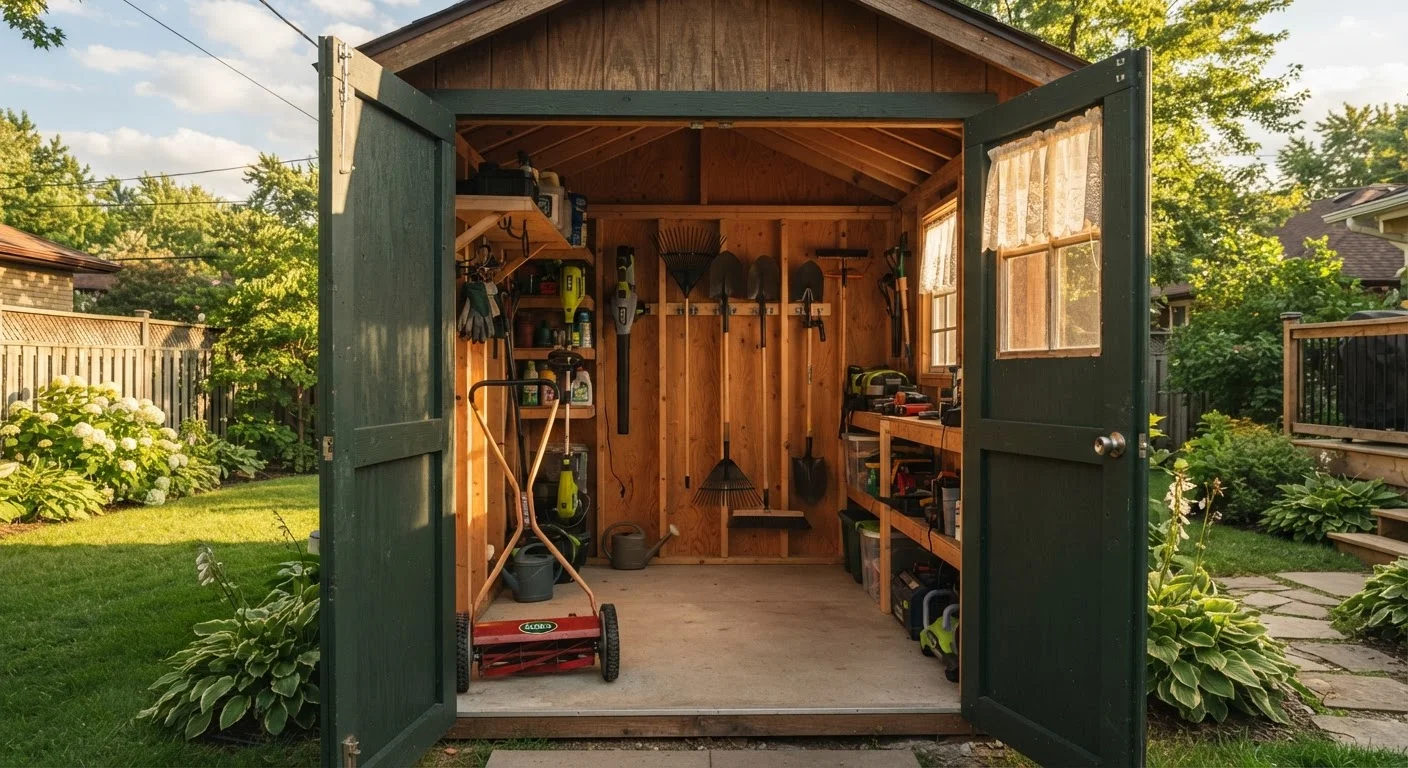
Our Verdict
Neither manual nor powered tools win outright - the right choice depends on your yard's size, your physical capacity, and how much ongoing cost and maintenance you're willing to manage. For small, flat yards used by households attentive to noise and environmental impact, manual tools are genuinely capable workhorses. For larger or heavily landscaped properties, powered tools deliver time savings that are hard to ignore.
Families with mid-to-large yards, limited time, or physically demanding terrain will typically get the most value from at least some powered tools, while smaller-yard households may find manual options entirely sufficient.
Why This Choice Matters More Than It Seems
The tools sitting in your garage or shed shape how often you actually use them - and how much yard work ends up postponed. Choosing between manual and powered lawn tools isn't just about preference; it affects your budget, your weekend schedule, and even your neighbors' peace and quiet.
Most families don't need to pick a single side. Understanding the real trade-offs lets you stock your shed strategically, rather than buying whatever was on sale. For a fuller picture of how year-round yard tasks fit together, see our full-year backyard overview.
Lower upfront and ongoing costs
Manual tools typically cost a fraction of powered equivalents and have virtually no ongoing operating expenses beyond cleaning and occasional blade sharpening.
No fuel, batteries, or engine maintenance
Without motors or batteries to manage, manual tools are ready to use after winter storage without any startup procedure or seasonal servicing.
Quiet operation, neighbor-friendly
Reel mowers and hand tools produce minimal noise, making early-morning or evening yard work possible without disturbing the neighborhood.
Lighter weight and easier to store
Most manual tools are compact and lightweight, making them easier to maneuver, hang on a wall, or tuck into a small shed or garage.
Zero direct emissions at point of use
Manual tools don't burn fuel or draw grid electricity while operating, which appeals to households focused on reducing their environmental footprint.
Where Manual Tools Genuinely Excel
Manual tools - reel mowers, hand edgers, pruning shears, rakes - are often dismissed as old-fashioned, but they hold real advantages in the right setting. A sharp reel mower, for instance, cuts grass cleanly rather than tearing it, which can reduce the risk of disease entry points in turf.
They're also quiet enough to use early on a Saturday morning without waking the block, and they produce no emissions at the point of use. Upkeep is straightforward: keep blades clean, occasionally sharpen them, and store them dry. There's no engine to service, no fuel to stabilize over winter, and no battery to replace after a few seasons.
For families exploring lower-maintenance yard strategies, ground covers that reduce mowing needs can complement a manual-tool approach by shrinking the area that needs regular cutting.
Where Powered Tools Earn Their Place
Once a lawn exceeds roughly a quarter-acre, or involves uneven terrain or dense vegetation, powered tools stop being a luxury and start being a practical necessity. A gas or battery-powered mower can cut in a fraction of the time, and string trimmers handle overgrown edges that would take considerable effort by hand.
Significantly more physical effort required
Manual mowing, edging, and raking over a large yard can be tiring, especially in hot weather or for household members with physical limitations.
Much slower on larger or denser lawns
A reel mower works well on a small, level lawn but becomes impractical on anything over roughly 2,000-3,000 square feet, particularly if grass is thick or uneven.
Ongoing battery or fuel costs add up
Powered tools - especially battery models - may need battery pack replacements every three to five years, which can represent a significant unexpected expense.
Noise restrictions may limit use windows
Gas mowers and leaf blowers can be loud enough to fall under local noise ordinances, restricting when they can legally be used in residential areas.
Engine and battery maintenance can be complex
Gas-powered equipment requires periodic servicing such as oil changes, air filter replacements, and fuel stabilization - tasks that require time, skill, or a service visit.
Battery-powered tools have improved substantially and now handle most residential tasks that once required gas. They're quieter, need no fuel mixing, and start reliably. The main limitation remains run time - a large yard may require swapping battery packs mid-job. Gas tools still hold an edge for extended, heavy-duty work, though they require more maintenance and storage care.
Pairing tool choices to the actual tasks each season takes makes a real difference. A month-by-month lawn care guide can help you match the right tool to each job at the right time of year.
Costs, Hidden and Otherwise
Manual tools carry a lower upfront cost and close to zero operating cost beyond occasional sharpening. Powered tools cost more at purchase and continue to generate expenses: fuel or electricity, replacement batteries, blade sharpening, and periodic servicing.
~$150-$400
Typical battery mower battery replacement cost
Replacement lithium-ion battery packs for residential mowers generally fall in this range, adding to total ownership cost after several years of use.
~1/4 acre
Practical upper limit for reel mower efficiency
Lawn care experts generally suggest manual reel mowers are best suited to yards up to about a quarter-acre, beyond which powered options become significantly more practical.
It's worth thinking about total cost of ownership over several years, not just the sticker price. A corded electric trimmer, for example, costs less than a battery model and never needs a new battery - but the cord limits your range. If you're evaluating how to think about product specifications more broadly, understanding which specs actually matter applies to outdoor power equipment too.
Some powered tools - particularly gas-powered mowers - may also require professional servicing that adds to their lifetime cost. Consider whether your household has the time and skill to handle basic maintenance, or whether you'd realistically pay someone else. That same decision framework applies to many home tasks: knowing when to DIY and when to hire can save money and frustration.
Building a Practical Tool Mix
Most family yards are best served by a hybrid approach: use manual tools where they're genuinely capable (edging small beds, raking leaves into piles, pruning shrubs), and reach for powered tools when the job is too large or physically demanding to do manually without it becoming a chore you dread.
A reasonable starting point for a mid-sized suburban yard might be a manual reel mower or a single battery-powered mower, a corded or battery string trimmer, and a set of quality hand tools. Resist the temptation to over-buy. Tools that don't get used because they're too heavy, too loud, or too complicated to start tend to cause more problems than they solve - including the problem of the yard not getting maintained at all.
This article is for general informational purposes only. Tool suitability varies by individual physical ability, yard conditions, and local regulations. Always follow manufacturer safety guidelines when operating lawn equipment.
The content provided on our blog site traverses numerous categories, offering readers valuable and practical information. Readers can use the editorial team’s research and data to gain more insights into their topics of interest. However, they are requested not to treat the articles as conclusive. The website team cannot be held responsible for differences in data or inaccuracies found across other platforms. Please also note that the site might also miss out on various schemes and offers available that the readers may find more beneficial than the ones we cover.