

Our Verdict
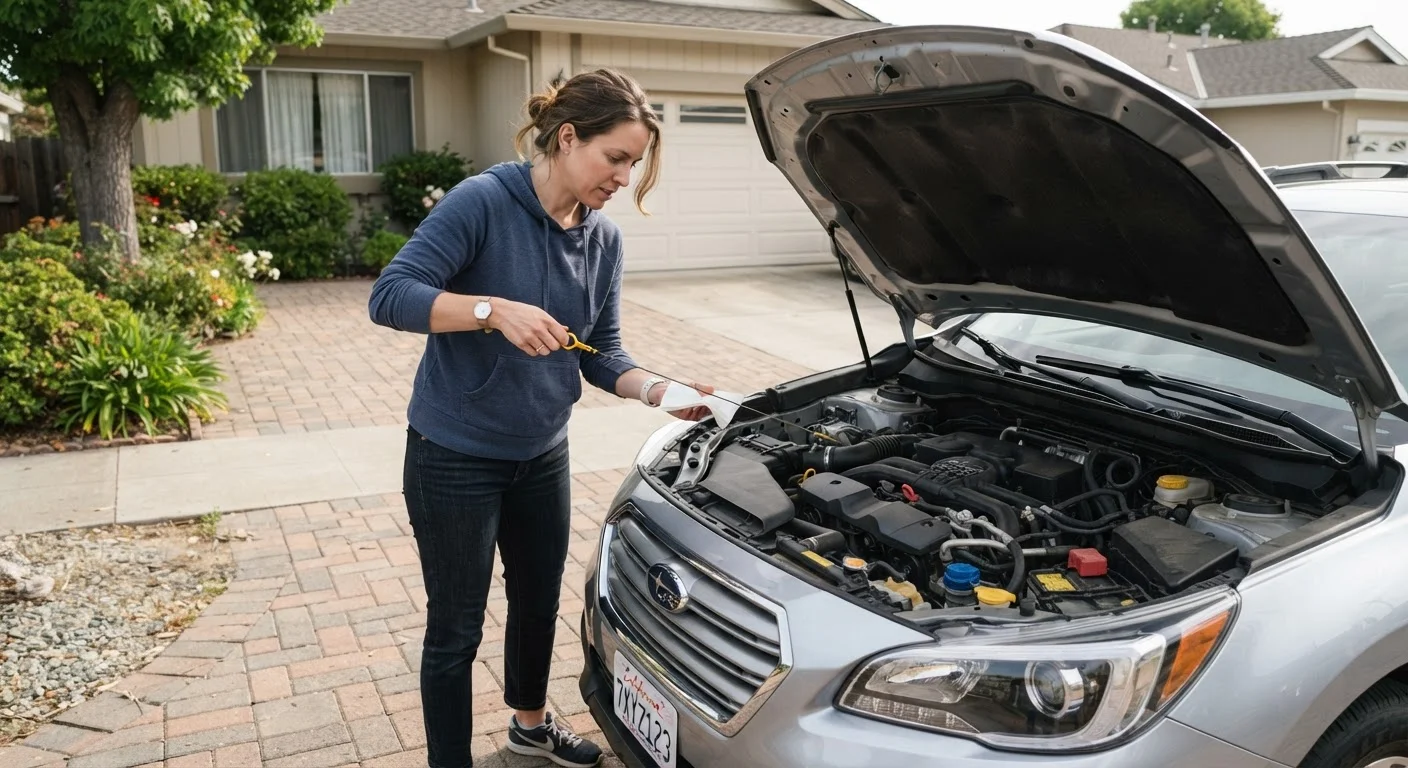
DIY car maintenance is a genuinely practical option for routine, low-risk tasks that require basic tools and no specialist knowledge. It saves money and builds useful familiarity with your vehicle. However, for anything touching safety systems, advanced electronics, or sealed drivetrain components, professional service is the smarter and safer choice.
Ideal for owners who are comfortable with basic mechanical tasks, have a reliable vehicle with accessible service points, and want to reduce routine maintenance costs without compromising safety.
What DIY Car Maintenance Actually Covers
DIY car maintenance spans a wide spectrum - from checking tyre pressure before a long trip to replacing a cabin air filter on a Saturday morning. The key is separating tasks that genuinely suit a home mechanic from those that carry real safety or mechanical risk.
Most modern vehicles have an owner's manual that outlines service intervals and identifies accessible maintenance points. If you haven't read yours, that's the logical starting point. For families looking to build good habits early, the guide to routine maintenance from day one offers a useful foundation.
The tasks that make sense for most owners to tackle at home tend to share a few characteristics: they don't require specialist tools, they don't involve safety-critical systems, and a mistake is recoverable without major damage. Fluid top-offs, bulb replacements, wiper blades, and cabin air filters all fall into this category.
Reduces routine maintenance costs meaningfully
Tasks like air filter changes, wiper blade replacements, and fluid top-offs cost a fraction of shop labor rates when done at home. Over a year, these savings can add up to several hundred dollars for a typical family vehicle.
Builds useful familiarity with your vehicle
Regularly checking fluids and inspecting accessible components gives owners an earlier sense of developing problems - like a coolant level that keeps dropping or a belt that's beginning to crack.
Flexible scheduling on your own timeline
Home maintenance doesn't require booking an appointment or waiting in a service queue. For busy families, being able to swap a cabin filter or check tyre pressure on a weekend morning has real practical value.
Entry-level tasks require minimal tools
Many common DIY jobs - bulb replacements, air filter swaps, wiper blade installations - need little more than a screwdriver and the owner's manual. The barrier to entry is low for the right tasks.
Helps you spot issues before they escalate
Owners who regularly pop the hood are more likely to notice low fluid levels, fraying belts, or corroded battery terminals before they cause a breakdown or a costly repair.
Where DIY Has Clear Limits
There's a point where confidence becomes a liability. Brake components, suspension geometry, fuel system work, airbag systems, and modern vehicle electronics all require either specialist equipment, calibrated tools, or detailed technical knowledge that most home mechanics don't have - and shouldn't attempt to fake.
Brake pad replacement is often cited as a borderline DIY task. While the basic process is straightforward on some vehicles, improper installation - even slightly - can cause brake fade, noise, or failure. The same applies to any task that disturbs wheel bearings, steering components, or the anti-lock braking system (ABS). These are not areas for trial and error.
Safety-critical mistakes can have serious consequences
Errors on brakes, steering, or suspension components don't just void a warranty - they can directly affect vehicle control. These systems have zero tolerance for amateur installation errors.
Modern vehicles require specialist diagnostic tools
Many repairs on current vehicles require an OBD-II scanner or manufacturer-specific software to complete properly. Without these tools, a seemingly simple job may leave warning lights on or systems miscalibrated.
Incorrect parts or fluids can cause hidden damage
Using the wrong grade of engine oil, the wrong coolant type, or a non-compatible part can cause damage that isn't immediately visible but shortens component life significantly.
DIY work may affect warranty coverage
While the Magnuson-Moss Warranty Act generally protects consumers' right to self-maintain vehicles, using non-approved fluids or parts - or performing work incorrectly - can complicate warranty claims if related problems arise.
Underestimating a job's complexity is a common risk
What looks straightforward in an online tutorial may be significantly harder in practice due to seized bolts, limited access, or vehicle-specific complications. Getting partway into a job and stopping can leave a car undriveable.
Modern vehicles also increasingly rely on software-integrated systems. A battery replacement, for example, may require a scan tool to reset the battery management system on some vehicles - otherwise fuel economy and charging behavior can be affected. Understanding where these intersections exist is part of knowing your limits. See our overview of how your car's electrical system works for useful context.
The Real Cost Calculation
~35%
Potential labor cost savings on routine maintenance
Industry estimates suggest that labor accounts for roughly 35-50% of most routine service bills, representing the primary savings opportunity for capable DIY owners.
4 in 10
Drivers who attempt DIY repairs annually
Consumer surveys consistently find that a significant minority of vehicle owners perform at least one maintenance task themselves each year, with oil changes and filter replacements most common.
Savings from DIY maintenance are real, but they require honest accounting. Factor in the cost of tools (which may be needed only once), the risk of purchasing incorrect parts, and the time invested. For straightforward tasks - oil changes on older vehicles, air filters, wiper blades - the math typically favors doing it yourself.
For more complex work, a mistake can turn a $40 job into a $400 repair. Routine maintenance that prevents expensive repair bills explains why skipping small services often creates larger downstream costs - a dynamic that applies equally to botched DIY work.
Families managing tight budgets should also consider that independent garages often offer competitive pricing on routine services. The dealer servicing vs. independent garage comparison breaks down what you actually get for the price difference.
Check Your Owner's Manual First
Vehicle specifications vary considerably - the correct oil viscosity, filter part number, and fluid type for your car may differ from general advice you find online. Your owner's manual is the authoritative source for your specific vehicle. If you've misplaced yours, most manufacturers make digital versions available through their official websites.
Building a Practical DIY Habit
The owners who get the most out of DIY maintenance are those who stay within a defined scope: regular visual inspections, fluid checks, filter swaps, tyre pressure monitoring, and light bulb replacements. Done consistently, these tasks keep a vehicle in good shape between professional services and give you an early warning of developing issues.
Several maintenance items are worth adding to your routine that many owners skip - cabin air filters and wiper blades among them. Our look at maintenance items that are surprisingly easy to overlook covers these in detail. For families watching the household budget, keeping a family car maintained on a tight budget provides a practical framework for prioritizing what matters most.
The goal isn't to replace your mechanic - it's to be an informed, engaged vehicle owner who handles what's appropriate and recognizes when to hand the job over.
The content provided on our blog site traverses numerous categories, offering readers valuable and practical information. Readers can use the editorial team’s research and data to gain more insights into their topics of interest. However, they are requested not to treat the articles as conclusive. The website team cannot be held responsible for differences in data or inaccuracies found across other platforms. Please also note that the site might also miss out on various schemes and offers available that the readers may find more beneficial than the ones we cover.