

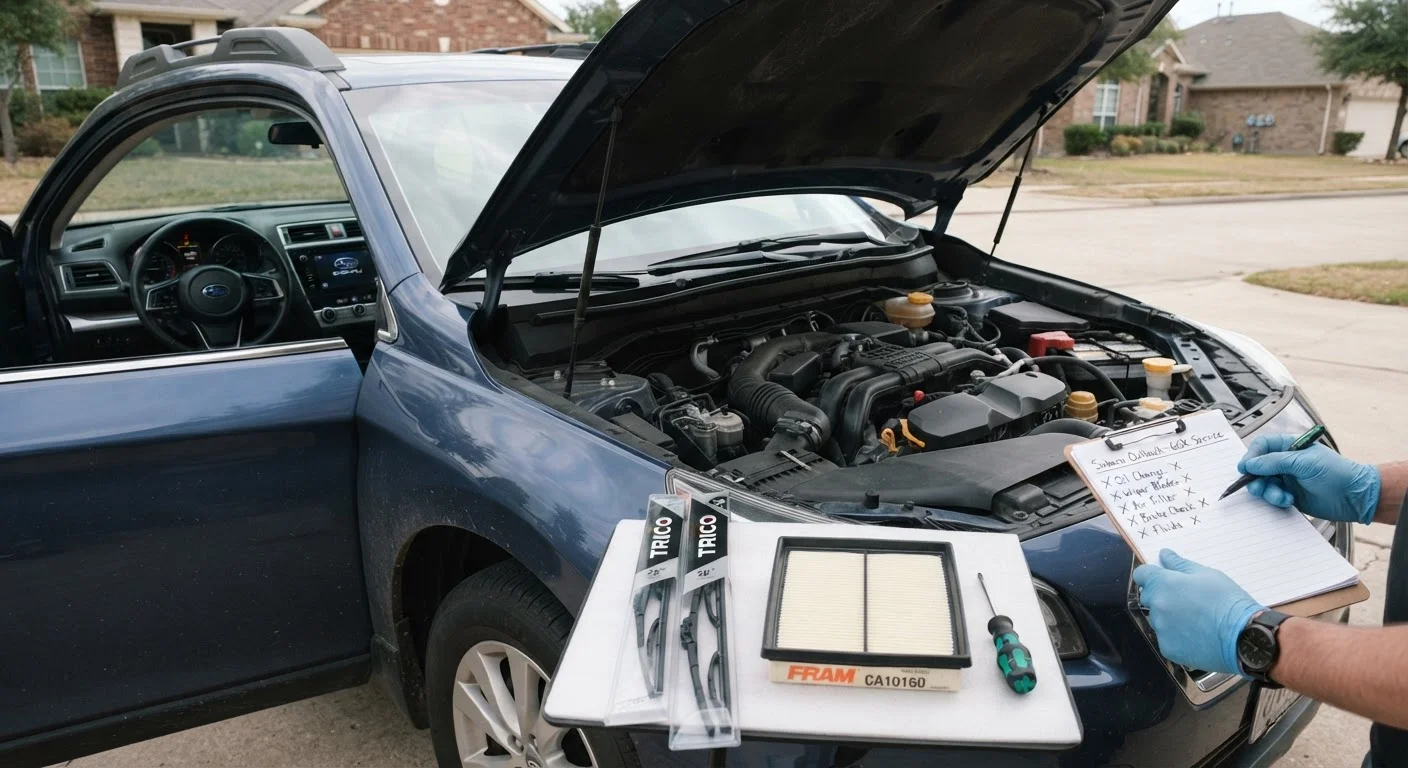
The maintenance items hiding in plain sight
Oil changes and tyre replacements get most of the attention - and for good reason. But between those headline services sits a long list of smaller maintenance tasks that quietly drift past their recommended intervals while families are focused on everything else. These aren't obscure jobs. They're items listed in nearly every owner's manual, yet they're routinely delayed or forgotten entirely.
The pattern is familiar: a cabin air filter goes three years without replacement, wiper blades start streaking in the first autumn rain, tyres wear unevenly because rotation was pushed back indefinitely. None of these failures happen overnight, which is exactly why they're so easy to overlook - until they're not. See how these habits connect to avoiding larger repair bills down the road.
The list below covers maintenance items that consistently fall through the cracks for everyday drivers. Each one is worth knowing - and most are simpler to address than people expect.
Cabin air filter
The cabin air filter cleans the air that flows through your heating and air conditioning system before it reaches the interior. A clogged filter restricts airflow, forces the blower motor to work harder, and can allow dust, pollen, and other particulates into the cabin - a real concern for passengers with allergies or respiratory sensitivities.
Most manufacturers recommend replacing the cabin air filter every 15,000 to 25,000 miles, though this varies by vehicle and driving environment. Dusty or high-pollen areas may call for more frequent changes. The filter is typically located behind the glove box or under the dashboard - on many vehicles, replacement requires no tools at all. Check your owner's manual for the exact location and interval.
A clogged cabin filter forces the blower motor to work harder and reduces interior air quality noticeably.
Wiper blades
Wiper blades degrade gradually through UV exposure, temperature cycling, and simple friction against the windshield. The result - streaking, skipping, or squealing during rain - tends to go unnoticed until visibility becomes genuinely compromised in a downpour or winter storm.
A general guideline is to inspect blades every six months and replace them annually, or sooner if performance drops. Replacement is straightforward and typically takes a few minutes. Given that clear visibility is fundamental to safe driving, this is one of the lowest-cost, highest-impact items on any maintenance checklist. Weather-specific considerations are worth reviewing in our seasonal car care guide.
Wiper blades degrade before most drivers notice - and compromised visibility in rain carries real risk.
Tyre rotation
Tyres wear unevenly depending on their position. Front tyres on front-wheel-drive vehicles, for instance, handle both steering and power delivery, which causes faster wear on the outer edges. Regular rotation - typically every 5,000 to 7,500 miles - redistributes that wear across all four tyres, extending their overall lifespan and helping maintain consistent handling characteristics.
Skipping rotation doesn't cause immediate problems, which is why it's so commonly delayed. But the cumulative effect is premature tyre replacement - a significantly larger expense than the rotation itself. For a deeper look at tyre condition indicators, see our guide to tyre pressure and tread depth.
Skipping rotation doesn't feel like anything - until you're replacing a full set of tyres ahead of schedule.
Battery terminals and connections
Battery terminals corrode over time, particularly in humid climates or where road salt is used. That corrosion - the whitish or bluish crust visible at the terminal connections - increases electrical resistance and can eventually prevent the vehicle from starting reliably.
Inspecting terminals during routine maintenance visits takes moments, and cleaning minor corrosion is a straightforward task. The battery itself typically lasts three to five years, depending on climate and use. A battery that's struggling to hold a charge often gives warning signs - sluggish cold starts, dimming interior lights - before it fails entirely. If you notice these, have the battery tested by a qualified mechanic before it leaves you stranded.
Corroded terminals are easy to spot and simple to address - but easy to miss if no one's looking.
Brake fluid
Brake fluid is hygroscopic, meaning it absorbs moisture from the air over time. As water content rises, the fluid's boiling point drops - which can reduce braking performance under hard use, such as repeated heavy braking on a long downhill grade. In everyday driving this degradation happens slowly and invisibly.
Most manufacturers recommend flushing brake fluid every two years or at specific mileage intervals. Checking the brake fluid reservoir takes seconds - the fluid should be near the maximum line and appear clear to light amber. Dark or murky fluid is a reliable sign that it's overdue for replacement. Brake system work should always be carried out by a qualified mechanic.
Brake fluid absorbs moisture silently over time, gradually reducing the performance margin you rely on most.
Engine air filter
Separate from the cabin air filter, the engine air filter prevents dirt and debris from entering the engine's intake. A restricted engine air filter can affect throttle response and fuel efficiency, though the impact is gradual enough that many drivers don't notice until the filter is heavily clogged.
Replacement intervals typically fall between 15,000 and 30,000 miles, though driving in dusty conditions shortens that window. The filter is usually visible under the hood inside a rectangular or cylindrical housing - its condition can often be assessed visually. Replacement is generally straightforward, though if you're uncertain, any service technician can check and replace it during a routine visit.
A clogged engine air filter restricts intake airflow gradually - by the time you notice it, it's overdue.
Staying ahead of the schedule
The most effective way to stay on top of these items isn't a complicated tracking system - it's a simple habit of opening the glove box. Your vehicle's owner's manual contains manufacturer-recommended service intervals for every item on this list, calibrated to your specific drivetrain and operating conditions. That guidance is more reliable than any generic rule of thumb.
Use a simple maintenance log
Keep a small notebook or a notes app entry recording the date and mileage each time you complete a maintenance task. This takes less than two minutes and removes any guesswork about what's due next. It's also useful documentation if you sell the vehicle - a verifiable service history has practical value to buyers.
If the manual isn't handy, many automakers publish this information through their official websites or owner portals. Some vehicles also track certain maintenance items through the instrument cluster or infotainment system, providing mileage-based reminders.
For families managing a tight vehicle budget, prioritising these smaller tasks is genuinely worthwhile. As our guide to maintaining a family car on a budget explains, preventive upkeep nearly always costs less than reactive repair. And if you're curious which of these tasks you can safely handle yourself, our DIY maintenance guide walks through exactly where the line falls between owner-friendly and mechanic-required.
This article is for general informational purposes only. Always consult your vehicle's owner's manual and a qualified mechanic for guidance specific to your car's make, model, and condition.
The content provided on our blog site traverses numerous categories, offering readers valuable and practical information. Readers can use the editorial team’s research and data to gain more insights into their topics of interest. However, they are requested not to treat the articles as conclusive. The website team cannot be held responsible for differences in data or inaccuracies found across other platforms. Please also note that the site might also miss out on various schemes and offers available that the readers may find more beneficial than the ones we cover.