

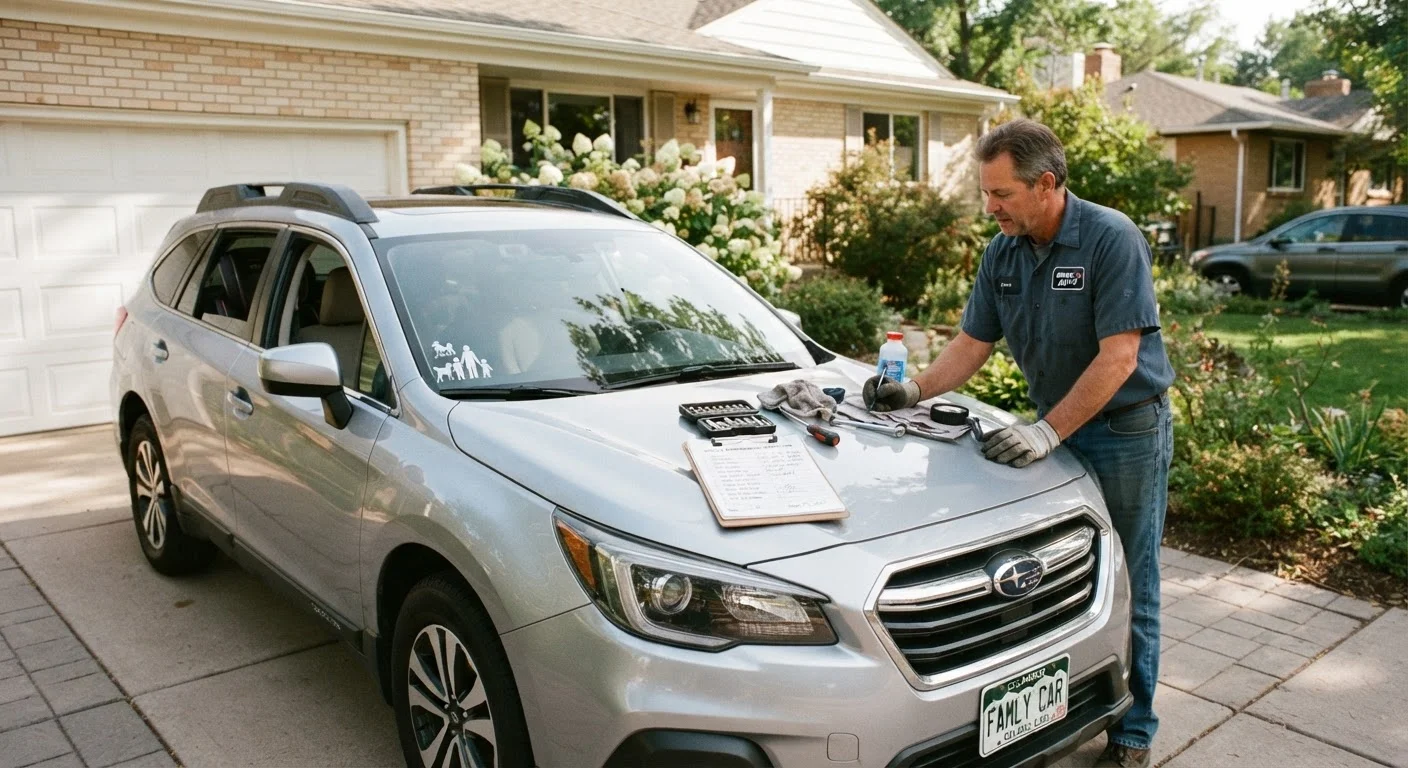
Why Small Services Have Big Financial Consequences
Most large repair bills don't arrive without warning - they follow months or years of deferred maintenance. A worn timing belt that snaps can destroy an engine worth several thousand dollars to replace. A low coolant level left unchecked can cause head gasket failure. The pattern is consistent: a modest service skipped turns into a catastrophic failure paid for out of pocket.
According to the AAA, vehicle-related expenses are among the largest recurring costs for American households. Understanding which maintenance tasks carry the highest financial leverage is the first step toward managing those costs proactively. For a broader view of ownership expenses, our guide to extending your vehicle's life without overspending covers the bigger picture.
$0.10/mile
Average vehicle maintenance cost per mile
AAA's annual Your Driving Costs study estimates routine maintenance averages around $0.10 per mile for a typical new vehicle - a figure that rises sharply when preventive services are skipped.
$4,500+
Typical engine replacement cost
Engine replacement due to oil starvation or overheating - both largely preventable - commonly runs between $4,000 and $8,000 or more depending on vehicle make and labor rates.
25%
Fuel economy loss from underinflation
The U.S. Department of Energy estimates that tires underinflated by just 1 PSI can reduce fuel economy by around 0.2%, with significant underinflation compounding losses considerably.
The Maintenance Tasks That Earn Their Keep
Not all maintenance items carry equal financial weight. The practices below have a consistent track record of preventing disproportionately expensive failures - prioritize these before anything else on your service list.
Follow manufacturer-specified oil change intervals, not blanket mileage rules.
Engine oil degrades over time and mileage, losing its ability to lubricate and cool internal components. Running an engine on degraded oil accelerates wear on bearings, camshafts, and cylinder walls - repairs that can run into thousands of dollars. Modern synthetic oils and engines often allow longer intervals than older advice suggested, so defaulting to your owner's manual saves money and protects the engine.
Inspect and maintain tire pressure monthly and before long trips.
Underinflated tires wear unevenly and significantly increase the risk of blowouts, which can cause accidents and require immediate, unplanned tire replacement. Correct inflation also improves fuel efficiency, reducing a cost that compounds over thousands of miles. Tire pressure drops naturally - roughly 1 PSI per month and 1 PSI for every 10°F drop in ambient temperature.
Replace the cabin and engine air filters at recommended intervals.
A clogged engine air filter restricts airflow to the combustion chamber, reducing fuel efficiency and potentially causing the engine to run rich - wasting fuel and stressing components. Cabin air filters affect HVAC system performance; a severely blocked one can strain the blower motor. Both are inexpensive parts compared to the components they protect.
Monitor and top up all fluid levels between scheduled services.
Coolant, brake fluid, power steering fluid, and transmission fluid all degrade and can leak. Low coolant can lead to overheating and head gasket failure. Low brake fluid may indicate worn pads or a developing leak - both safety and financial concerns. Catching these early is inexpensive; ignoring them is not.
Have brakes inspected at least once a year or any time you notice changes in stopping behavior.
Brake pads are a wear item designed to be replaced; rotors are not. Allowing pads to wear down completely causes metal-on-metal contact that damages rotors, turning a $150-$300 pad replacement into a $400-$700-plus rotor-and-pad job. Brake performance is also directly tied to vehicle safety, making this one of the highest-priority maintenance items.
Replace the timing belt or chain at manufacturer-specified intervals.
On vehicles with timing belts (as opposed to chains), the belt drives the synchronization between the engine's camshaft and crankshaft. Failure causes the engine's internal components to collide, often resulting in catastrophic, unrepairable engine damage. Timing belt replacement is a significant but predictable service; engine replacement is not.
Quick Actions You Can Take This Week
Some of the highest-impact maintenance steps require no tools, no appointment, and less than 15 minutes. These are worth doing now rather than waiting for a scheduled service.
For a clearer sense of which tasks are genuinely safe to handle yourself versus when a qualified mechanic should take over, see our DIY car maintenance guide.
Using Your Owner's Manual and Service History as Financial Tools
Your owner's manual contains manufacturer-specified service intervals tailored to your exact engine, transmission, and drivetrain. Following these intervals - rather than generic advice - is the most reliable way to maintain both performance and warranty coverage. Skipping manufacturer-recommended services can complicate warranty claims and reduce resale value.
A documented service history functions as a financial asset. It demonstrates to future buyers or insurers that the vehicle has been properly maintained, often supporting a stronger resale price. Our article on understanding your car's service history explains what those records actually communicate about a vehicle's condition.
Warranty Coverage and Maintenance Records
Many vehicle warranties - including powertrain coverage - require that you follow the manufacturer's specified maintenance schedule and retain documentation. Keeping receipts and service records is not just good organization; it can be essential if a warranty claim is disputed. Digital records stored in a dedicated folder or app make this straightforward.
If you're weighing where to have services performed, our dealer vs. independent garage comparison lays out the practical trade-offs on cost, warranty, and quality of care.
The content provided on our blog site traverses numerous categories, offering readers valuable and practical information. Readers can use the editorial team’s research and data to gain more insights into their topics of interest. However, they are requested not to treat the articles as conclusive. The website team cannot be held responsible for differences in data or inaccuracies found across other platforms. Please also note that the site might also miss out on various schemes and offers available that the readers may find more beneficial than the ones we cover.