

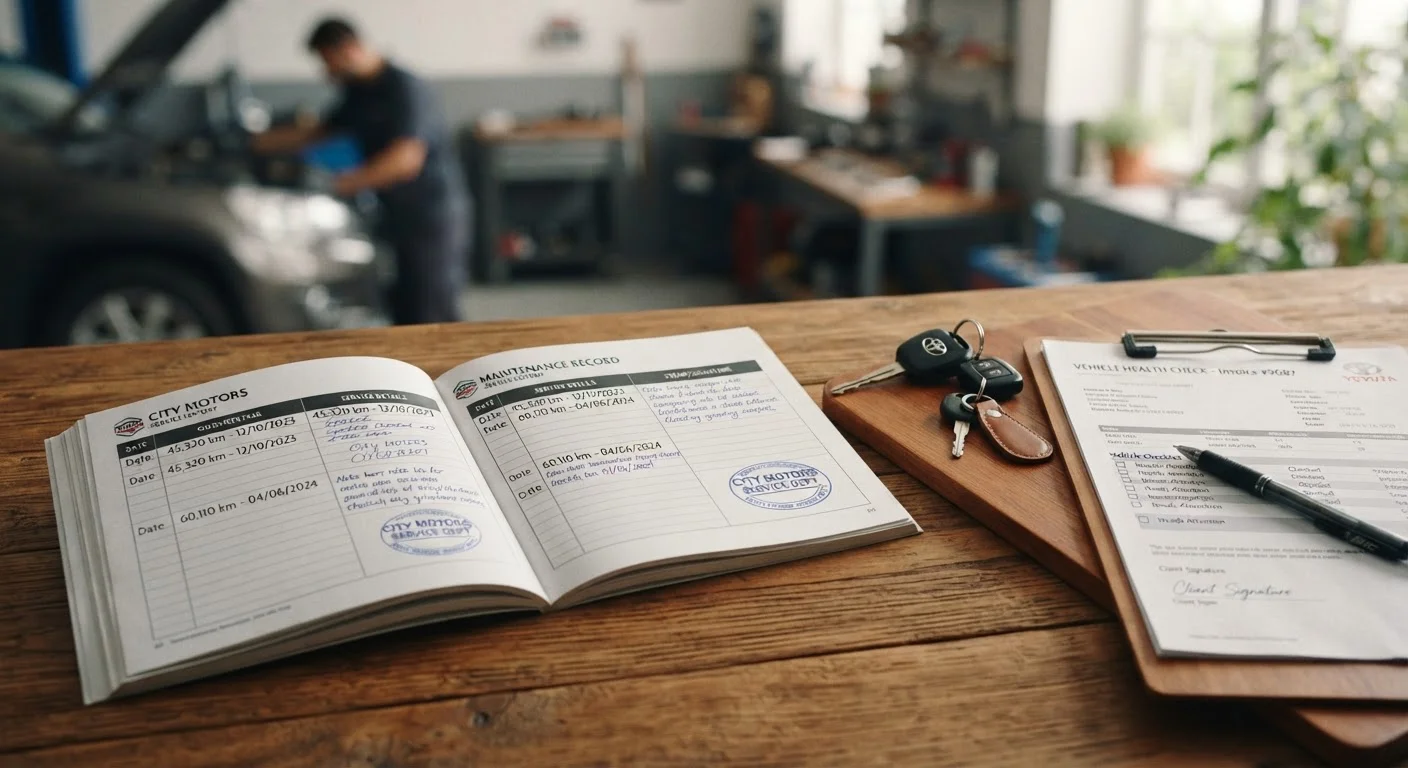
What a Service History Actually Contains
A service history isn't just a stamped booklet - it's a chronological account of how a vehicle has been treated. At minimum, a solid record will show:
- Date and mileage of each service - confirming intervals were respected
- Work performed - oil and filter changes, brake inspections, fluid replacements, and any advisory notes
- Who did the work - garage name, stamp, and ideally a technician signature
- Parts replaced - especially high-wear items like brake pads, belts, and batteries
When you see a consistent pattern of services at or near the manufacturer's recommended intervals, it tells you the previous owner took upkeep seriously. When you see long gaps - say, 30,000 miles between oil changes on a car specifying 7,500-mile intervals - that's a warning sign worth investigating. Check your vehicle's maintenance schedule to understand what intervals matter most for your specific car.
~$500-$1,000+
Typical premium for full-history used vehicles
Industry observers and used-car pricing guides consistently note that verifiable service records add measurable value to private and dealer sales.
30%
Of used car buyers cite incomplete records as a deal-breaker
Consumer surveys on used car purchasing behaviour regularly show that service history ranks among the top factors influencing buyer confidence.
Why It Matters When Buying a Used Car
For families in the market for a used vehicle, service history is one of the clearest windows into what you're actually buying. A car that looks clean and drives well on a test route may have underlying problems that only show up in the records - or in their absence.
Specific things to watch for:
- Timing belt or chain service - failure here can mean engine replacement, which easily runs into thousands of dollars
- Coolant and brake fluid changes - often skipped, but critical for safety and component longevity
- Odometer consistency - if the mileage on receipts doesn't match the pattern of service dates, that's a red flag for potential odometer tampering
A pre-purchase inspection by a qualified mechanic - independent of the seller - is always worth the cost, and the service history gives that mechanic a useful starting point. See our comparison of dealer servicing vs. independent garage options if you're deciding where to take the car for that inspection.
How Service History Affects Long-Term Ownership Costs
The financial case for keeping a full service history is straightforward: well-maintained cars break down less, and when they do, repairs tend to be less severe. Routine maintenance genuinely prevents expensive repair bills - skipping a $80 oil change can eventually lead to engine damage costing several thousand dollars.
Resale value is the other major factor. Buyers - and dealers accepting trade-ins - consistently pay more for vehicles with documented histories. A complete, consistent record demonstrates the car has been cared for, which reduces the buyer's perceived risk.
“A vehicle's maintenance record is essentially its health history - it tells you far more about long-term reliability than any visual inspection alone ever could.”
— Automotive Consumer Advisory Panel, Independent vehicle buying guidance body
If you're managing a family budget, the math is worth considering: a car with a clean history is more predictable. Surprise breakdowns and deferred maintenance catch-up costs are among the most disruptive unplanned expenses a household can face. For practical strategies on keeping costs manageable, see keeping a family car well-maintained on a tight budget.
Building and Maintaining Your Own Service Record
Whether you drive a three-year-old SUV or a 12-year-old sedan, the habits you build now determine the history the next owner sees - and the reliability you experience in the meantime.
Practical steps to keep your record solid:
- Follow manufacturer intervals - your owner's manual lists service schedules by mileage and time. Both matter; some fluids degrade even with low use.
- Keep every receipt - a folder in your glove box or a simple phone photo archive works. Digital records from a garage are useful, but having your own copies is a safeguard.
- Note what was inspected, not just replaced - if a technician checks your brakes and notes they have 40% life remaining, that's worth recording.
- Use consistent providers where possible - a garage with your car's history on file can spot patterns and flag emerging issues earlier.
If you're a new driver building these habits from scratch, our guide on car ownership for new drivers: routine maintenance from day one covers the full picture of what to prioritize.
A Simple System That Takes Two Minutes
After every service, photograph the receipt and drop the original into a labeled envelope in your glove box. If you ever need to prove maintenance history - for a warranty claim, insurance query, or sale - you'll have the documentation ready without searching through emails or calling garages.
Frequently Asked Questions
No. Stamps from reputable independent garages are equally valid for maintaining a service history. Since a 2002 European ruling (relevant context for US buyers evaluating imported vehicles), manufacturers cannot void warranties solely because service was performed outside a dealership network. In the US, the Magnuson-Moss Warranty Act provides similar protections - always verify with a qualified professional for your specific situation.
A vehicle with no history isn't automatically a poor buy, but it carries more risk. You'll have no way to confirm whether critical items like timing belts, brake fluid, or coolant have been changed on schedule. Factor in the cost of a full mechanical inspection and potentially catching up on missed services before committing.
Contact the garages or dealerships listed in the logbook and ask them to confirm the vehicle's visits by VIN (Vehicle Identification Number). Many manufacturers also maintain digital service records you can verify through their customer portals. A vehicle history report from a reputable provider can flag ownership changes and major incidents as well.
Service history doesn't directly set your premium, but it can be relevant if you file a claim and there's a dispute about whether the car was properly maintained. Keeping your own service records is good practice for documentation purposes.
Yes. Going forward, keep all receipts from oil changes, tire rotations, and any other work performed. If you use the same garage regularly, they'll have records on file. This builds a credible documented trail even if the car's earlier history is incomplete.
The content provided on our blog site traverses numerous categories, offering readers valuable and practical information. Readers can use the editorial team’s research and data to gain more insights into their topics of interest. However, they are requested not to treat the articles as conclusive. The website team cannot be held responsible for differences in data or inaccuracies found across other platforms. Please also note that the site might also miss out on various schemes and offers available that the readers may find more beneficial than the ones we cover.