

Start here
Why Routine Maintenance Matters From the Start
Next
The Checks You Can Do Yourself
Then
Understanding Your Service Schedule
When you're ready
Building a Maintenance Habit That Sticks
Why Routine Maintenance Matters From the Start
Owning a car for the first time comes with a learning curve - and one of the most important lessons has nothing to do with driving. It's understanding that a car is a mechanical system that degrades gradually, and that small, regular attention is far cheaper than reactive repairs.
Think of it this way: an oil change might cost $50-$100. An engine damaged by neglected oil can cost several thousand dollars to rebuild or replace. The math is straightforward, and the habits that protect you are not complicated. As our guide on avoiding expensive repair bills explains, the most financially damaging problems are usually the ones that were preventable.
Starting good habits in your first year of ownership also means you're much more likely to sustain them. New drivers who treat maintenance as a normal part of ownership - not a chore - generally spend less on repairs and keep their vehicles running reliably for longer.
Your Owner's Manual Is Free Guidance
Many new drivers never open the owner's manual - but it's one of the most practical tools you have. It lists the exact fluids your car requires, the correct tire pressure, and every service interval specific to your model. If you've misplaced a physical copy, most manufacturers offer free digital versions on their official websites.
The Checks You Can Do Yourself
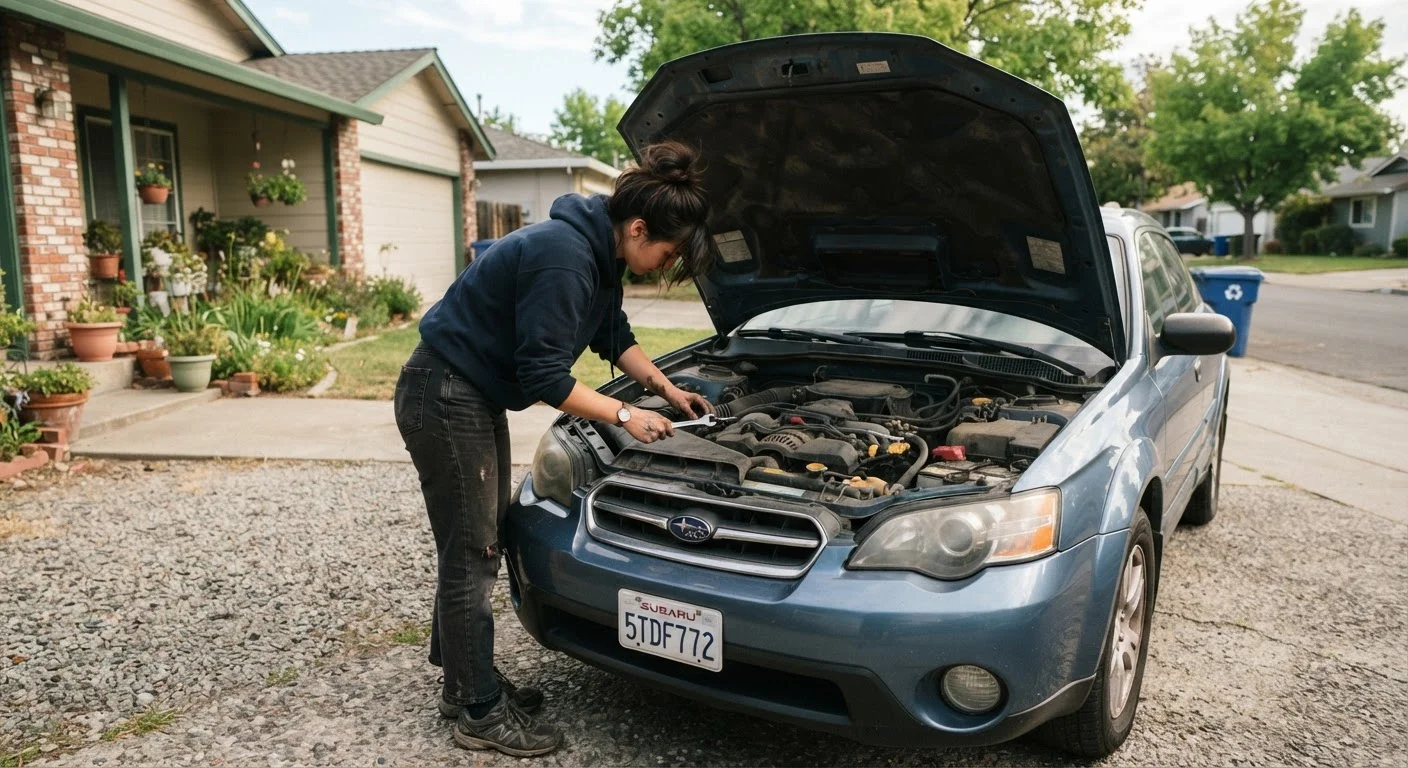
You don't need mechanical expertise to stay on top of the basics. Several of the most important checks take only a few minutes and require nothing more than your owner's manual and basic awareness.
Owner's Manual
The booklet provided with your vehicle by the manufacturer. It contains your car's specific maintenance schedule, fluid specifications, and warning light explanations - always the first place to look.
Service Interval
The recommended mileage or time period between specific maintenance tasks, such as oil changes or tire rotations. Intervals vary by vehicle and service type.
Dipstick
A long metal rod you pull out to check the engine oil level. It has minimum and maximum markings so you can see whether the oil level is in the safe range.
Tire Pressure (PSI)
The amount of air inside a tire, measured in pounds per square inch. The correct value for your vehicle is on a sticker inside the driver's door jamb, not on the tire itself.
Coolant
A fluid that circulates through your engine to regulate temperature and prevent overheating. Also called antifreeze, it requires periodic checking and replacement.
Brake Pad
A replaceable component that presses against the brake rotor to slow the vehicle. Pads wear down over time and must be replaced before they become dangerously thin.
Weekly or Before Long Trips
- Tire pressure: Underinflated tires wear unevenly, reduce fuel efficiency, and affect handling. Check pressure when tires are cold, using the value on the door jamb sticker - not the maximum printed on the tire sidewall.
- Engine oil level: With the engine off and cool, pull the dipstick, wipe it clean, reinsert it fully, and read the level. Top up if it's near the minimum mark.
- Lights: Walk around the car and confirm headlights, brake lights, and turn signals are working. A failed brake light is both a safety risk and a traffic violation.
Monthly
- Coolant level: Check the overflow reservoir (not the radiator cap - never open it when warm). Low coolant can cause overheating.
- Windshield washer fluid: Minor, but important for visibility in wet or dirty conditions.
- Tire tread depth: Insert a quarter into a tread groove. If you can see the top of Washington's head, tread is getting low.
For a deeper look at how your car's electrical system - including the battery - fits into overall reliability, see our guide on how your car's electrical system works.
Understanding Your Service Schedule
Every vehicle comes with a manufacturer-specified maintenance schedule, printed in the owner's manual. This document is the most authoritative source for your specific car - more reliable than general rules of thumb you might find online.
Key services to understand:
- Oil and filter change: Protects the engine from friction and wear. Interval varies by vehicle and oil type - check your manual.
- Air filter replacement: A clogged air filter reduces engine efficiency. Usually inspected annually and replaced as needed.
- Cabin air filter: Affects interior air quality and HVAC performance. Often overlooked by new owners.
- Tire rotation: Evens out wear across all four tires, extending tire life.
- Brake inspection: Brake pad thickness and rotor condition should be checked at each tire rotation.
- Coolant flush, transmission fluid, and spark plugs: Less frequent but important long-term items with specific mileage triggers in your manual.
Our family car maintenance schedule guide walks through these intervals in detail so you know exactly what to expect and when.
Severe vs. Normal Driving Conditions
Many owner's manuals list two maintenance schedules: one for normal driving and one for 'severe' conditions - which includes frequent short trips under 5 miles, stop-and-go city driving, extreme temperatures, or towing. If your daily driving fits the severe category, you may need more frequent service intervals. Check your manual to see which schedule applies to you.
Building a Maintenance Habit That Sticks
Knowing what to do is only half the challenge - the other half is actually doing it consistently. A few simple systems make this much easier.
Keep a Maintenance Log
A notebook in the glove box, a spreadsheet, or an app: record every service with the date, mileage, and what was done. This helps you track intervals, provides proof of care when selling the vehicle, and makes it easier for a mechanic to give accurate advice.
Set Calendar Reminders
Link your next oil change or tire rotation to a calendar event. Many people find it easier to remember service by pairing it with something routine - the start of each season, or a specific mileage milestone noted on a sticky note in the car.
Budget for It
Routine maintenance is a predictable cost - which makes it easier to plan for than surprise repairs. Our guide to maintaining a family car on a budget covers how to prioritize spending without cutting corners on what matters most. For a complete picture of vehicle ownership costs from purchase onward, see our car costs and savings financial guide for families.
Building these habits early pays dividends for the life of the vehicle - and gives you the confidence to handle ownership without being caught off guard.
Frequently Asked Questions
Most modern vehicles follow a 12-month or 7,500-10,000 mile service interval, whichever comes first - but always check your owner's manual for the manufacturer's specific recommendation. Some newer models use an oil life monitoring system that tells you when a change is due. Sticking to these intervals protects your engine and keeps any warranty valid.
A quick weekly check should cover tire pressure, engine oil level, coolant level, and all exterior lights. None of these require tools - just a few minutes and your owner's manual for reference values. Catching a slow tire leak or a low fluid level early can prevent a much bigger problem on the road.
Many vehicles display an oil life percentage or an oil change reminder light on the dashboard. If yours doesn't, track your mileage from the last change and follow the interval in your owner's manual. Oil that looks very dark and gritty on the dipstick is overdue for a change, though color alone isn't a reliable indicator on modern engines.
Yes - basic checks like oil level, coolant, and windshield washer fluid are designed to be done by the owner and require no mechanical skill. Always let the engine cool for at least 15 minutes before opening the hood, and never open the radiator cap while the engine is hot. Anything beyond fluid checks and visual inspection should be handled by a qualified mechanic.
Skipping services allows wear and degradation to go undetected. A missed oil change, for example, can lead to sludge buildup that damages the engine - a repair that costs far more than any number of oil changes. For a detailed look at which jobs carry the highest financial risk when deferred, see our guide on <a href="/cars-driving/car-costs-savings/routine-maintenance-that-prevents-expensive-repair-bills">maintenance tasks that prevent expensive repairs</a>.
No - as long as the work meets manufacturer specifications and is properly documented, independent mechanics can perform routine services without voiding a warranty under most circumstances. Keep all receipts and records. What matters is that the right fluids, filters, and parts to spec are used, not the brand of the shop.
The content provided on our blog site traverses numerous categories, offering readers valuable and practical information. Readers can use the editorial team’s research and data to gain more insights into their topics of interest. However, they are requested not to treat the articles as conclusive. The website team cannot be held responsible for differences in data or inaccuracies found across other platforms. Please also note that the site might also miss out on various schemes and offers available that the readers may find more beneficial than the ones we cover.