

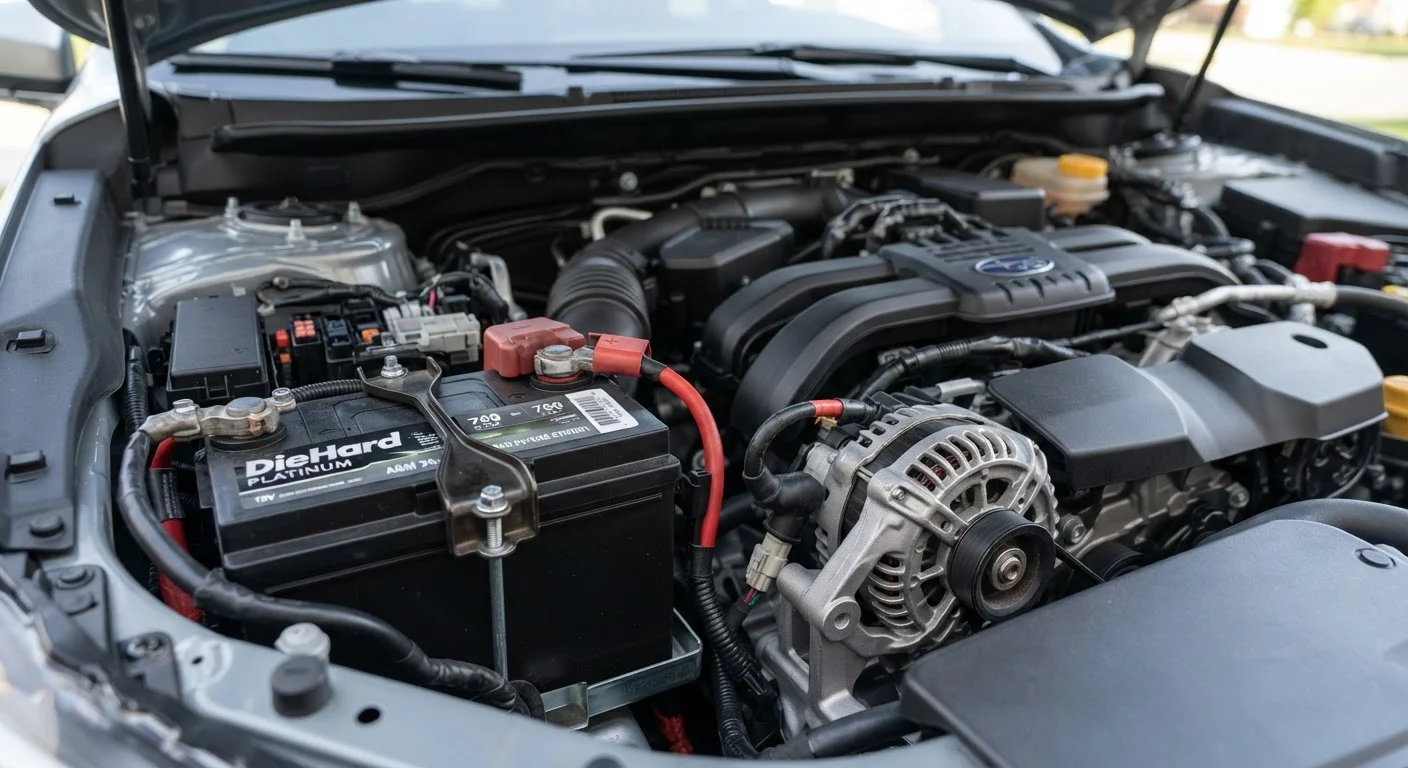
The Battery: Your Car's Power Reserve
Think of the battery as your car's power reserve - a self-contained energy store that does the heavy lifting at the moment you turn the key. When you start the car, the battery delivers a large surge of electricity to the starter motor and powers the ignition system long enough for the engine to fire.
Once the engine is running, the battery's primary job is largely done. It continues to stabilize voltage in the electrical system, but it isn't designed to run the car indefinitely on its own. A car with a dead alternator will drain its battery and stop - usually within 30 to 60 minutes of driving, depending on electrical load.
Battery health degrades gradually. In hotter climates, heat accelerates the chemical breakdown inside the cells. In colder climates, cold weather reduces the battery's ability to deliver current - which is why many batteries fail on the first freezing morning of the year. Having your battery tested once it's three years old gives you advance warning rather than a surprise on the school run.
3-5 years
Typical car battery lifespan
Industry guidance from battery manufacturers and automotive service associations consistently cites this range for conventional 12-volt lead-acid batteries under normal use.
~50%
Of no-start calls caused by battery failure
Roadside assistance data from major automotive clubs in the US consistently identifies dead or discharged batteries as the leading cause of breakdown call-outs.
13.5-14.5V
Healthy alternator output at idle
This voltage range is the standard diagnostic benchmark used by mechanics to confirm an alternator is charging the system correctly.
The Alternator: What Keeps the Battery Charged
The alternator is a generator driven by a belt connected to the engine. While the engine runs, the alternator produces electricity that powers your car's systems and recharges the battery. Without a functioning alternator, the battery would run flat every time you drove.
Alternator failure tends to be gradual. Early signs include dimming headlights, a battery warning light on the dashboard, flickering interior lights, or accessories behaving erratically. Because these symptoms overlap with a weakening battery, many drivers replace the battery only to find the problem returns - because the alternator was draining it all along.
A simple voltage test - something most mechanics and many parts stores can perform quickly - helps distinguish between the two. A healthy alternator typically produces between 13.5 and 14.5 volts at idle. A reading significantly outside that range warrants attention. See our complete maintenance schedule guide for how alternator checks fit into routine servicing.
“The battery, alternator, and starter are interdependent - a weakness in any one of them puts stress on the others. Catching a failing alternator before it kills a good battery can save a driver two repair bills instead of one.”
— ASE-Certified Master Technician, Automotive service professional with over 20 years of diagnostic experience
The Starter Motor: Turning the Engine Over
The starter motor is an electric motor that physically cranks the engine - rotating it fast enough for combustion to begin. It engages only for the second or two it takes the engine to start, then disengages automatically.
Starter problems have a fairly recognizable signature. A single loud click when you turn the key often means the starter solenoid (the switch that activates the motor) is receiving power but the motor isn't engaging. Rapid clicking usually points to insufficient power reaching the starter - often a battery or connection issue rather than the starter itself. A grinding noise suggests the starter's drive gear isn't meshing cleanly with the engine's flywheel, which warrants prompt attention to avoid damaging a more expensive component.
Starters are generally durable - many last the life of the vehicle - but heat, age, and high-mileage wear do catch up with them. Because starter replacement involves working under the vehicle and around the exhaust system, it's a job most families are better off leaving to a qualified mechanic. Our DIY vs. professional repair guide covers where the sensible boundary lies for home mechanics.
Keeping All Three Healthy: Practical Steps
The good news is that basic electrical system maintenance is neither expensive nor complicated. A few straightforward habits help avoid the most common failures:
- Test the battery annually once it passes the three-year mark. Many auto parts retailers offer free battery tests.
- Keep battery terminals clean. Corrosion - the white or bluish crust that builds up on terminals - increases resistance and can mimic a failing battery. Cleaning terminals is a simple task most owners can handle at home.
- Avoid excessive short trips. Engines that rarely run long enough to fully charge the battery shorten its lifespan noticeably.
- Respond to warning lights promptly. The battery warning light on the dashboard signals a charging system problem - not just a weak battery. Driving on means risking a breakdown.
- Address belt wear early. The serpentine belt that drives the alternator should be inspected at regular service intervals. A snapped belt disables the alternator immediately.
Staying ahead of electrical system wear is one of the more cost-effective things a family can do. For a broader look at how small maintenance steps prevent large bills, see how routine maintenance protects your budget.
Check Your Battery Before Winter
Cold weather is the single biggest trigger for battery failures. Having your battery load-tested in late fall - before temperatures drop - gives you time to replace it on your schedule rather than on the roadside. Most service shops and many parts retailers perform this test quickly and at low or no cost.
Frequently Asked Questions
If the car starts fine but warning lights appear or accessories flicker while driving, suspect the alternator. If the car struggles or won't start at all - especially after sitting overnight - the battery is more likely the cause. A load test at most auto parts stores can confirm which component is at fault.
Most conventional lead-acid batteries last three to five years. Extreme heat or cold, short frequent trips, and leaving accessories on when parked all shorten battery life. Having it tested annually after the three-year mark is a sensible precaution.
A single loud click or rapid clicking when you turn the key often points to a starter or electrical connection issue. A grinding noise can indicate worn starter gears. If the engine cranks very slowly or not at all despite a charged battery, have the starter evaluated by a mechanic.
Swapping a battery is one of the more accessible DIY tasks for most vehicles - it typically requires basic hand tools and care to disconnect the negative terminal first. However, some modern vehicles require a computer reset or battery registration procedure after replacement, so consult your owner's manual or a mechanic if uncertain.
Idling does allow the alternator to charge the battery, but only slowly and inefficiently. Driving at highway speeds charges a battery significantly faster. A deeply discharged battery may need a dedicated battery charger rather than just idling or short trips.
Jump-starting is generally safe if done correctly - connecting cables in the right order and to the correct terminals. Many modern vehicles have specific jump-start terminals in the engine bay rather than directly on the battery. Always check your owner's manual before attempting a jump-start, and consult a professional if unsure.
The content provided on our blog site traverses numerous categories, offering readers valuable and practical information. Readers can use the editorial team’s research and data to gain more insights into their topics of interest. However, they are requested not to treat the articles as conclusive. The website team cannot be held responsible for differences in data or inaccuracies found across other platforms. Please also note that the site might also miss out on various schemes and offers available that the readers may find more beneficial than the ones we cover.