

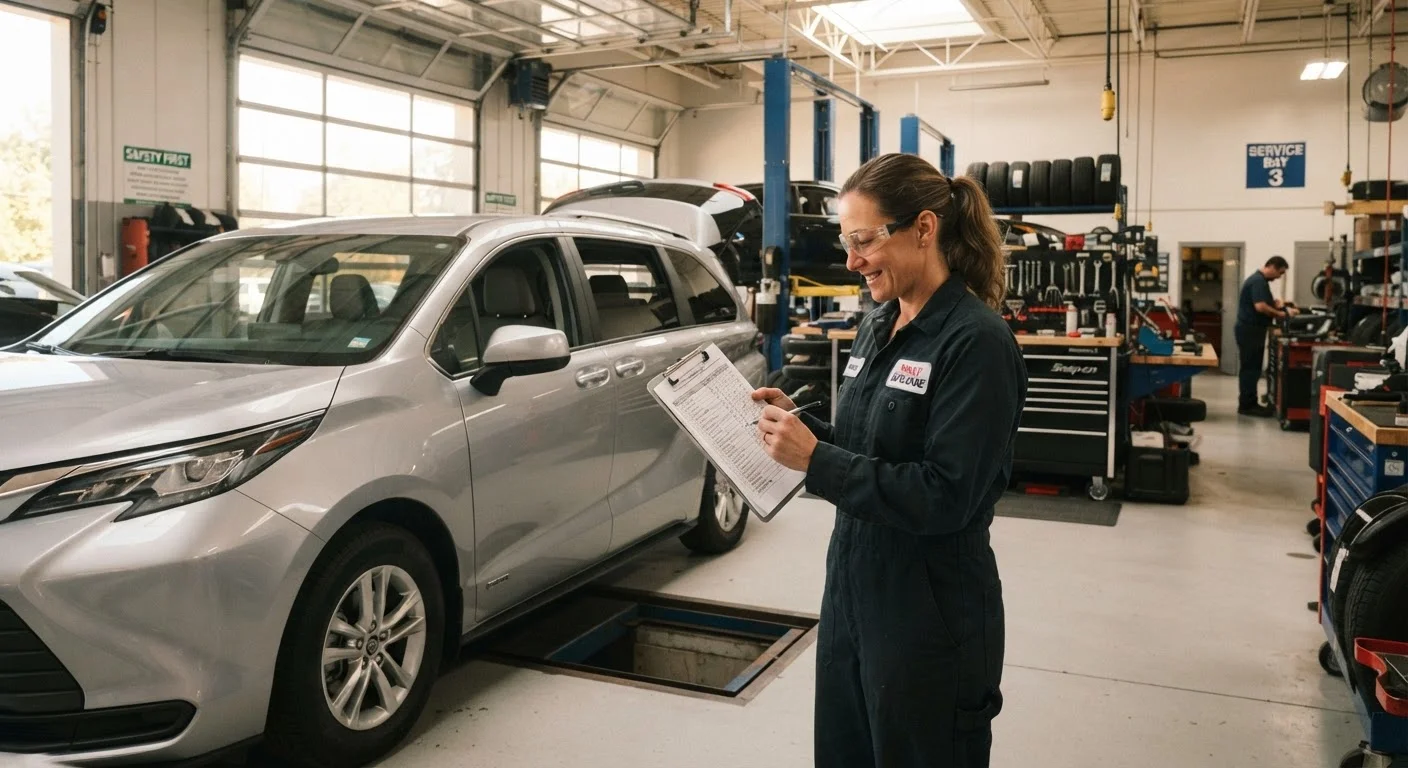
Why the Maintenance Schedule Exists
Your vehicle's maintenance schedule isn't arbitrary - it reflects years of engineering data about how components wear under real-world conditions. Manufacturers test their vehicles extensively to determine the point at which oil degrades, filters clog, and belts weaken. The schedule is designed to service those parts before failure, not after.
The single most reliable source for your specific schedule is the owner's manual. Third-party reminder stickers and service center recommendations can be useful prompts, but they don't override what the manufacturer has determined for your engine. If you've misplaced your manual, most manufacturers publish them online through their official websites.
Keeping up with the schedule also connects directly to your vehicle's service history, which affects resale value and gives future owners confidence in the car's condition.
The Core Services and What They Actually Do
Understanding each task demystifies the schedule and helps you prioritize when budgets are tight.
60,000-100,000 mi
Typical timing belt replacement interval
Manufacturer specifications vary widely; always verify the exact interval for your engine in your owner's manual.
~$35-$75
Typical conventional oil change cost
General market range for conventional oil changes at independent shops; synthetic oil changes typically cost more and are recommended for many modern engines.
30,000-50,000 mi
Common coolant flush interval
Actual intervals vary by vehicle and coolant type; some extended-life coolants can last longer - confirm with your owner's manual.
- Oil and filter change: Engine oil lubricates moving parts and absorbs heat. As it ages, it breaks down and carries contaminants. Fresh oil and a new filter restore that protection. Interval varies by oil type and vehicle - check your manual.
- Air filter replacement: A clogged air filter restricts airflow to the engine, reducing efficiency. Most manufacturers suggest inspection around every 15,000-30,000 miles, but dusty driving environments shorten that window.
- Tire rotation: Front and rear tires wear at different rates. Rotating them on schedule - typically every 5,000-7,500 miles - evens out wear and extends tire life across all four wheels.
- Brake inspection: Brake pads and rotors wear gradually. Regular inspection catches deterioration before it compromises stopping power - a direct safety issue for families.
- Coolant flush: Coolant prevents your engine from overheating and protects against corrosion. It degrades over time; most vehicles need a flush every 30,000-50,000 miles or every few years.
- Timing belt or chain: The timing belt synchronizes your engine's internal components. If it snaps, the result is typically severe engine damage. Most manufacturers specify replacement between 60,000 and 100,000 miles - this is one interval you cannot afford to ignore.
- Transmission fluid: Automatic and manual transmissions both rely on clean fluid for smooth operation. Neglecting this can lead to expensive transmission repairs.
For tasks you can handle yourself, our guide on DIY car maintenance covers which jobs are safe for home mechanics and which warrant a professional.
Normal vs. Severe Duty: Which Applies to Your Family?
Most owner's manuals list two service tracks: normal and severe duty. Many families unknowingly fall into the severe-duty category without realizing it.
Check Both Time and Mileage Intervals
Most service intervals are expressed as whichever comes first - mileage or time. A family that drives infrequently might never hit the mileage marker but should still service the vehicle on the time schedule. For example, an oil change may be due every 7,500 miles or every 12 months, whichever comes first. Always use the 'whichever comes first' rule.
Severe-duty conditions typically include:
- Frequent short trips under five miles - common for school runs and errands
- Persistent stop-and-go traffic in urban areas
- Driving in extreme heat, cold, or dusty environments
- Regular towing or carrying heavy loads
If your driving fits this profile, follow the more frequent severe-duty intervals. The cost difference between the two schedules is modest; the cost difference between proactive maintenance and a premature engine failure is not.
Staying on top of fluid levels between services is also worthwhile. Our guide on checking your car's fluid levels walks through what to look for and how to do it safely at home.
Staying on Budget Without Cutting Corners
Routine maintenance is far less expensive than the repairs it prevents. That said, there are sensible ways to manage costs without skipping critical services.
Keeping organized records of every service - dates, mileage, and work performed - helps you track what's due and negotiate more confidently with service providers. It also protects you if a warranty claim arises. If you're working with a tighter budget, our article on maintaining a family car on a tight budget offers practical prioritization strategies.
For a deeper look at which specific services deliver the most financial protection, see routine maintenance that prevents expensive repair bills.
This article provides general automotive information for educational purposes. Always consult your vehicle's owner's manual and a qualified mechanic for guidance specific to your vehicle's make, model, and condition.
Frequently Asked Questions
It depends on whether your vehicle uses conventional or synthetic oil, and what your manufacturer specifies. Many modern vehicles with synthetic oil can go 7,500 to 10,000 miles between changes. Always check your owner's manual rather than defaulting to an older 3,000-mile rule that no longer applies to most cars.
Missing one service rarely causes immediate failure, but the risk compounds over time. Neglected oil can degrade and cause engine wear; a missed timing belt replacement can result in catastrophic engine damage. Addressing overdue services promptly minimizes long-term risk.
No. Under the Magnuson-Moss Warranty Act, independent shops can legally perform routine maintenance without voiding your manufacturer warranty, as long as services meet manufacturer specifications and records are kept. See our comparison of <a href="/cars-driving/car-maintenance/dealer-servicing-vs-independent-garage-a-practical-comparison">dealer vs. independent garage servicing</a> for more detail.
A minor service typically covers oil and filter changes plus a basic vehicle inspection. A major service adds items like spark plugs, air filters, brake inspections, and fluid top-ups or replacements. The exact scope varies by manufacturer, so refer to your owner's manual for your vehicle's specific definitions.
Onboard service indicators are a useful tool, but they vary in sophistication. Some calculate oil life based on actual driving conditions; others simply count miles. Cross-referencing the reminder with your owner's manual gives you the most reliable guidance.
Manufacturers typically define severe duty as frequent short trips under 5 miles, stop-and-go urban driving, extreme heat or cold, towing, or dusty conditions. If most of your driving fits this description, follow the severe-duty intervals in your owner's manual - they call for more frequent service.
The content provided on our blog site traverses numerous categories, offering readers valuable and practical information. Readers can use the editorial team’s research and data to gain more insights into their topics of interest. However, they are requested not to treat the articles as conclusive. The website team cannot be held responsible for differences in data or inaccuracies found across other platforms. Please also note that the site might also miss out on various schemes and offers available that the readers may find more beneficial than the ones we cover.