

Why Fluid Checks Matter for Family Vehicles
Modern family cars are reliable, but that reliability depends on a handful of fluids doing their jobs quietly behind the scenes. Engine oil lubricates moving parts, coolant prevents overheating, brake fluid transmits pedal force to the calipers, power steering fluid assists wheel control, and washer fluid keeps your view clear. When any one of these drops too low or degrades, the consequences range from annoying to dangerous.
The good news: checking all five takes less time than a coffee stop, costs nothing, and requires no mechanical background. It's one of the most straightforward ways families can stay ahead of breakdowns and avoid repair bills that arrive without warning. If you're preparing for a trip, our pre-road-trip vehicle checklist covers these checks alongside tyres and lights.
What you will need
What You'll Need
No specialized tools are required for routine fluid checks. The items below are all you need to get started safely.
Owner's Manual
Identifies the correct fluid types, reservoir locations, and fill specifications for your specific vehicle.
Lint-free rags or paper towels
Used to wipe the oil dipstick clean before taking a reading, and to clean up any drips.
Disposable nitrile gloves
Protects hands from engine fluids, some of which can irritate skin with repeated contact.
Flashlight or phone torch
Helps you locate reservoirs and read level markings clearly in low-light engine bays.
Before you begin, locate your owner's manual - either in your glove box or through your manufacturer's website or app. Reservoir positions and required fluid grades vary significantly between vehicles, and guessing can cause real damage.
How to Check Each Fluid: Step-by-Step
Work through these checks in order, starting with the engine off and the car parked on level ground. The entire process typically takes 10-20 minutes for someone new to it.
Park safely and prepare the engine
Park on a flat, level surface and turn off the engine. For an accurate oil reading, most manufacturers recommend letting the engine sit for at least 5-10 minutes after switching off so oil drains back into the sump. Check your owner's manual - some vehicles specify checking oil when warm but not running. Apply the parking brake before opening the hood.
Check the engine oil
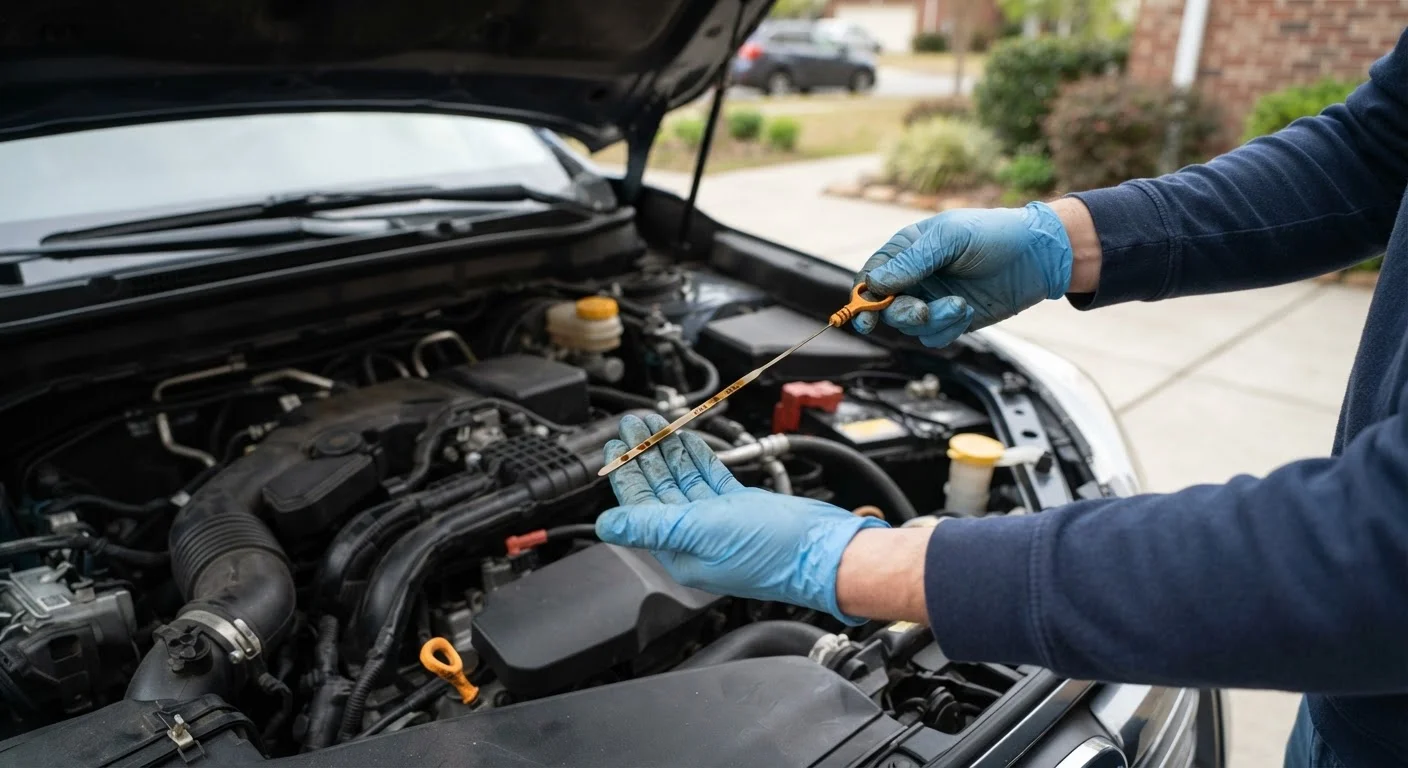
Locate the oil dipstick (usually a brightly colored ring or handle near the center of the engine). Pull it out fully and wipe it clean with a rag. Reinsert it all the way, then pull it out again and hold it horizontally. The oil should sit between the MIN and MAX markers. Also note the color: healthy oil ranges from amber to dark brown. Black, gritty, or milky oil warrants a visit to a mechanic.
Check the engine coolant
Locate the translucent coolant reservoir (often marked with a thermometer or radiator symbol). Read the level against the MIN and MAX lines printed on the side of the tank - you should be able to do this without opening the cap. The coolant should appear blue, green, pink, or orange depending on the type your vehicle uses.
Check the brake fluid
The brake fluid reservoir is typically located near the back of the engine bay on the driver's side, marked with a warning symbol. Most reservoirs are translucent - check the level against the MIN and MAX markings without opening the cap. Brake fluid should appear clear to light yellow. Dark, murky fluid or a level at or below MIN needs professional attention promptly.
Check the power steering fluid
Many newer vehicles have electric power steering and no fluid reservoir - check your owner's manual first. If your car has hydraulic power steering, locate the reservoir (often near the front of the engine bay) and check the level against the MIN/MAX markers. Some caps include a small dipstick. The fluid should be clear to light pink or reddish; dark or foamy fluid is a sign the system needs professional service.
Check the windshield washer fluid
The washer fluid reservoir is the only fluid on this list that poses no mechanical risk if run low - but an empty reservoir on a muddy highway creates a real visibility hazard. Locate the reservoir (marked with a spray-jet symbol), unscrew the cap, and check the level. Top it up with pre-mixed washer fluid rated for your climate. In cold regions, use a formula rated below the lowest temperatures you expect.
Brake Fluid Drops Are Not Normal
Unlike washer fluid, brake fluid does not get consumed through regular use. If your brake fluid level has dropped noticeably, this is a warning sign - either your brake pads are significantly worn (as pads wear down, the caliper extends further, drawing fluid from the reservoir) or there is a leak somewhere in the braking system. Do not top up the fluid and ignore the issue. Have the braking system inspected by a qualified mechanic before driving the vehicle further.
For a broader view of which maintenance tasks families can confidently handle at home - and where to draw the line - see our DIY car maintenance guide.
Making Fluid Checks a Lasting Habit
A one-off check is useful; a monthly habit is genuinely protective. Most vehicle manufacturers suggest checking oil and coolant at least once a month and before any long journey. Brake and power steering fluid are slower-changing but still worth a quick visual every month.
Build Checks Into Your Routine
Pairing these checks with a regular event - such as the first weekend of each month or every other fuel stop - makes them easy to remember. A consistent habit of 10-15 minutes can catch small problems before they become expensive repairs. See our family car maintenance schedule guide for the full picture of service intervals.
Never Mix Fluid Types
Using the wrong coolant, brake fluid specification, or power steering fluid can damage seals and system components - sometimes immediately. Always consult your owner's manual for the precise specification before adding any fluid. When in doubt, ask a mechanic rather than guess.
Staying consistent with these checks fits naturally into the wider goal of keeping your family car maintained on a tight budget - small, regular attention prevents the kind of neglect that leads to large, unplanned expenses. You can also find these checks embedded in the pre-trip vehicle safety checklist we recommend for every family road trip.
The content provided on our blog site traverses numerous categories, offering readers valuable and practical information. Readers can use the editorial team’s research and data to gain more insights into their topics of interest. However, they are requested not to treat the articles as conclusive. The website team cannot be held responsible for differences in data or inaccuracies found across other platforms. Please also note that the site might also miss out on various schemes and offers available that the readers may find more beneficial than the ones we cover.