

Summary
22 items · 30-60 minutes
Why a Pre-Trip Check Matters More Than You Think
Breaking down on a highway with kids in the back isn't just stressful - it can be dangerous. The reassuring truth is that many roadside breakdowns are preventable with a simple pre-departure walk-around. According to highway safety data, tyre failures and fluid-related overheating are consistently among the most common causes of non-collision breakdowns on long drives.
You don't need a mechanic's toolkit or technical expertise to work through this checklist. Most of these checks take less than a minute each and require nothing more than your eyes, hands, and a few basic items you likely already own. Think of it as the same logic as checking your luggage before a flight - a small upfront investment of time that protects a much bigger trip.
For a broader look at building safe driving habits for your whole family, see The Family Road Safety Playbook. And if you're planning a multi-week getaway, The Six Weeks Before Departure checklist covers the full trip preparation process.
Tyres
Fluids
Lights
Brakes and Steering
Emergency Kit
What You'll Need
Gather these items before you start your checks. Having everything ready means you won't have to abandon the process halfway through.
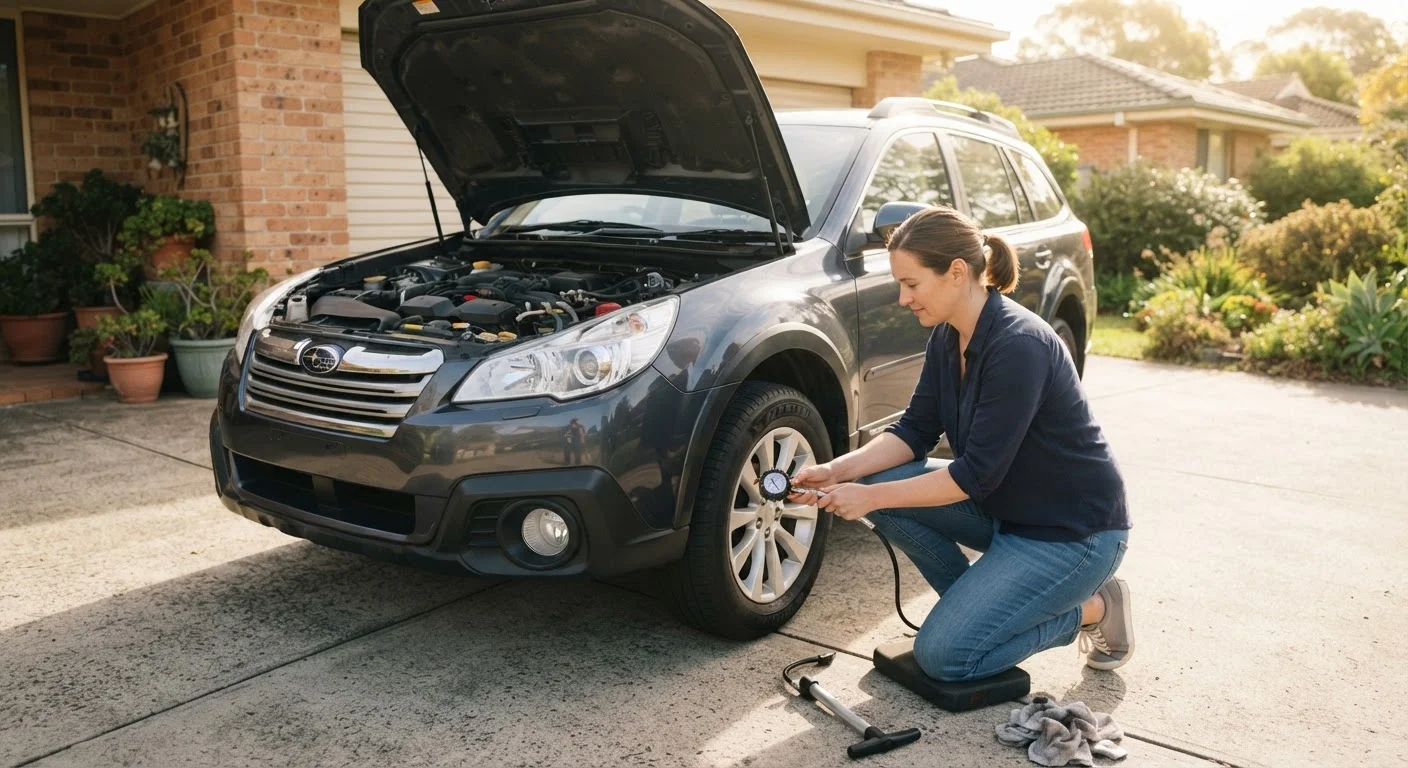
Tyre pressure gauge
Measures tyre pressure accurately so you can match it to the manufacturer's recommended figure.
Tread depth gauge
Gives a precise tread depth reading to confirm tyres meet the legal minimum of 2/32 inch (and ideally more for highway driving).
Torch or flashlight
Illuminates hard-to-see areas under the hood and beneath the vehicle during early-morning or evening checks.
Clean rag or paper towels
Needed to wipe the oil dipstick between readings for an accurate result.
Engine oil (correct grade for your vehicle)
For topping up if the dipstick shows the level is below the minimum mark.
Windscreen washer fluid
For topping up the washer reservoir so you can clean the windscreen safely throughout the journey.
Fluids, Lights, and the Details That Get Missed
Fluid levels are the most common area where small problems become expensive ones. Always check fluids when the engine has been off for at least two hours - checking a hot engine gives inaccurate readings and risks burns. For a detailed walkthrough on each fluid reservoir, Fluid Levels Every Family Car Owner Should Know How to Check walks through each step safely.
Never Open a Hot Coolant Cap
Coolant systems operate under pressure, and opening the reservoir or radiator cap while the engine is still warm can cause scalding fluid to spray. Always wait at least two hours after switching off the engine before checking coolant levels. If you suspect an overheating issue on the road, pull over safely and wait - do not open the bonnet immediately.
Lights are easy to overlook because you rarely see your own car from the outside. A simple fix: ask another adult or older child to stand outside while you cycle through headlights, indicators, brake lights, and reverse lights. Replace any blown bulbs before departure - spare bulbs are inexpensive and some vehicles allow owner replacement in minutes.
If this is part of a longer trip with kids on board, Long-Distance Road Trips with Kids covers driver fatigue management and keeping everyone comfortable over many hours.
Brake Concerns Mean Stop - Don't Wait
If your test drive reveals grinding, sharp pulling to one side, a spongy brake pedal, or an illuminated brake warning light, do not proceed with a long trip until the issue has been assessed by a qualified mechanic. Brake faults can escalate rapidly at highway speeds and are not a risk worth carrying on a journey with your family.
The content provided on our blog site traverses numerous categories, offering readers valuable and practical information. Readers can use the editorial team’s research and data to gain more insights into their topics of interest. However, they are requested not to treat the articles as conclusive. The website team cannot be held responsible for differences in data or inaccuracies found across other platforms. Please also note that the site might also miss out on various schemes and offers available that the readers may find more beneficial than the ones we cover.