

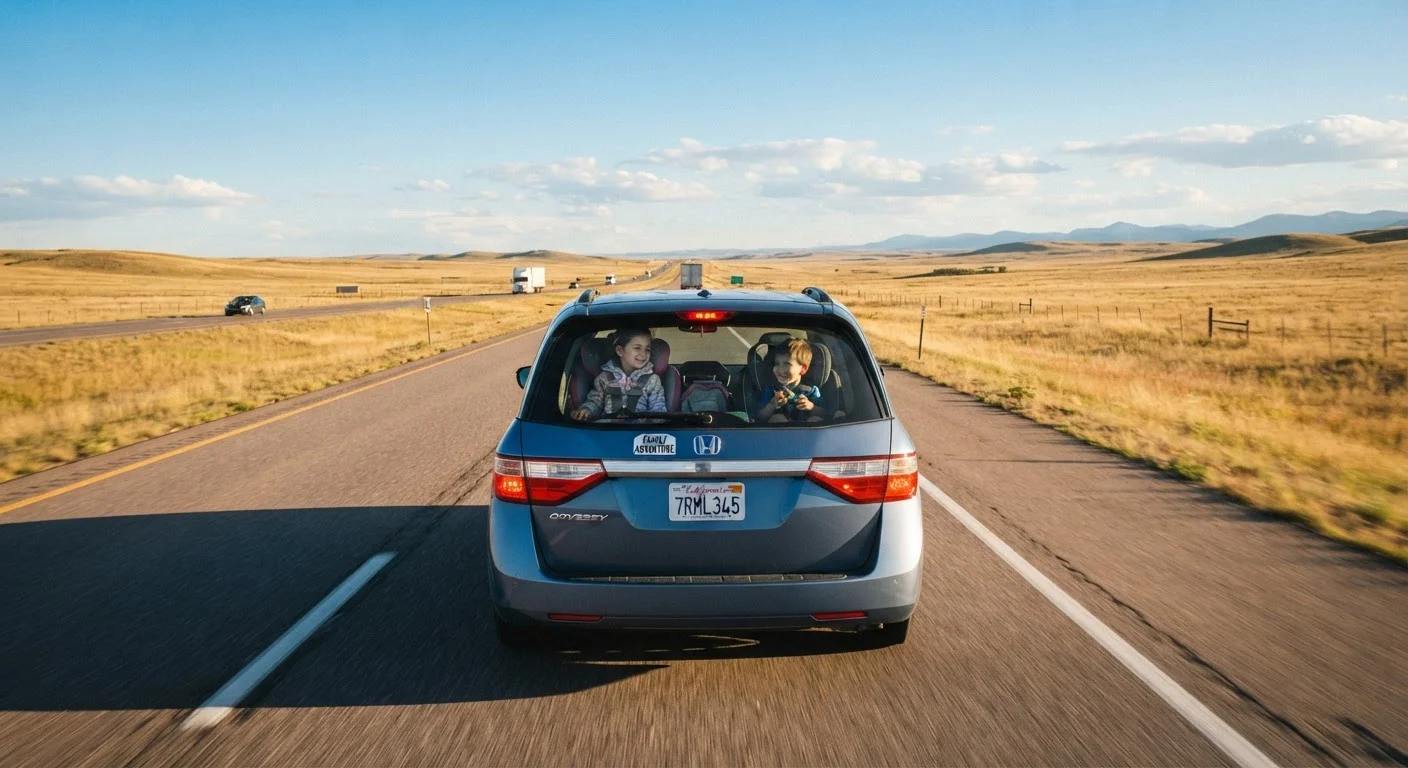
Why Long Family Drives Carry a Different Risk Profile
A two-hour grocery run feels nothing like a nine-hour drive to see family across state lines. The vehicle is the same, but the conditions are radically different: sustained highway speeds, accumulated fatigue, confined and restless passengers, and the psychological pull to push through rather than stop. Research from the National Highway Traffic Safety Administration consistently identifies drowsy driving as a serious crash risk - and families on long trips face an above-average exposure to it.
What makes family road trips particularly complex is that the things parents do to manage kids - turning around to pass a snack, mediating a backseat argument, adjusting a screen - are also the kinds of distractions that degrade driving performance. See what the research shows about cognitive distraction to understand how much mental bandwidth these micro-interruptions actually consume.
The good news: most of the risk is manageable. The practices below reflect widely accepted road safety guidance and practical family driving experience.
Best Practices for Safer Long-Distance Family Driving
These recommendations draw on driver fatigue research, child passenger safety guidance, and route-planning principles. They apply whether you're crossing two states or just doing a long day trip.
Schedule a mandatory stop every two hours, regardless of how alert you feel.
Fatigue impairs judgment before drivers consciously recognize it - meaning you can feel fine while your reaction time is meaningfully degraded. Setting a firm two-hour rule removes the temptation to rationalize pushing through. The stop doesn't have to be long; even 15 minutes of walking and fresh air helps.
Avoid driving during your normal sleep window, particularly between midnight and 6 a.m.
Circadian rhythm drives sleepiness on a biological schedule regardless of how much sleep you got the night before. Driving in the late-night hours amplifies fatigue risk even for well-rested adults. For families, this window also tends to produce unpredictable children.
Share driving duties whenever a qualified second driver is available.
No amount of caffeine fully replaces rest, and sustained driving is mentally taxing even on uneventful roads. Rotating drivers every 90-120 minutes keeps both drivers fresher and provides built-in recovery time.
Secure all loose items and cargo before departure - not on the road.
In a sudden stop or collision, unsecured items become projectiles. This is a documented injury mechanism that's entirely preventable. Luggage in the cabin, sports equipment, and even water bottles all pose risk if not properly stowed.
Establish clear in-car rules for children before the trip starts.
Children who understand the expectations - staying buckled, using indoor voices, raising needs calmly - create fewer reactive situations for the driver. Consistency across trips also builds habits that carry forward.
Check your vehicle's key systems before any long trip.
Tire pressure, fluid levels, wiper blades, and lights all affect safety on extended highway driving. A breakdown or blowout at highway speed with children aboard is a serious emergency. Pre-trip checks catch most preventable issues.
Quick Actions to Take Before You Leave
Preparation done the night before - not in the driveway at 6 a.m. - takes enormous pressure off the driver and reduces early-trip stress that can accelerate fatigue. For a broader vehicle preparation checklist, the Car Maintenance hub covers the key systems worth checking before any long drive.
Managing Kids' Restlessness Without Increasing Driver Risk
Children aren't simply passengers - they're an active variable in the driving environment. Boredom escalates quickly in a car, and the instinct to intervene while driving is natural but dangerous. The goal is to reduce the need for reactive interventions by anticipating needs before they escalate.
Reactive Interventions Are a Hidden Risk
Turning around to handle a dispute, reaching back to pass something, or raising your voice to manage noise are all forms of distraction. Studies consistently show that even brief cognitive distraction - not just physical - degrades hazard response time. The common habits that quietly raise driving risk include many behaviors parents perform without thinking. The best strategy is to hand off passenger management to an adult co-passenger whenever possible, and to pull over when intervention genuinely can't wait.
For activity ideas that keep kids genuinely occupied without relying on the driver, Keeping Kids Engaged on Long Journeys offers practical, low-conflict strategies. And if you're still weighing whether to drive at all, Driving vs. Flying With Kids lays out the honest trade-offs.
This article provides general road safety information for educational purposes. Always follow local traffic laws and consult qualified professionals for vehicle-specific maintenance or safety concerns.
The content provided on our blog site traverses numerous categories, offering readers valuable and practical information. Readers can use the editorial team’s research and data to gain more insights into their topics of interest. However, they are requested not to treat the articles as conclusive. The website team cannot be held responsible for differences in data or inaccuracies found across other platforms. Please also note that the site might also miss out on various schemes and offers available that the readers may find more beneficial than the ones we cover.