

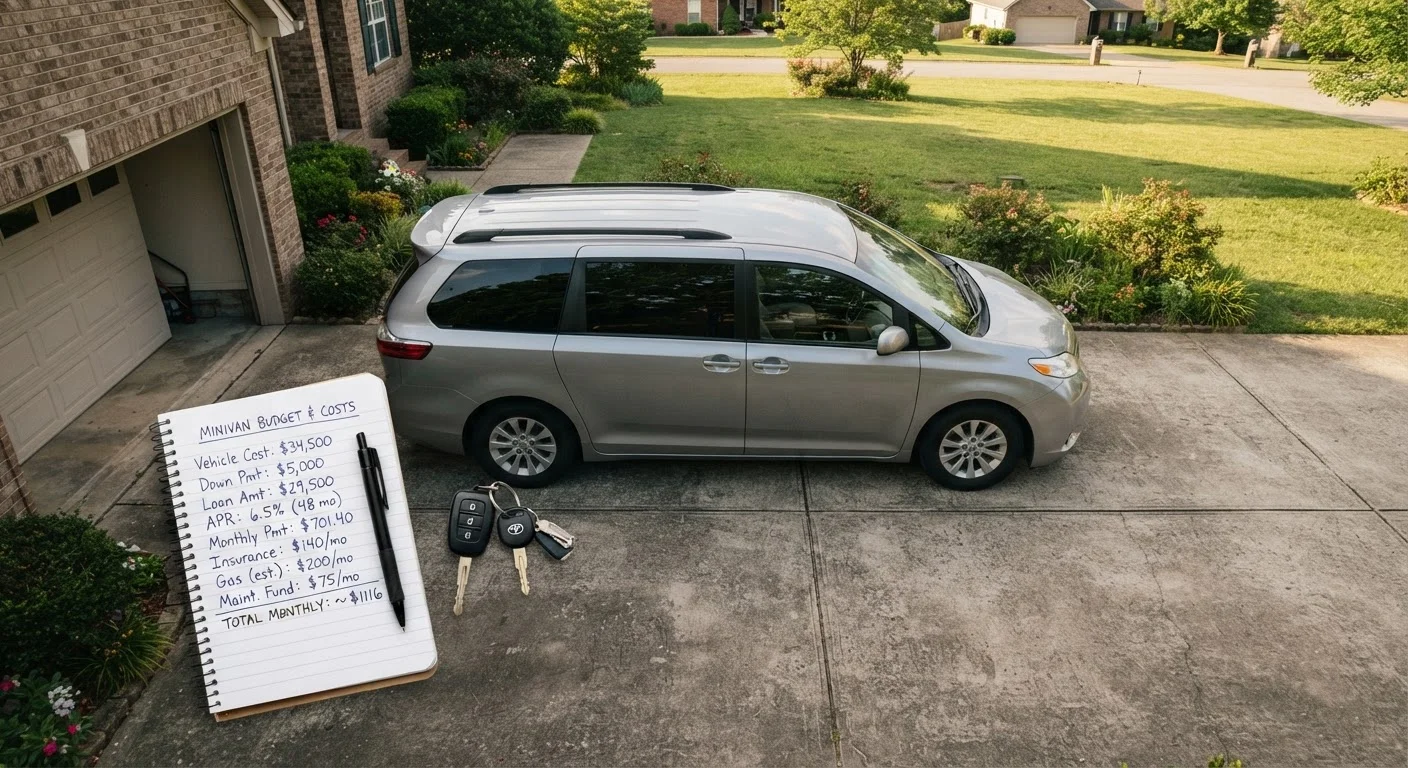
The True Cost of Buying a Car
When a family shops for a vehicle, the advertised price is just the starting point. Sales tax, registration fees, dealer documentation fees, and any add-on warranties or protection packages can add several thousand dollars to the out-the-door cost. In many states, sales tax alone on a $35,000 vehicle can exceed $2,500.
Title and registration fees vary widely by state but commonly run between $200 and $700 at purchase. If you're trading in a vehicle, the trade-in value offsets the purchase price - but understanding your trade-in's fair market value beforehand prevents you from leaving money on the table.
Families who go in without a realistic budget often discover they've spent more than intended. The patterns that push families over budget are well documented and often avoidable with advance planning.
Always calculate the out-the-door price - not the sticker price - before comparing vehicles. Ask the dealer to itemize every fee in writing so you can identify which charges are negotiable.
Documentation fees, dealer add-ons, and protection packages are frequently negotiable, yet many buyers focus only on the vehicle price and overlook these line items.
Get your insurance quote before finalizing a vehicle choice, not after. Insurance costs vary significantly by model and can shift the math on a 'less expensive' vehicle.
Some vehicles that appear affordable to purchase carry substantially higher insurance premiums due to repair costs, theft rates, or safety ratings - factors that compound over years of ownership.
Ongoing Ownership Costs to Budget For
The American Automobile Association (AAA) regularly estimates that the average annual cost of vehicle ownership in the U.S. runs well above $10,000 when all expenses are included. That figure covers fuel, insurance, maintenance, tires, registration renewal, and depreciation.
- Fuel: Varies significantly based on vehicle type, driving patterns, and local prices. A family driving 15,000 miles per year in a mid-size SUV averaging 25 mpg will spend roughly $2,000-$2,800 annually at typical gas prices.
- Insurance: Premiums depend on vehicle type, driver history, location, and coverage levels. Full-coverage policies for family vehicles commonly run $1,400-$2,400 per year.
- Maintenance and repairs: Following the manufacturer's recommended maintenance schedule - oil changes, tire rotations, brake inspections - is the most cost-effective approach. See our car maintenance hub for practical scheduling guidance.
- Tires: A full set of quality replacement tires typically costs $500-$1,200 installed, and most families replace them every 40,000-60,000 miles depending on the tire type and driving habits.
$10,000+
Average annual U.S. vehicle ownership cost
According to AAA's annual Your Driving Costs study, total ownership expenses including depreciation consistently exceed $10,000 per year for the average American driver.
~50%
Typical new-car value lost in first five years
Industry data consistently shows new vehicles lose roughly half their value within five years, making depreciation the largest single ownership expense for most families.
20%+
Recommended minimum down payment on a vehicle
Financial guidance widely cited by consumer education organizations suggests at least 20% down to stay ahead of depreciation and avoid negative equity.
Financing vs. Paying Cash: What Families Should Weigh
Most families finance a vehicle purchase rather than paying outright. A 60-month loan on a $32,000 vehicle at 7% interest adds roughly $6,000 in total interest over the loan term. Extending to 72 or 84 months lowers the monthly payment but increases total interest paid and creates the risk of being "underwater" - owing more than the car is worth.
Paying cash eliminates interest entirely and simplifies the transaction, but ties up capital that could serve other household needs. The right approach depends on each family's cash reserves, other financial obligations, and the loan rate they can qualify for. This article is general financial information - not personalized financial advice. Consult a qualified financial adviser for guidance specific to your situation.
Down payments matter: putting at least 20% down on a vehicle purchase reduces monthly payments, limits interest exposure, and keeps equity positive during the early months of ownership when depreciation is steepest.
Depreciation and Resale Value
Depreciation is the single largest cost of vehicle ownership for most families, yet it's rarely discussed at the dealership. A new vehicle typically loses 15-25% of its value in the first year and around 50% over five years, though this varies by vehicle segment and market conditions.
Buying a vehicle that is two to three years old - with the steepest depreciation already absorbed by the first owner - is a widely recognized way to reduce the cost-per-mile of ownership. Certified pre-owned programs can offer some peace of mind through limited warranty coverage, though the terms vary considerably.
Resale value is influenced by reliability reputation, color, mileage, service history documentation, and regional demand. Keeping a clean service record and maintaining the vehicle properly supports the best possible resale position when you're ready to sell or trade.
Strategies to Reduce What You Spend
Families have more control over car costs than they often realize. A few practical levers:
- Keep the vehicle longer. Every year beyond the average ownership cycle spreads purchase and acquisition costs further. Our guide on extending vehicle life without overspending on upkeep covers this in detail.
- Right-size the vehicle. A larger vehicle costs more to fuel, insure, and maintain. Choosing the smallest vehicle that genuinely meets your family's needs consistently delivers savings across every cost category.
- Shop insurance annually. Premiums are not fixed. Comparing quotes at renewal and adjusting coverage as the vehicle ages can yield meaningful savings without sacrificing necessary protection.
- Follow the maintenance schedule. Deferred maintenance reliably becomes more expensive than the maintenance itself - a neglected timing belt or low coolant level can turn into engine damage costing thousands.
- Budget for irregular costs. Set aside a monthly vehicle reserve - even $50-$75 - to absorb tires, brakes, and unexpected repairs without disrupting the household budget.
For families weighing transportation against other large household expenses, the family buying guides hub offers a broader framework for evaluating major purchase decisions.
Long Loan Terms Can Cost You More
Extending a car loan to 72 or 84 months to reduce monthly payments significantly increases total interest paid and raises the risk of owing more than the car is worth. If your vehicle needs replacement or is totaled early in a long loan term, you may owe more than your insurance payout covers. Factor total loan cost - not just the monthly payment - into your decision.
The content provided on our blog site traverses numerous categories, offering readers valuable and practical information. Readers can use the editorial team’s research and data to gain more insights into their topics of interest. However, they are requested not to treat the articles as conclusive. The website team cannot be held responsible for differences in data or inaccuracies found across other platforms. Please also note that the site might also miss out on various schemes and offers available that the readers may find more beneficial than the ones we cover.