

Why Garden Myths Are So Persistent
Gardening advice travels fast - through neighborhood conversations, social media posts, and tips passed down from grandparents. Some of it is genuinely useful. A lot of it, however, has roots in folklore rather than horticulture. The trouble is that myths often sound plausible, and when a garden thrives despite the advice (not because of it), the story gets repeated as proof.
Separating signal from noise matters because acting on bad information costs real time and money. Below, we examine some of the most common gardening misconceptions and what the evidence actually suggests. Whether you're managing a backyard vegetable plot or a container garden on the patio, getting the basics right makes everything easier. See our guide to soil health for a deeper look at the fundamentals that underpin almost every gardening decision.
Myth
Crushed eggshells add calcium to soil and are worth saving to sprinkle around plants.
Fact
Eggshells decompose extremely slowly and provide negligible calcium to soil within a typical growing season.
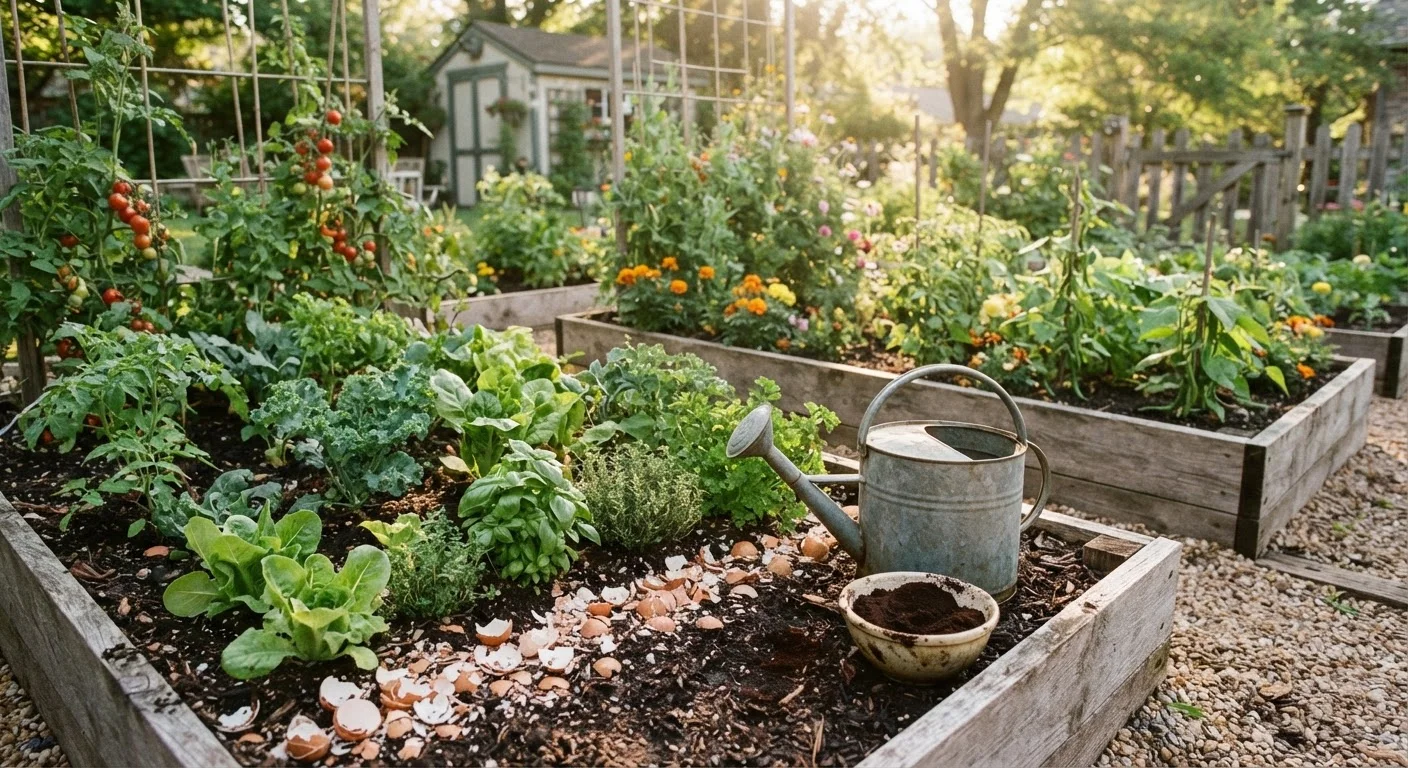
Eggshells are largely calcium carbonate, so the logic seems sound. The problem is decomposition speed. Research has shown that even finely ground shells can take years to break down enough to release usable calcium into the soil. If your soil is genuinely calcium-deficient - something a soil test can confirm - agricultural lime or gypsum works far more quickly and predictably. Saving eggshells for compost is fine, but don't count on them as a fast fix.
Myth
Coffee grounds make great fertilizer and can be spread freely across garden beds.
Fact
Coffee grounds are mildly acidic and nitrogen-rich, but overuse can suppress plant growth and rapidly lower soil pH.
Used coffee grounds do contain some nitrogen and organic matter. However, they can create a dense, hydrophobic layer when applied thickly, and their acidity accumulates faster than most gardeners expect. Acid-loving plants like blueberries may tolerate modest amounts, but most vegetables and flowers prefer a more neutral pH. A soil test before amending is always a wise first step. In moderate quantities, blending grounds into compost is a safer approach than direct application.
Myth
Gravel or pebbles at the bottom of a pot improve drainage.
Fact
A gravel layer at the base of a container actually raises the water table inside the pot, keeping roots wetter.
This is one of the most widely repeated container-gardening tips, and it runs counter to basic soil physics. Water moves through soil by capillary action and does not freely cross the boundary between fine and coarse materials until the finer layer is saturated. Adding gravel reduces the volume of usable soil while keeping the bottom of the root zone wetter for longer. Good drainage comes from using a well-structured potting mix and ensuring the pot has adequate drainage holes - not from layering materials inside.
Myth
Plants need watering every day, especially in summer.
Fact
Most established plants benefit from deep, infrequent watering rather than daily shallow watering.
Daily watering tends to keep moisture near the soil surface, encouraging roots to stay shallow rather than grow downward to find water. Shallow-rooted plants are more vulnerable to heat stress and drought. Most vegetables and ornamentals do better with a thorough soak two or three times a week - enough to wet the root zone - followed by a period of moderate drying. Factors like soil type, pot size, and weather affect the right schedule, so monitoring the soil an inch or two below the surface is a reliable guide. For more on dialing in your routine, see our overwatering guide.
Myth
Organic fertilizers are always safe to use in any amount because they're natural.
Fact
Organic fertilizers can over-fertilize and create nutrient imbalances just as synthetic ones can, especially with repeated applications.
"Natural" does not mean unlimited. Organic fertilizers like bone meal, blood meal, or fish emulsion still release nitrogen and phosphorus into the soil. Excess phosphorus in particular can interfere with a plant's ability to absorb iron and zinc, and can run off into waterways. Following label guidance and testing soil periodically helps avoid applying nutrients that aren't needed - which saves money and protects the surrounding environment.
Myth
Pruning wounds should be sealed with paint or tar to protect the tree.
Fact
Research has consistently found that wound sealants do not help trees heal and may actually trap moisture and encourage disease.
The practice of painting cut limbs with tar or commercial sealant was widely recommended for decades. Studies conducted by arborists and university extension programs have found that trees compartmentalize (seal off) wounds through their own internal processes, and that applying external coatings can interfere with this. Clean cuts made at the right location - just outside the branch collar - give trees the best chance to recover without any added product.
What to Do Instead
Replacing myth-based habits doesn't mean overhauling your entire routine. Small, evidence-informed adjustments - watering deeply but less frequently, testing soil before amending it, choosing proper pot drainage - tend to produce better results with less effort. Our watering smarter guide goes into detail on adjusting irrigation schedules to match your plants' actual needs.
If you're looking to recycle kitchen scraps productively, composting at home is a far more reliable route than scattering materials directly on beds. And once your soil is healthy, pairing it with good mulch practice pays dividends all season - the one yard habit that pays off article explains how and where to apply it.
Don't Skip Drainage Holes in Containers
No amount of layering inside a pot compensates for a container without drainage holes. Stagnant water at the root zone promotes root rot, which can kill a plant within days in warm weather. Always choose containers with at least one drainage hole, and empty saucers after heavy rain or watering so roots aren't sitting in pooled water.
The best gardening decisions start with observation: watch your plants, test your soil occasionally, and question advice that sounds too simple to be universally true. That skepticism - along with a little patience - is what separates a garden that thrives from one that just survives.
The content provided on our blog site traverses numerous categories, offering readers valuable and practical information. Readers can use the editorial team’s research and data to gain more insights into their topics of interest. However, they are requested not to treat the articles as conclusive. The website team cannot be held responsible for differences in data or inaccuracies found across other platforms. Please also note that the site might also miss out on various schemes and offers available that the readers may find more beneficial than the ones we cover.