

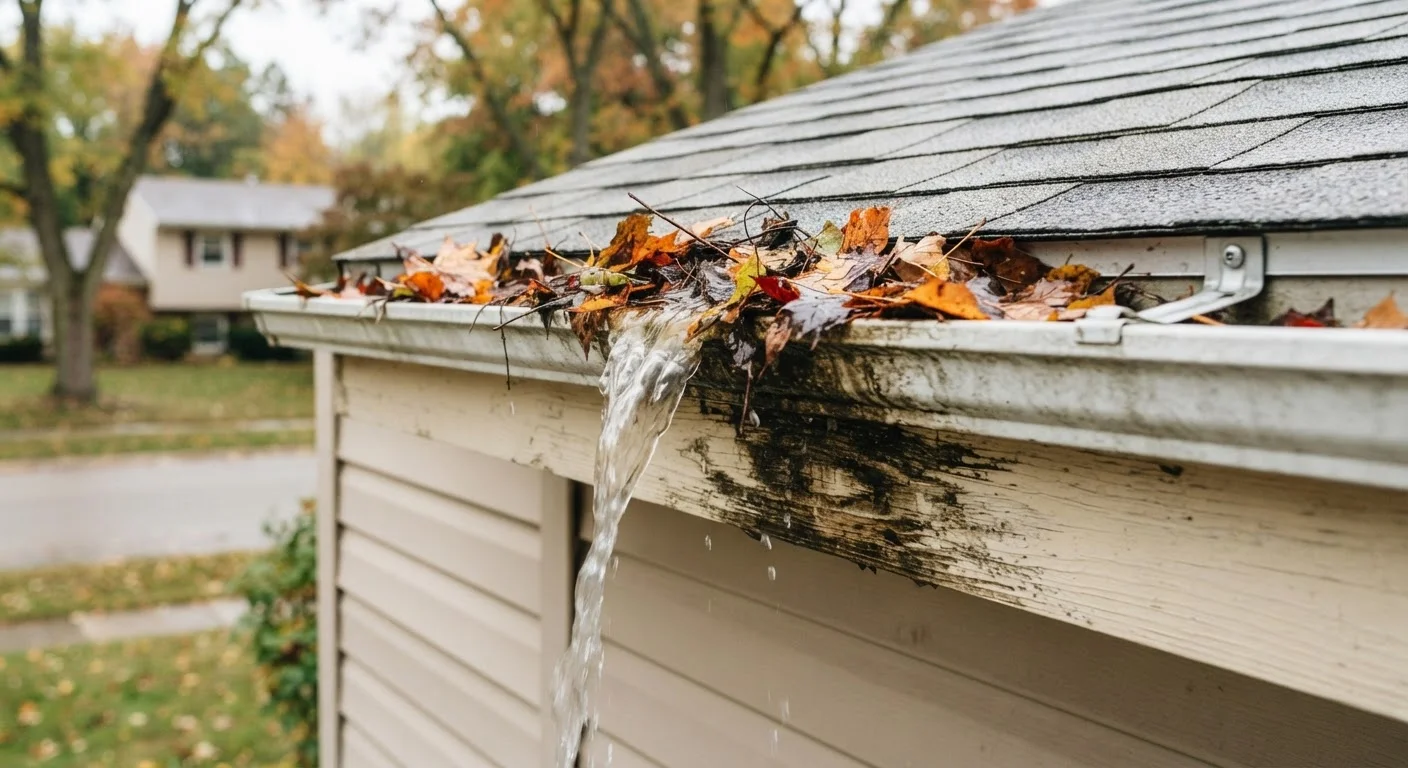
Why Gutters Matter More Than Most Families Realize
Gutters sit quietly at the edge of your roofline, and for most families, they only come to mind when something goes wrong. That invisibility is exactly the problem. A properly functioning gutter system does something remarkable: it intercepts thousands of gallons of rainwater each year and routes it safely away from the parts of your home that are most vulnerable to moisture damage.
Without working gutters, rainwater cascades freely off the roof's edge, saturating the soil directly against your foundation, soaking into wall framing, and pooling on surfaces not designed to handle standing water. Over time, that unmanaged water is one of the leading contributors to some of the most expensive repairs a homeowner can face - foundation settling, basement flooding, rotted fascia boards, and damaged siding.
Understanding your gutters as an active protective system - rather than a passive decorative trim - is the first shift that helps families stay ahead of preventable damage. For a broader view of which home systems deserve regular attention, see our guide for new homeowners.
What Happens When Gutters Fail
Gutter failures tend to follow a predictable path. Debris accumulates, water backs up, and the overflow finds the path of least resistance - which is almost never where you'd want it to go.
$10,000+
Typical foundation repair cost from water damage
According to home repair cost data compiled by industry analysts, foundation repairs driven by water intrusion often exceed this threshold, depending on severity and region.
2x/year
Recommended minimum gutter cleaning frequency
Home maintenance guidance from the American Society of Home Inspectors and similar organizations consistently recommends at least two cleanings annually for most residential properties.
70%
Of basement water problems linked to exterior drainage
Research from the University of Minnesota Extension has suggested that a majority of basement moisture issues originate from surface drainage problems, including gutters and grading.
Common consequences of neglected gutters include:
- Foundation damage: Soil oversaturation near the base of the home leads to hydrostatic pressure, which can cause cracking and settling over time.
- Basement moisture: Water that pools against foundation walls is a primary driver of basement dampness. Our article on basement dampness and drainage explains how to identify the source.
- Fascia and soffit rot: Overflowing gutters saturate the wooden boards they attach to, which can rot within a single wet season if left unaddressed.
- Exterior paint damage: Water running down siding accelerates peeling and moisture ingress - a connection explored in our piece on keeping exterior paint healthy.
- Landscape erosion: Uncontrolled runoff carves channels in garden beds and can wash away mulch and topsoil.
Small problems in this area have a way of escalating. The principles behind that pattern are covered in detail in our article on why small leaks become big problems.
How Often Should You Clean Your Gutters?
For most homes in the US, cleaning gutters twice a year - once in late spring and once in late fall after trees have shed their leaves - provides an adequate baseline. However, that frequency isn't universal.
You may need to clean more often if:
- Your home is surrounded by large deciduous trees, particularly pine trees whose needles compact quickly into gutters.
- You've had heavy storms that deposit shingle granules, twigs, or other debris.
- You notice water overflow during moderate rain, not just heavy downpours.
Homes with minimal tree cover might manage with a single annual cleaning, though a twice-yearly inspection is still worthwhile. Seasonal timing connects naturally to your broader home calendar - our season-by-season maintenance calendar includes gutter tasks alongside other priority checks.
After cleaning, run a garden hose from the far end of the gutter toward the downspout and time how quickly water moves. A slow drain signals that the gutter slope needs adjusting before the next rain season.
Gutters should slope approximately a quarter-inch for every ten feet toward the downspout. A visual check alone rarely catches subtle pitch problems that cause standing water and accelerate corrosion.
Mark your calendar for gutter checks the week after your area's peak leaf-fall - not during it. Cleaning too early means a second layer of leaves will arrive and undo your work.
Timing your fall cleaning correctly means you only need to do it once, reducing the time investment while ensuring gutters are clear before winter freeze-thaw cycles begin.
A Simple Inspection Routine Anyone Can Follow
You don't need specialist tools or experience to spot gutter problems early. A deliberate walk around your home's exterior - ideally after a rainfall - reveals most issues.
From the ground
- Look for sections of gutter that appear to sag or pull away from the fascia.
- Check for water stains running vertically down your siding, which indicate overflow points.
- Look at downspout exits - water should be flowing several feet away from the foundation, not pooling directly against it.
From a safe ladder position
If you're comfortable using a stable, properly footed ladder, a closer look lets you:
- Check for standing water in the gutter channel (indicates poor slope toward the downspout).
- Look for rust, holes, or separated joints.
- Confirm downspout connections are secure and unblocked.
For roof-adjacent checks that don't require getting up on the roof itself, see our ground-level roof inspection guide.
Repairs You Can Handle vs. When to Call a Pro
Many gutter maintenance tasks are genuinely manageable for a homeowner with basic tools and a safe ladder setup. Others carry real risk and are better handed to a licensed professional.
Generally safe for DIY
- Removing debris by hand or with a gutter scoop
- Flushing downspouts with a garden hose
- Resealing minor leaks at joints using gutter sealant
- Repositioning a mildly sagging section by tightening or replacing gutter spikes or hangers
- Attaching a downspout extension to direct water further from the foundation
When to call a professional
- Gutters that are pulling away from the roofline along a significant section - this may indicate fascia rot or structural issues that go beyond the gutter itself.
- Any work on a two-story or higher roofline where ladder stability is a genuine hazard.
- Installation of new sections or a complete gutter replacement.
- Situations where you're not confident the ladder setup is secure.
Ladder Safety Is Non-Negotiable
Never use a ladder on uneven ground, wet surfaces, or without another adult present nearby. Always maintain three points of contact and avoid leaning past the ladder's sides. For second-story gutters or steep rooflines, hiring a professional is the safer choice - not just a convenience.
Falls from ladders are one of the most common causes of serious home-related injuries. If you have any doubt about working safely at height, the cost of a professional service is worthwhile.
Gutter Guards: Do They Actually Help?
Gutter guards - mesh screens, foam inserts, reverse-curve systems, and similar products - are designed to keep debris out while allowing water through. They can be a practical investment for homes with significant leaf fall, but they come with realistic limitations families should understand before committing.
What they do well: Guards meaningfully reduce how often gutters need cleaning. For heavily treed properties, this can be the difference between four cleanings a year and one.
What they don't do: No guard system eliminates the need for maintenance entirely. Small debris - shingle granules, pine needles, seed pods - can still pass through or accumulate on top of guards. Foam-style inserts can also harbor mold if they stay damp.
If you're weighing whether guards make sense for your home, consider your tree coverage, your comfort level on a ladder, and how often you're currently cleaning. Guards work best as a complement to routine maintenance - not a substitute for it.
Fitting Gutters Into Your Yearly Home Routine
The families that avoid expensive gutter-related repairs typically aren't doing anything extraordinary - they've simply made gutter checks a predictable, seasonal habit. Two inspections a year, tied to seasonal transitions, is the most practical rhythm for most households.
Consider linking your gutter checks to other exterior tasks you're already doing: raking leaves in fall, or checking outdoor faucets and sprinkler systems in spring. Bundling tasks reduces the mental load and ensures nothing slips through.
Water management around your home is also interconnected. Poorly functioning gutters feed problems in plumbing, foundations, and landscaping. Our piece on plumbing issues families overlook shows how related systems can compound each other when maintenance slips.
Your yard's drainage also plays a role - how water moves through your garden beds and soil affects how much pressure ends up against your foundation. See our yard and garden hub for outdoor drainage and landscaping guidance.
Gutters aren't glamorous, but the half-hour it takes to clear and inspect them is one of the highest-return maintenance tasks you can do for your home's long-term health.
The content provided on our blog site traverses numerous categories, offering readers valuable and practical information. Readers can use the editorial team’s research and data to gain more insights into their topics of interest. However, they are requested not to treat the articles as conclusive. The website team cannot be held responsible for differences in data or inaccuracies found across other platforms. Please also note that the site might also miss out on various schemes and offers available that the readers may find more beneficial than the ones we cover.