

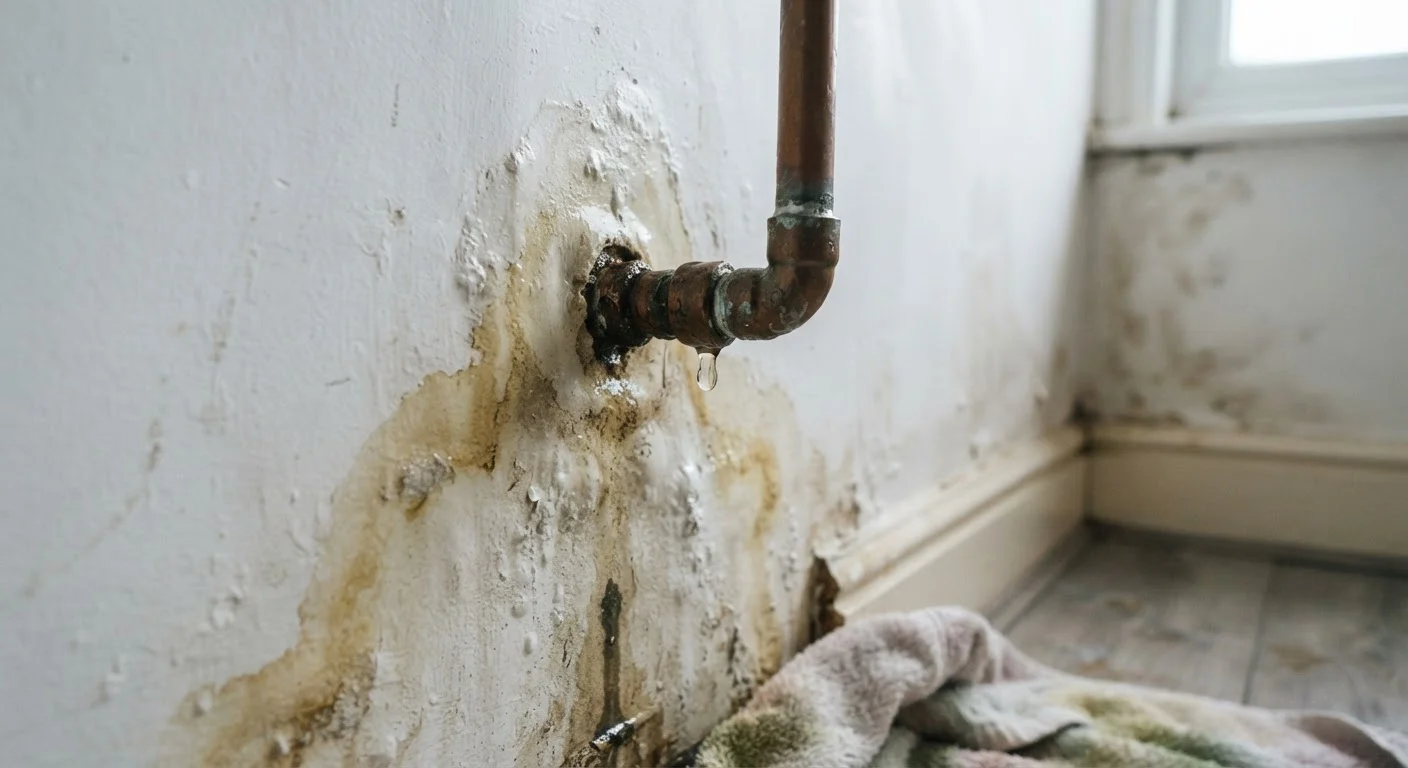
Why Small Leaks Are Deceptively Dangerous
A drip under the kitchen sink or a damp patch behind the bathroom wall rarely feels urgent. Life is busy, and these things can seem easy to defer. But water is remarkably persistent - it follows the path of least resistance, wicking into porous materials like drywall, insulation, and wood framing long before any visible damage appears on the surface.
The core problem is that water damage compounds over time. A slow drip that soaks into a wall cavity can saturate structural lumber, creating ideal conditions for wood rot and mold. Once mold establishes a colony - which can happen within 24 to 48 hours on wet organic material - remediation becomes significantly more involved than simply drying out the space.
Equally important: the damage you can see is rarely the full picture. A stained ceiling tile may signal that water has already traveled several feet from its source, soaking insulation and potentially softening framing along the way. By the time discoloration is visible, the underlying damage is usually well underway.
When to Call a Professional Immediately
If water damage involves your electrical panel, circuit breakers, or any wiring, do not enter the affected area until power has been safely shut off by a qualified electrician. Similarly, if you suspect a gas line may be involved - for example, near a water heater - leave the home and contact your utility provider. Structural damage to load-bearing walls or floors also warrants a professional assessment before any repair work begins.
The Most Common Sources of Household Water Damage
Understanding where leaks originate helps families know where to look during routine checks. Some of the most frequent culprits include:
- Plumbing connections: Joints under sinks, toilet supply lines, and washing machine hoses degrade over time. Braided hoses in particular have a limited service life and can fail suddenly.
- Roof and flashing: Damaged or missing shingles and deteriorated flashing around chimneys and vents allow water to penetrate attic spaces.
- Windows and doors: Failed caulking or damaged weather-stripping lets wind-driven rain seep into wall cavities over time.
- Foundation and basement walls: Hydrostatic pressure from poor drainage can push water through concrete. Our article on basement dampness and drainage covers this in detail.
- Gutters and downspouts: Blockages cause overflow that saturates soil along your foundation. Keeping gutters clear is one of the most effective preventive steps a homeowner can take.
Do a Quick Monthly Check Under Sinks
Place a dry paper towel under each sink cabinet and leave it for 24 hours. If it picks up any moisture, you have an active drip worth investigating. This simple habit takes seconds and catches many leaks before they reach flooring or wall framing.
Early Warning Signs Families Shouldn't Ignore
Catching water damage early can mean the difference between a straightforward repair and a costly remediation project. During a deliberate walkthrough of your home - which takes about 15 minutes - watch for these indicators:
- Musty or earthy odors in enclosed spaces like closets, under stairs, or in the basement
- Bubbling, peeling, or discolored paint on walls or ceilings
- Soft or spongy flooring, particularly near bathrooms, kitchens, or exterior doors
- Warped or buckled baseboards along exterior walls
- Rust stains or mineral deposits around pipe connections or fixtures
- An unexplained increase in your water bill, which can signal a hidden supply line leak
If you notice any of these signs, tracing the moisture source promptly - rather than monitoring it - is the more protective choice for your home and family.
24-48 hrs
Time for mold to begin growing on wet materials
According to the U.S. Environmental Protection Agency, mold can start to develop on damp surfaces within one to two days under the right conditions.
~14%
Of home insurance claims are water-damage related
Industry data consistently identifies water damage and freezing as one of the most frequent categories of homeowner insurance claims in the United States.
10x
Potential cost increase from delayed remediation
Restoration professionals generally report that remediation costs rise substantially when structural materials and mold are involved versus early-stage moisture-only issues.
What Happens When Water Damage Goes Unaddressed
The progression of unaddressed water damage follows a predictable pattern that accelerates over time. In the early stage, surface materials absorb moisture and may show discoloration. Left unchecked, organic materials like wood, drywall, and insulation begin to break down. Structural integrity can be compromised in framing members, especially in areas with repeated wet-dry cycles.
Beyond structural concerns, persistent moisture creates indoor air quality issues. Mold spores are naturally present in most homes at low levels; give them sustained moisture and organic material, and they multiply quickly. While this article is for general informational purposes and not a health guide, it's worth noting that indoor mold is widely recognized as a concern for indoor air quality - consult a qualified professional if you suspect significant mold growth in your home.
Remediation costs reflect the timeline of neglect. Surface-level fixes addressed within days are a very different financial proposition from projects that require removing walls, replacing structural lumber, or treating widespread mold colonies. Building the habit of routine inspection - similar to the logic behind routine vehicle maintenance - pays meaningful dividends over time.
“Water damage is one of those problems where time is never on your side. The cost of repair grows with every week you wait, while the source of the leak rarely fixes itself.”
— American Society of Home Inspectors, Professional association representing certified home inspectors across the United States
Frequently Asked Questions
Mold can begin colonizing damp materials within 24 to 48 hours of water exposure. Wood framing and drywall can start to deteriorate noticeably within days to weeks depending on the leak rate. The speed of damage depends on material type, ventilation, and temperature.
Look for musty or earthy odors, bubbling or peeling paint, soft spots in flooring, yellowish ceiling stains, and visible mold near baseboards or windows. Unexplained spikes in your water bill can also indicate a hidden leak.
Coverage varies significantly by policy and cause. Sudden, accidental damage - like a burst pipe - is often covered, while slow leaks from deferred maintenance typically are not. Review your specific policy and speak with your insurer to understand what applies to your situation.
Minor surface issues like repainting a small stain after fixing the source can often be DIY tasks. However, damage involving structural framing, electrical systems, or significant mold growth should be assessed by a qualified contractor or remediation professional. Never attempt electrical repairs in a water-affected area without a licensed electrician.
Yes - blocked gutters cause water to overflow and pool against your foundation, which can drive moisture into basements and crawl spaces. Keeping gutters clear is one of the simplest ways to prevent interior water intrusion. See our guide on <a href="/home-garden/home-maintenance/gutters-the-part-of-your-home-most-families-forget-until-its-too-late">gutter maintenance</a> for a practical routine.
A quick visual inspection of common problem areas - under sinks, around toilets, near the water heater, and along exterior walls - every one to three months is a practical habit. After heavy storms, check the attic, basement, and around windows as a priority.
The content provided on our blog site traverses numerous categories, offering readers valuable and practical information. Readers can use the editorial team’s research and data to gain more insights into their topics of interest. However, they are requested not to treat the articles as conclusive. The website team cannot be held responsible for differences in data or inaccuracies found across other platforms. Please also note that the site might also miss out on various schemes and offers available that the readers may find more beneficial than the ones we cover.