

Our Verdict
Basements offer real value as storage, utility, and living space, but they demand consistent moisture vigilance that other parts of a home do not. Most dampness problems are manageable with correct diagnosis and targeted maintenance - but skipping that diagnosis and applying generic fixes is where families waste money and time. With the right habits in place, a basement can remain dry and functional for decades.
Homeowners who are willing to perform seasonal checks, address drainage issues promptly, and call in licensed professionals for water intrusion that persists beyond basic fixes.
Why Basements Are Uniquely Vulnerable to Moisture
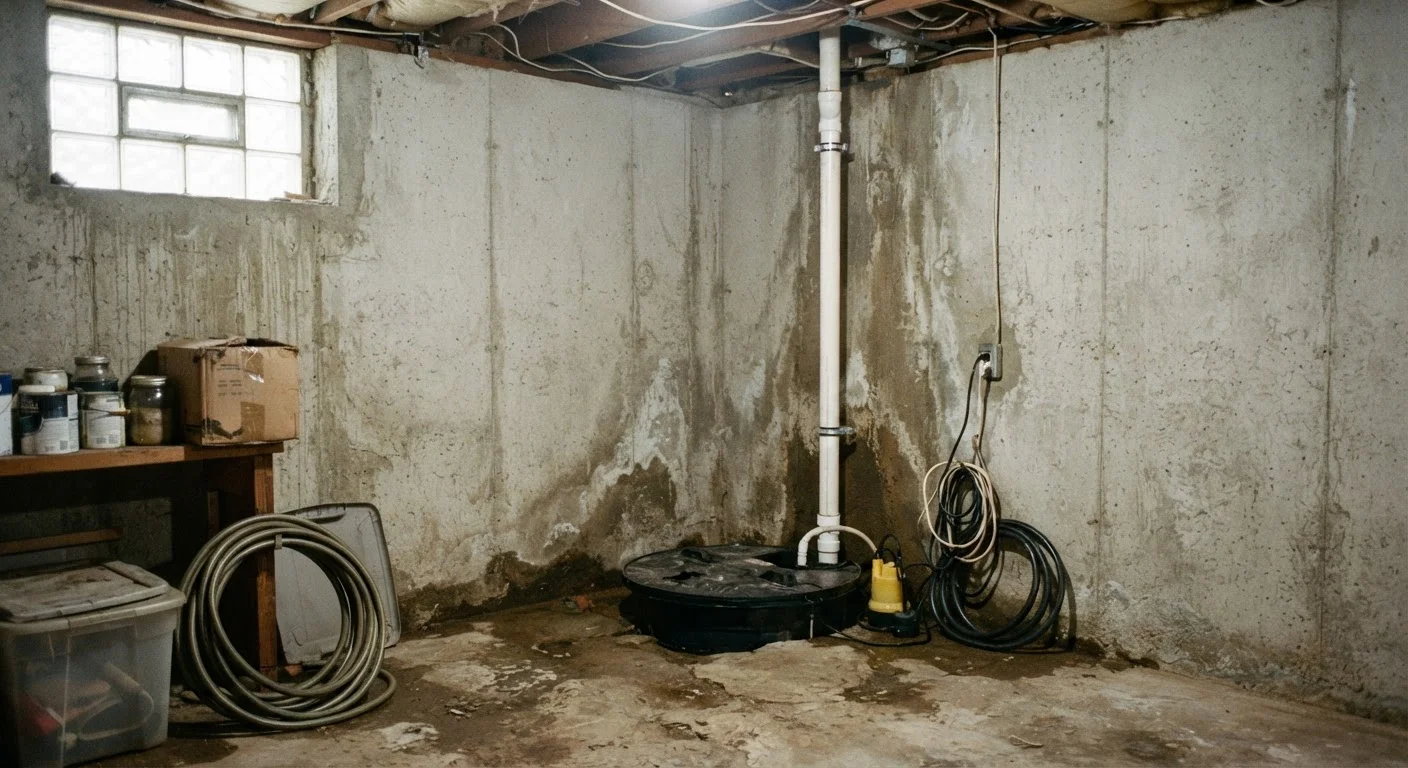
A basement sits below grade - meaning it is surrounded on multiple sides by soil that holds water. After rain or snowmelt, that water exerts hydrostatic pressure (the force of water pushing against a surface) against foundation walls and floor slabs. Even well-poured concrete is not perfectly impermeable; over time, small cracks and porous sections allow moisture to migrate inward.
There are three distinct moisture sources families should know how to tell apart:
- Condensation: Warm, humid indoor air hits cool basement surfaces and deposits moisture. You'll notice it most in summer on pipes and walls.
- Surface water intrusion: Rainwater drains toward the foundation due to poor grading or clogged gutters, then seeps through cracks at the wall-floor joint.
- Groundwater: A high water table pushes water up through the floor slab, often appearing as efflorescence (white mineral deposits) or standing water after sustained rain.
Identifying which type you're dealing with is step one. A simple test: tape a piece of plastic sheeting to a damp wall section, seal all edges, and leave it for 24 hours. Moisture on the plastic's outer face points to condensation; moisture behind it indicates water coming through the wall itself. Understanding how water intrusion escalates helps explain why early identification matters so much.
Pros: What Works in Your Favor
Basements aren't a losing battle. Several factors make moisture management genuinely achievable for most families.
Exterior drainage fixes are low-cost and high-impact
Redirecting downspouts and regrading a short soil run near the foundation can eliminate the majority of surface water intrusion without professional help.
Sump pumps reliably handle groundwater in most conditions
A properly sized sump pump with a battery backup protects finished and unfinished basements alike during heavy rainfall events when the water table rises.
Dehumidifiers resolve condensation-based dampness effectively
In homes where moisture is primarily airborne rather than structural, a basement dehumidifier running through summer months can keep surfaces dry at modest operating cost.
Early cracks are inexpensive to seal
Small, non-structural cracks caught early can be sealed with flexible polyurethane products for under $30, preventing them from becoming conduits for water entry.
Professional waterproofing systems are durable long-term solutions
Interior perimeter drainage systems, when correctly installed by licensed contractors, can manage even persistent groundwater pressure and often carry multi-year warranties.
98%
Of basements that will experience some moisture
According to the American Society of Home Inspectors, an estimated 98% of homes with basements will experience some form of water intrusion at some point.
6 ft
Minimum downspout extension from foundation
The general guidance from building professionals is to discharge downspout water at least six feet from the foundation to meaningfully reduce surface water pressure.
Good exterior drainage is the single highest-leverage action homeowners can take. Extending downspouts at least six feet from the foundation and maintaining a positive slope away from the house (roughly one inch per foot for the first six feet) redirects the majority of surface water before it reaches the foundation. Keeping gutters clear and functional is a direct part of this same system.
Cons: The Honest Challenges
Basements also come with real limitations that families should weigh realistically before investing in finishing or heavy storage use.
Root-cause diagnosis is often skipped, wasting money
Homeowners frequently apply sealant paints or run dehumidifiers against active water intrusion, treating the wrong problem and seeing the issue return within months.
Hydrostatic pressure can overwhelm standard sealants
When the water table is high and sustained, pressure against the slab and walls exceeds what any topical coating can resist, requiring engineered drainage solutions instead.
Mold can establish quickly in persistent dampness
Mold colonies can begin forming within 24 to 48 hours on wet organic materials like drywall, wood framing, and stored cardboard - common in finished basements.
Professional waterproofing carries significant upfront cost
Interior drainage systems with sump installation commonly run into thousands of dollars depending on basement size and access, making it a major household expense.
Older foundations have inherent limitations
Stone or brick foundations common in pre-1950s homes are inherently porous and may require specialized approaches that modern poured-concrete advice does not cover.
When to Call a Licensed Professional
If you observe efflorescence (white chalky deposits) covering a large wall section, water pooling on the floor slab after rain, or musty odors that persist despite dehumidification, these are signs of active groundwater intrusion that goes beyond DIY scope. A licensed waterproofing contractor or structural engineer can assess whether your foundation has cracks, failed drain tile, or a water table issue requiring an engineered solution. Do not delay: prolonged moisture weakens concrete and wood framing over time and creates conditions favorable to mold.
Interior waterproofing paints are widely marketed but widely misunderstood. They can reduce minor vapor transmission through concrete but cannot withstand active water pressure. If water is visibly seeping through a wall, paint will peel and fail within a season. The same caution applies to hydraulic cement - it plugs individual cracks but does not resolve the underlying drainage or pressure problem. For a fuller picture of maintenance tasks that matter, see the seasonal home maintenance calendar.
Maintenance That Actually Moves the Needle
Routine basement upkeep is not complicated, but it does require consistency. The following actions address root causes rather than cosmetic symptoms:
- Inspect and clean gutters twice yearly - spring and fall - to prevent overflow that drains toward the foundation.
- Check window well drains after heavy rain. Debris-clogged wells pool water directly against foundation walls at their most vulnerable points.
- Test your sump pump quarterly by slowly pouring water into the pit until the float triggers. Replace pumps older than 10 years and install a battery backup for power-outage events.
- Run a dehumidifier in summer months to keep relative humidity below 60%, which limits condensation and discourages mold growth.
- Seal visible cracks in walls or the floor-wall joint with a flexible, polyurethane-based sealant - not rigid hydraulic cement alone - to accommodate minor structural movement.
Small plumbing oversights inside the basement itself - such as a slow-draining floor drain or an unchecked water heater valve - can compound moisture problems quickly, so include those in your walkthrough.
If active water entry persists after correcting exterior drainage, a licensed waterproofing contractor should assess the foundation. Interior drainage systems (a perimeter channel draining to a sump) are a proven solution for groundwater pressure but involve significant installation work and are best evaluated by a professional who can recommend an approach matched to your specific foundation type.
The content provided on our blog site traverses numerous categories, offering readers valuable and practical information. Readers can use the editorial team’s research and data to gain more insights into their topics of interest. However, they are requested not to treat the articles as conclusive. The website team cannot be held responsible for differences in data or inaccuracies found across other platforms. Please also note that the site might also miss out on various schemes and offers available that the readers may find more beneficial than the ones we cover.