

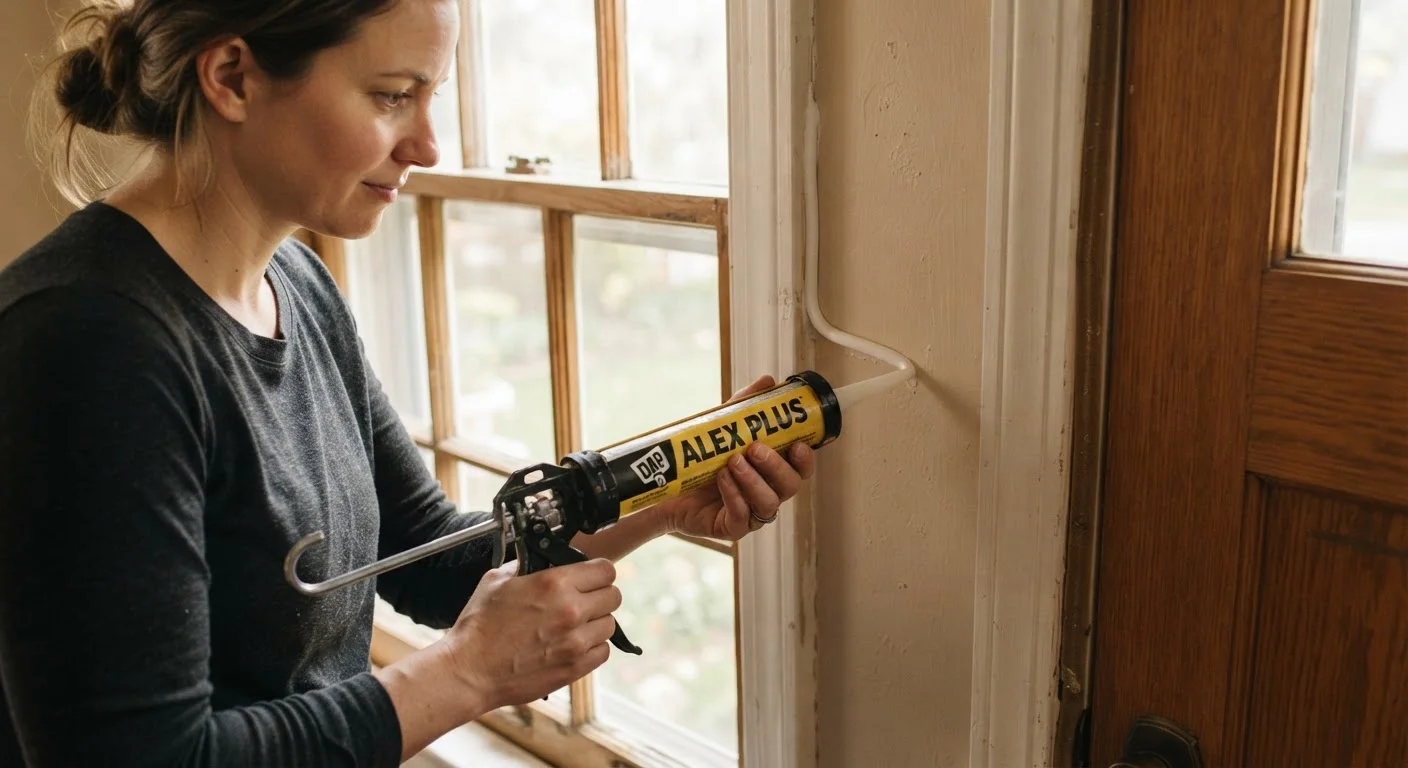
Option A
Caulking
The permanent gap-filler for stationary surfaces.
Best for: Sealing fixed joints and cracks between non-moving surfaces like window frames, baseboards, and exterior siding.
Option B
Weather-Stripping
The flexible barrier for surfaces that move.
Best for: Creating a compressible seal around movable components like doors and operable windows that open and close regularly.
Why Choosing the Wrong Sealant Causes Problems
Drafts through gaps and cracks can account for a significant portion of household energy loss, but not every gap calls for the same fix. The most common mistake homeowners make is reaching for whichever product is on hand - typically caulk - and applying it everywhere. When caulk is used around a door frame that moves with every use, it cracks within weeks and, in some cases, can temporarily bond the door shut.
The core distinction is simple: caulk is for stationary surfaces; weather-stripping is for moving ones. Understanding which you're dealing with before you start saves time, money, and frustration. Both materials work well in the right context, and a well-sealed home often needs both. Poorly sealed gaps can also let in moisture - something that compounds over time, as explored in our article on how small leaks become bigger problems.
| Criterion | Caulking | Weather-Stripping |
|---|---|---|
| Best surface type | Stationary, non-moving joints | Moving parts - doors, operable windows |
| Material flexibility | Cures firm; limited flex | Compresses and rebounds with use |
| Typical lifespan | 5-10 years (properly applied) | 1-5 years depending on material and traffic |
| Skill level required | Low to moderate | Low; most types are peel-and-stick |
| Tools needed | Caulk gun, utility knife, smoothing tool | Scissors or utility knife; screwdriver for sweeps |
| Risk of misuse | Can bond moving parts shut if misapplied | Low; easy to remove and replace |
| Where NOT to use | Around door frames, operable sashes | Fixed trim, wall-to-frame joints |
Where and How to Use Caulk
Caulk is a flexible sealant that cures into a firm, adhesive bead. It bonds two surfaces together permanently, making it the right choice wherever two fixed materials meet and need a continuous, airtight seal.
Common caulking locations
- Where window frames meet interior or exterior walls
- Baseboards, crown molding, and trim against walls
- Gaps around plumbing pipes or electrical outlets on exterior walls
- Joints between siding and trim on the home's exterior
- Around stationary skylights
For interior moisture-prone areas like kitchens and bathrooms, a silicone or silicone-blend caulk holds up better against humidity. For most exterior applications, a paintable latex-based caulk is easier to work with and finish. Our piece on bathroom surface maintenance covers how sealants perform in high-humidity spaces in more detail.
Basic application tips
- Clean and dry the surface thoroughly before starting.
- Cut the caulk tube nozzle at a 45-degree angle for better control.
- Apply in one steady pass; smooth with a dampened finger or caulk tool.
- Allow full cure time before exposing to moisture - check the product label.
Up to 30%
Home heating/cooling energy lost through gaps and cracks
The U.S. Department of Energy estimates that air leaks can account for up to 30% of a home's heating and cooling energy use.
$50-$100
Typical cost to weather-strip an exterior door
According to general home improvement estimates, a full door weather-stripping replacement is one of the most cost-effective home maintenance tasks available.
Where and How to Use Weather-Stripping
Weather-stripping creates a compressible seal - it flattens when a door or window closes and springs back when it opens. That flexibility is what makes it suitable for surfaces that move repeatedly. Rigid materials like caulk simply can't survive this repeated compression cycle.
Common weather-stripping locations
- Door frames (top and sides)
- Bottom of exterior doors (using a door sweep)
- Operable window sashes
- Attic hatch edges
- Garage doors
Common weather-stripping types
- Foam tape
- Self-adhesive, inexpensive, and beginner-friendly - best for lightweight use like windows. Compresses easily but wears out faster in high-traffic doors.
- V-strip (tension seal)
- Durable plastic or metal strip that springs outward to fill a gap. Works well on the sides of sliding windows and doors.
- Door sweeps
- Mounted to the bottom of a door, these seal the gap between the door base and the threshold - often the biggest draft point in a home.
Most weather-stripping is straightforward to replace yourself. Check for worn or flattened strips each fall before heating season. If you can slide a sheet of paper through a closed door without resistance, the stripping likely needs replacing.
Keeping up with weather-stripping is part of a broader home maintenance mindset - one that also includes gutter maintenance, another often-overlooked source of seasonal home damage.
Putting It All Together: A Quick Inspection Routine
Once a year - ideally in early fall - walk through your home with both materials in mind. On a windy day, hold a lit incense stick or a thin piece of tissue near suspect areas; if it flickers, you've found a draft source.
When to Call a Professional
Most caulking and weather-stripping projects are well within DIY range. However, if you notice significant gaps around structural framing, persistent drafts near electrical panels, or gaps tied to settling or foundation movement, it's worth having a qualified contractor or energy auditor assess the situation. Gaps in these areas may indicate deeper issues that surface sealants won't fully address.
For stationary gaps you find along trim, siding, or wall penetrations, reach for caulk. For anything that opens and closes - doors, operable windows, attic hatches - check the weather-stripping first. Replace what's worn and add where it's missing entirely.
Homes with basements deserve extra attention along the sill plate - the horizontal framing that sits on top of the foundation wall. This area is a frequent source of hidden drafts and moisture intrusion. See our guide on basement dampness and drainage for more on protecting that vulnerable zone.
Neither project requires advanced skills or expensive tools. A tube of caulk, a caulk gun, and an adhesive weather-stripping kit cover the majority of what most homes need. The investment in time is small; the payoff in comfort and reduced energy use can be meaningful.
The content provided on our blog site traverses numerous categories, offering readers valuable and practical information. Readers can use the editorial team’s research and data to gain more insights into their topics of interest. However, they are requested not to treat the articles as conclusive. The website team cannot be held responsible for differences in data or inaccuracies found across other platforms. Please also note that the site might also miss out on various schemes and offers available that the readers may find more beneficial than the ones we cover.