

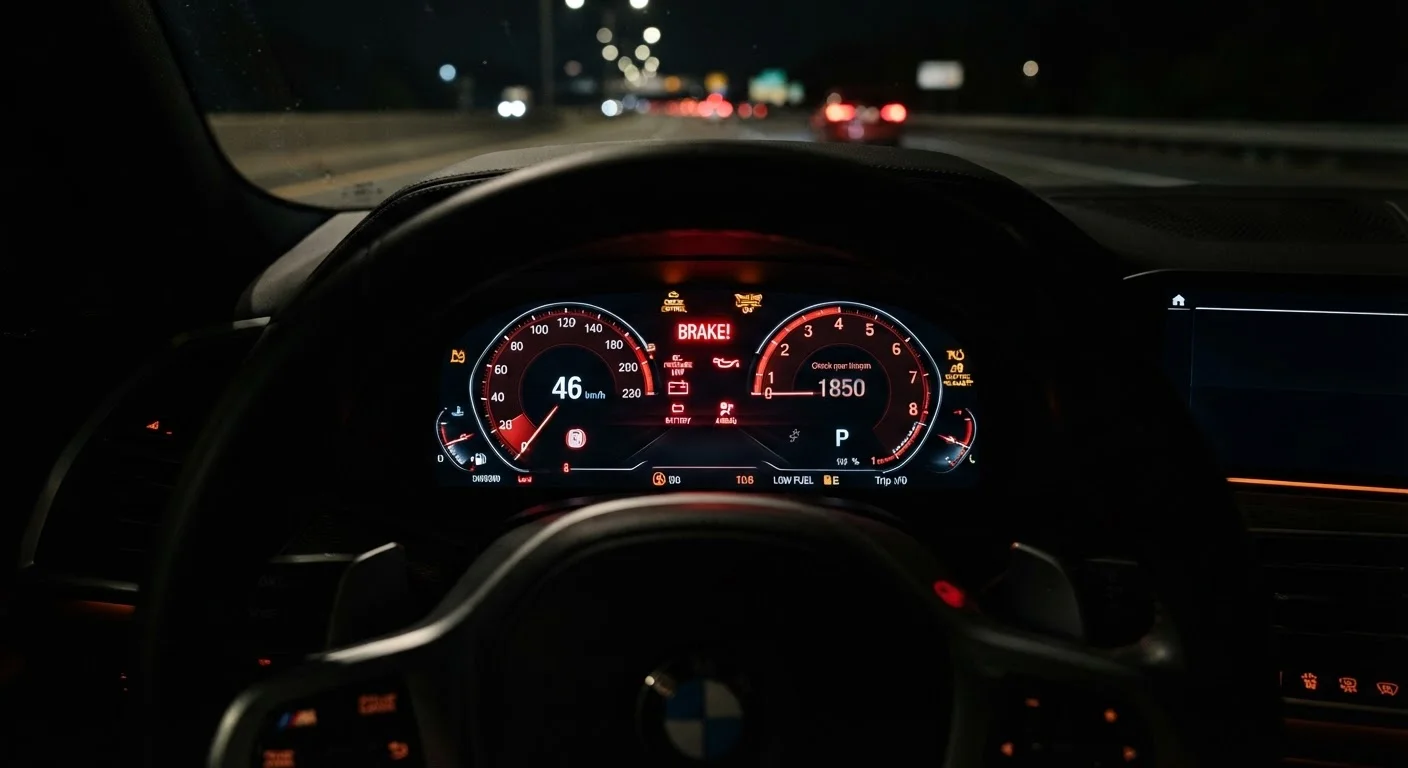
How Dashboard Warning Lights Are Organized
Most modern vehicles use a color-coded system to communicate urgency. Understanding the color hierarchy is the fastest way to know how to respond before you've even looked up the symbol.
| Color: Red | Stop and act immediately |
| Color: Amber / Yellow | Schedule service within days |
| Color: Green / Blue | Informational - system is active |
| Most misunderstood light | Check Engine (can be minor or serious - always scan for codes) |
| Fastest fix to check first | TPMS alert - verify tire pressure with a manual gauge |
| Best reference for your car | Owner's manual - symbols vary by manufacturer |
- Red lights signal a serious or potentially dangerous condition - pull over safely and address it immediately, or have the vehicle towed if necessary.
- Amber or yellow lights indicate a system requiring attention soon, but typically not a roadside emergency. Schedule service within a few days.
- Green or blue lights are generally informational - confirming that a feature (like high beams or turn signals) is active.
Your vehicle's owner's manual remains the definitive reference for your specific make and model. Symbols and their meanings can vary by manufacturer, so if you see an unfamiliar icon, the manual should be your first stop - not guesswork.
Red Lights: Stop and Act Now
These warnings indicate conditions that can damage your engine, compromise safety, or both. Don't delay.
OBD-II / Fault Code
On-Board Diagnostics II is a standardized system in vehicles manufactured after 1996 that stores fault codes when a problem is detected. A technician uses a scanner tool to read these codes and identify the issue triggering a warning light.
TPMS
Tire Pressure Monitoring System - a sensor-based system that alerts you when tire pressure drops below a safe threshold. It does not replace a manual pressure check with a gauge.
ABS
Anti-lock Braking System - prevents wheels from locking up during hard braking, helping the driver maintain steering control. A fault in the system doesn't disable normal brakes but removes this protective function.
Coolant / Antifreeze
A fluid that circulates through the engine to regulate temperature. Low coolant levels are a common cause of the engine overheating warning light.
Charging System
The combination of alternator and battery that keeps your car's electrical systems powered while the engine runs. A failing alternator is the most frequent cause of the battery warning light.
Oil Pressure
The force that keeps engine oil circulating through moving parts. Critically low oil pressure - distinct from low oil level - means oil is not reaching key components and engine damage can occur rapidly.
- Oil Pressure Warning (oil can icon)
- Indicates dangerously low oil pressure. Continuing to drive can cause catastrophic engine damage within minutes. Stop safely, turn off the engine, and check oil levels before doing anything else. If oil is full, the issue may be a pump failure - call for assistance.
- Engine Temperature Warning (thermometer in water)
- Your engine is overheating. Pull over, turn off the engine, and let it cool. Do not remove the radiator cap while the engine is hot. This can signal low coolant, a failed water pump, or a blocked radiator.
- Battery / Charging System Warning (battery icon)
- The electrical charging system is failing. Your vehicle is running on battery reserve only. Reduce electrical load (turn off AC, radio) and drive directly to a service center - the car may stall without warning.
- Brake System Warning (exclamation mark in circle)
- If the parking brake is not engaged, this signals a problem with the brake hydraulic system or low brake fluid. Have the vehicle inspected before driving further.
See routine maintenance tasks that protect against costly failures to understand how regular upkeep keeps these emergencies from occurring.
Amber Lights: Schedule Service Soon
Amber warnings mean your car has detected something worth fixing, but most won't leave you stranded today. That said, don't ignore them indefinitely - some can escalate.
Check Engine Light: Don't Panic, But Don't Wait
A steady check engine light is worth investigating within a week; a flashing check engine light signals an active misfire that can damage the catalytic converter - reduce speed and load immediately and get to a shop the same day. Many auto parts retailers will read OBD-II fault codes for free, giving you a starting point before speaking to a mechanic.
- Check Engine Light (engine silhouette) - One of the most misunderstood lights on the dash. It can range from a loose gas cap to a misfiring cylinder. A diagnostic scan at any qualified shop will read the stored fault codes and identify the cause. Don't assume it's minor and don't assume it's catastrophic - get it checked within a week.
- Tire Pressure Monitor (TPMS - flat tire with exclamation mark) - One or more tires are below the recommended pressure. Check all four tires manually with a gauge. For more on this, see understanding tyre pressure and tread depth.
- Traction Control / Stability Control (car with squiggly lines) - When flashing, the system is actively working to prevent a skid. If it stays on, the system may be disabled or have a fault - have it checked.
- Service Due / Oil Change Reminder - A maintenance interval alert, not a mechanical failure. Schedule your next service. Review your family car's full maintenance schedule to stay on top of all intervals.
- ABS Warning (ABS in circle) - The anti-lock braking system has a fault. Standard braking still works, but ABS may not activate during hard stops - drive carefully and have it inspected promptly.
A Note on Modern Driver Assistance Warnings
Newer vehicles include warnings tied to driver assistance systems - lane departure alerts, forward collision warnings, and blind-spot indicators. These may illuminate if sensors are blocked by dirt, ice, or after a minor impact. Understanding what these systems do and don't do helps you interpret their alerts correctly and avoid over-relying on them.
If an assistance system warning appears after a car wash or in cold weather, clean the relevant sensors (typically located in the grille, windshield, or rear bumper) and see if the light clears. A persistent warning after cleaning warrants a shop visit.
Keeping a clear service history also helps technicians diagnose recurring warning light patterns faster - learn why a complete service history matters for reliability and diagnostics.
The content provided on our blog site traverses numerous categories, offering readers valuable and practical information. Readers can use the editorial team’s research and data to gain more insights into their topics of interest. However, they are requested not to treat the articles as conclusive. The website team cannot be held responsible for differences in data or inaccuracies found across other platforms. Please also note that the site might also miss out on various schemes and offers available that the readers may find more beneficial than the ones we cover.