

Why Seasonal Maintenance Pays for Itself
Most breakdowns aren't random - they're predictable. Temperature swings push already-stressed components past their limits, and vehicles that haven't been prepped for the season are the ones that leave families stranded. Whether you're heading into summer heat or winter cold, a focused set of checks done twice a year gives your car's systems the best chance of handling what's coming.
Skipping seasonal prep doesn't save money - it defers costs and adds risk. The maintenance tasks that prevent expensive repair bills tend to be the inexpensive, easy-to-overlook ones. Seasonal transitions are the ideal time to run through them systematically.
Getting Ready for Summer: Heat Is Harder on Cars Than Most Families Think
High temperatures accelerate wear on rubber components, strain the cooling system, and drain batteries that are already weakened. Before summer heat peaks, run through these checks:
- Coolant system: Verify the coolant level and concentration. A 50/50 mix of coolant and distilled water typically protects up to around 265°F - well above road temperatures, but summer can push engine temps higher than expected in traffic or towing situations.
- Belts and hoses: Squeeze rubber hoses; they should feel firm and consistent, not spongy or brittle. Check belts for cracking or fraying. Heat accelerates rubber degradation noticeably.
- Air conditioning: Test the A/C well before the first hot week. Recharging refrigerant or replacing a cabin air filter is straightforward; diagnosing a failed compressor in July is not.
- Tires: Heat increases tire pressure - check levels when tires are cold and refer to the sticker on the driver's door jamb, not the maximum listed on the sidewall.
Don't Set Your A/C and Forget It
Running the A/C for at least 10 minutes once a week - even in cooler months - keeps the compressor seals lubricated and helps you detect problems before summer. A refrigerant recharge is far cheaper than a compressor replacement. If you notice the air isn't as cold as it used to be, have the system inspected rather than waiting.
Getting Ready for Winter: Cold Attacks the Systems Families Rely on Most
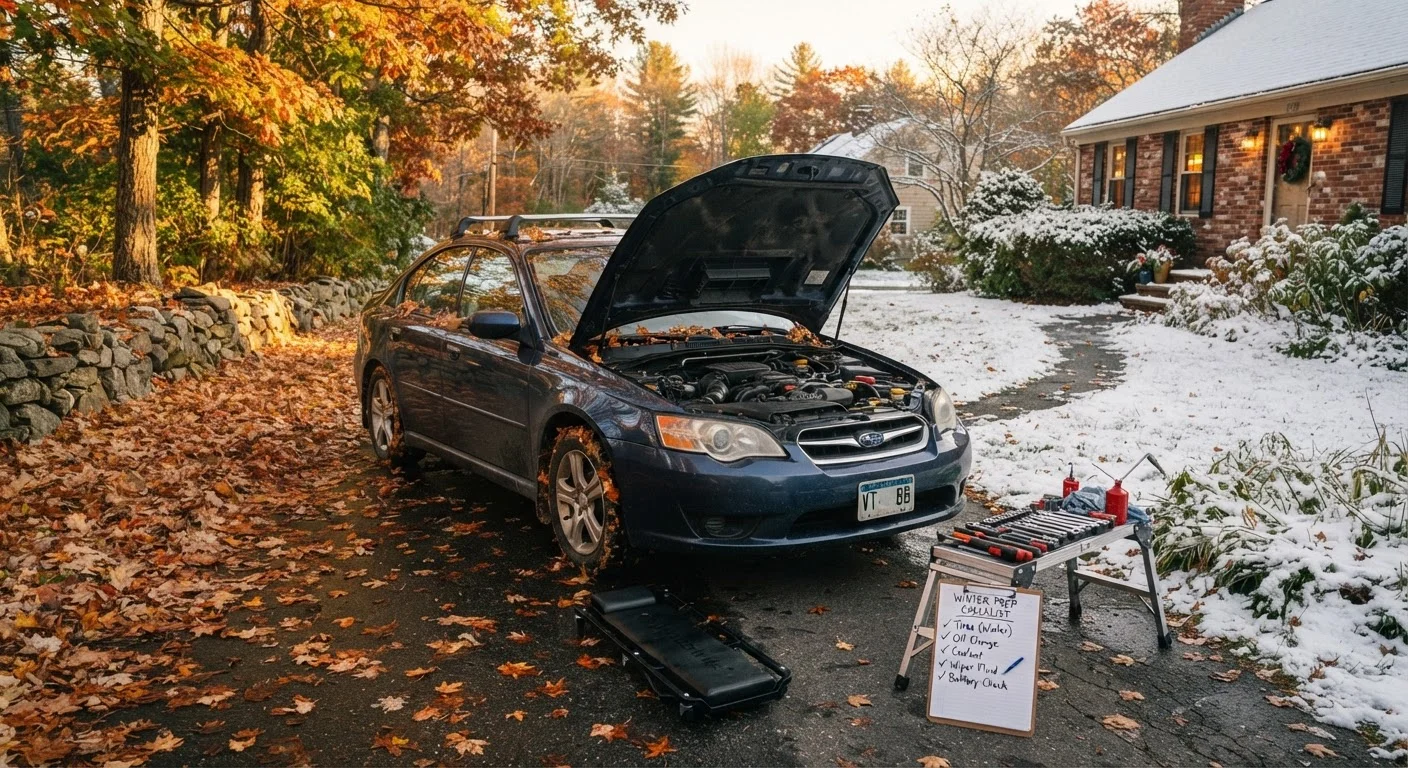
Cold weather compresses battery capacity, thickens motor oil, reduces tire pressure, and turns small windshield chips into full cracks overnight. A pre-winter check is one of the highest-value maintenance windows of the year.
Up to 50%
Drop in battery cranking power in extreme cold
General industry guidance indicates that very cold temperatures can cut a battery's available power by up to half compared to mild conditions.
1 PSI
Tire pressure lost per 10°F temperature drop
This figure reflects the standard relationship between ambient temperature and tire inflation, widely cited by tire manufacturers and safety organizations.
- Battery: A battery that starts fine in September may struggle at 20°F. Most auto parts stores will load-test a battery for free. If it's more than three years old and showing any weakness, replacement before winter is worth serious consideration.
- Wipers and washer fluid: Standard washer fluid freezes. Swap in a winter-rated fluid rated for low temperatures, and check wiper blade condition. Streaking blades in an ice storm are a genuine safety concern - see our look at surprisingly overlooked maintenance items for more context.
- Tires: All-season tires lose grip below about 45°F. If you live somewhere that regularly sees ice or snow, dedicated winter tires make a measurable difference. Check tread depth with a quarter - if Lincoln's head is fully visible, it's time to replace.
- Antifreeze/coolant: Have the freeze protection level checked - it should protect well below the lowest expected temperature in your area.
Adapting your driving to match conditions is just as important as vehicle prep. Our guide on driving in adverse weather and road conditions covers the behavioral side of winter safety.
Quick Wins You Can Act on Right Now
Not everything on a seasonal checklist requires a shop visit. Several high-impact tasks take less than 20 minutes and need only basic tools. Use these as your starting point before booking anything more involved.
For families working with a tighter budget, prioritizing these self-serviceable items first - then tackling shop work in order of urgency - is a practical approach. The strategies for keeping a family car maintained on a budget article walks through that prioritization in more detail.
This article is for general informational purposes. Always consult your vehicle's owner's manual and a qualified mechanic for guidance specific to your make, model, and driving conditions.
The content provided on our blog site traverses numerous categories, offering readers valuable and practical information. Readers can use the editorial team’s research and data to gain more insights into their topics of interest. However, they are requested not to treat the articles as conclusive. The website team cannot be held responsible for differences in data or inaccuracies found across other platforms. Please also note that the site might also miss out on various schemes and offers available that the readers may find more beneficial than the ones we cover.