

Why Weather Changes Everything Behind the Wheel
Most drivers understand, in theory, that bad weather calls for more caution. In practice, though, many families underestimate just how dramatically rain, ice, fog, and wind alter how a vehicle behaves. Tyre grip drops, visibility shrinks, and stopping distances lengthen - often far faster than people expect.
For parents, the stakes are clear: a car full of children means every safety margin matters more. The adjustments below are grounded in physics and widely accepted driving guidance. None require special equipment or advanced skill - just deliberate habit changes that can be made right now. For a broader look at the habits that quietly raise risk, see common risky driving habits families should be aware of.
Rain: Increase Following Distance and Slow Down Early
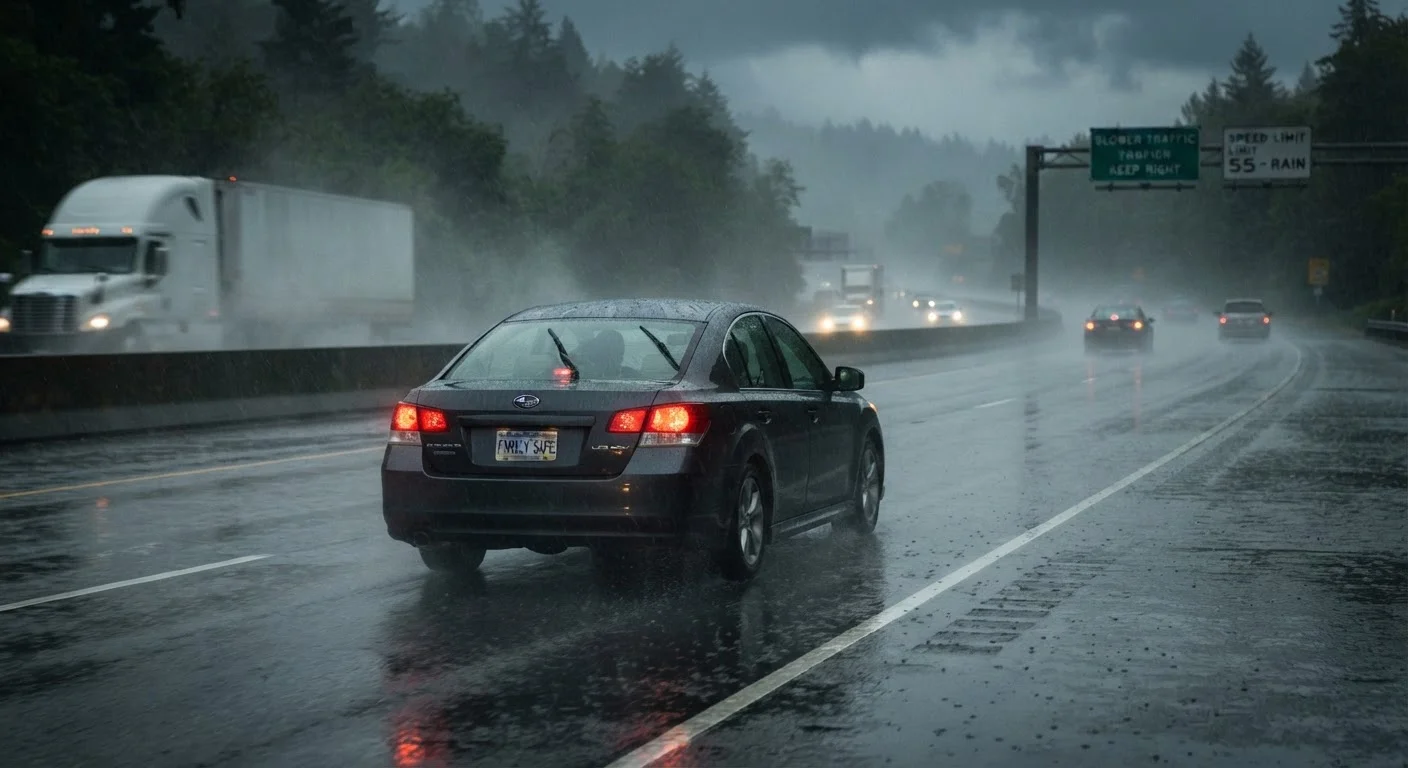
Water on the road reduces tyre friction substantially. At highway speeds on a wet surface, stopping distances can be two to three times longer than on dry pavement - meaning the two-second rule you follow in dry conditions isn't enough. Extend your gap to at least four seconds in moderate rain, more in heavy downpours.
Brake gently and progressively rather than jabbing the pedal. If your vehicle lacks automatic emergency braking, be especially deliberate. Avoid cruise control in wet conditions - it can prevent you from naturally lifting off the throttle when grip starts to fade. Turn headlights on whenever wipers are running; in many US states this is required by law and it significantly increases your visibility to other drivers.
On wet roads, stopping distances can be two to three times longer than on dry pavement.
Fog: Use Low Beams, Not High Beams, and Drop Speed Significantly
High-beam headlights in fog actually make visibility worse - the light bounces off water droplets and creates glare that obscures the road ahead. Switch to low beams (and use rear fog lights if your vehicle has them) so other drivers can see you without being blinded.
Reduce speed far more than feels instinctive. Fog can make it impossible to react to hazards - a stopped vehicle, a pedestrian, a bend - until you're dangerously close. Drive at a speed at which you can stop comfortably within the distance you can actually see. Pull off the road safely if fog becomes dense enough to make driving genuinely dangerous, and use hazard lights to signal your position. For how fog compounds with darkness, see our piece on night driving with the family.
High beams in fog create glare that reduces rather than improves visibility.
Ice and Snow: Gentle Inputs, More Space, Slow Earlier
On ice, traction can disappear almost entirely. The guiding principle is gentleness: smooth, gradual steering inputs; slow, progressive braking; light acceleration. Jerky movements are far more likely to induce a skid than steady ones.
Increase following distance to eight to ten seconds or more. Begin slowing well before junctions, bends, and hills - coasting off the throttle early is more effective than braking late on a slippery surface. Bridges and overpasses freeze before road surfaces because cold air circulates underneath; treat them with particular caution. If you do enter a skid, steer gently in the direction you want to go and avoid stamping on the brakes. Understanding stopping distances on ice is central to safe winter driving - our explainer on speed, space, and stopping covers the physics clearly.
Bridges and overpasses freeze before road surfaces - treat them with extra caution.
Crosswinds: Ease Off the Throttle and Grip the Wheel Firmly
Strong side winds - particularly on open roads, bridges, or when passing large trucks - can push a vehicle sideways unexpectedly. Higher-profile vehicles like SUVs and minivans are more susceptible than low-slung cars. The correction is to ease off the throttle (which lowers your speed and gives tyres more lateral grip) and hold the wheel with both hands, with a firm but not rigid grip.
Pay attention to wind warnings in weather forecasts before long trips, especially in exposed areas. Passing or being passed by large trucks on a windy day creates a brief but significant buffeting effect - anticipate it rather than react to it. Reduce speed proactively in exposed stretches rather than waiting until the car is moving sideways.
Easing off the throttle in crosswinds lowers speed and improves the tyres' lateral grip.
Heavy Rain and Flash Flooding: Never Drive Through Standing Water
Flooded roads are among the most underestimated hazards in poor weather. Just six inches of moving water can knock a person over; one to two feet can carry away most passenger vehicles. Road surfaces beneath floodwater are invisible - the road may be damaged or missing entirely.
If you encounter standing or flowing water across the road, do not attempt to cross unless you can see the surface clearly and are confident of the depth. Turn around and find an alternate route. This is especially important with children in the vehicle: evacuation from a submerged car is difficult for adults and far harder for young passengers. After driving through unavoidable shallow water, test your brakes gently - wet brake components can reduce stopping power momentarily.
Just one to two feet of moving water is enough to carry away most passenger vehicles.
Building These Habits Into Every Journey
The adjustments above work best when they become automatic rather than reactive. Before each trip in uncertain weather, take thirty seconds: check your mirrors, confirm headlights are on if visibility is reduced, and mentally commit to a larger following gap. That brief pause resets your expectations before any problem arises.
Check Conditions Before You Leave
Before any trip in uncertain weather, check a reliable weather service for updated road condition reports in your area. Many state departments of transportation provide real-time road condition maps online. A two-minute check before departure can help you choose a safer route or delay travel until conditions improve.
Vehicle condition also plays a role. Worn tyres, degraded wiper blades, and underinflated tyres all amplify the effects of wet or icy roads. Staying on top of seasonal maintenance - covered in detail in our guide to seasonal car care - keeps your vehicle capable of responding when conditions deteriorate. Weather-related driving sits within a wider framework of family road safety; the Family Road Safety Playbook is a useful starting point for reviewing habits across the board.
The content provided on our blog site traverses numerous categories, offering readers valuable and practical information. Readers can use the editorial team’s research and data to gain more insights into their topics of interest. However, they are requested not to treat the articles as conclusive. The website team cannot be held responsible for differences in data or inaccuracies found across other platforms. Please also note that the site might also miss out on various schemes and offers available that the readers may find more beneficial than the ones we cover.