

Why Ordinary Habits Carry Real Risk
Most families don't think of themselves as distracted drivers. They think of distracted driving as something other people do - texting at speed, eating behind the wheel. The more common pattern is quieter: a half-second glance to the back seat, a quick tap on the sat-nav, a familiar stretch of road driven without much conscious thought.
These micro-distractions accumulate. Each one might be individually minor, but on a school run with unpredictable pedestrians or a motorway merge at 65 mph, even a brief lapse matters. The goal here isn't to make driving feel stressful - it's to make the invisible visible so you can make deliberate choices.
For a broader framework on building safer habits across every type of family journey, the Family Road Safety Playbook is a practical starting point.
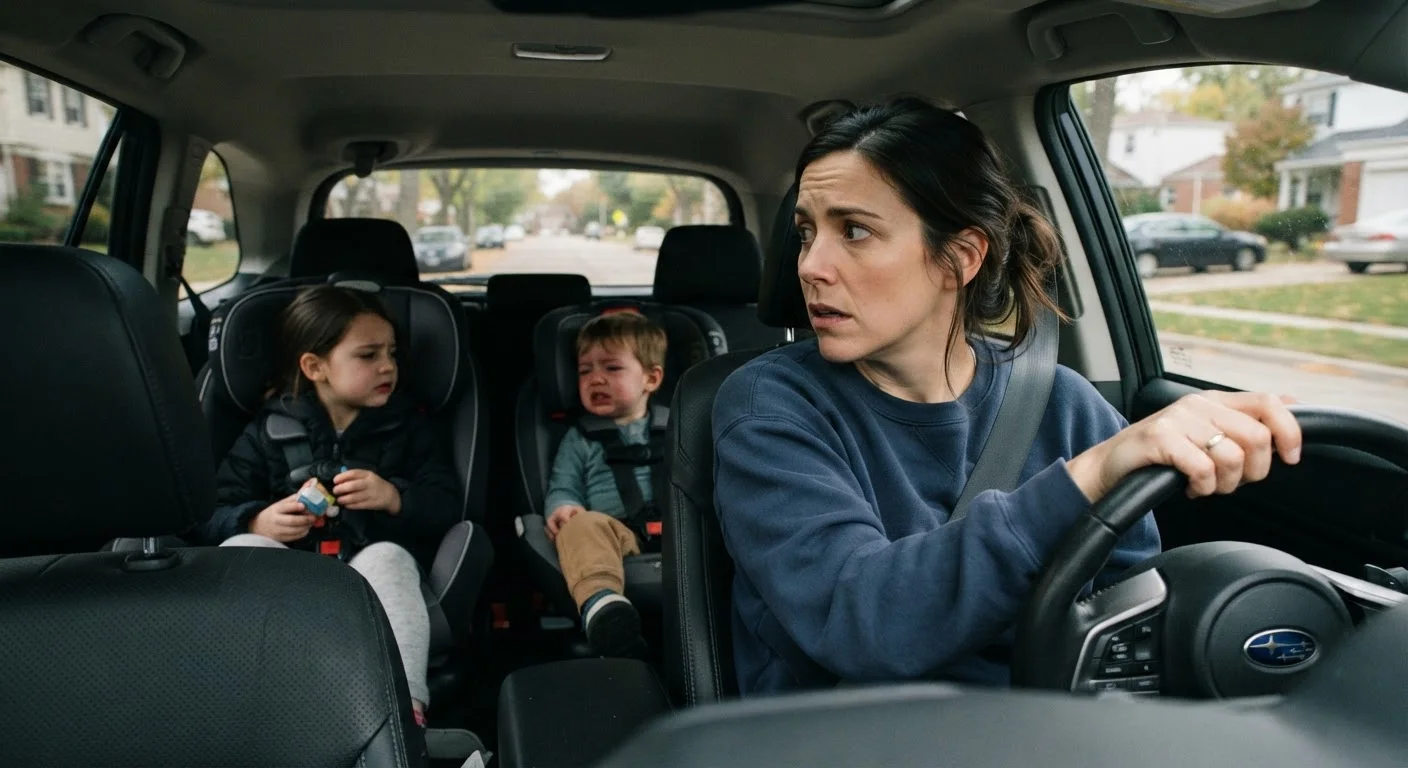
Turning around to address children in the back seat while the vehicle is moving.
Why it happens: It feels natural and urgent - a crying toddler or squabbling siblings demand attention. Parents instinctively respond to what they hear, not where they're looking.
Adjusting the navigation system, radio, or climate controls while actively driving.
Why it happens: Modern dashboards pack many functions into touchscreens that require visual and manual interaction. Drivers underestimate how long these adjustments take.
Allowing following distance to shrink below a safe gap, especially on familiar routes.
Why it happens: Habit and mild impatience compress spacing over time. A loaded family vehicle with extra weight also takes longer to stop - a factor most drivers don't consciously adjust for.
Treating a familiar route as low-risk and reducing overall alertness.
Why it happens: Repetition breeds autopilot. The school run or daily commute can feel so routine that the brain processes it with less active engagement - a well-documented effect sometimes called 'highway hypnosis.'
Skipping a pre-departure check when running late with children in tow.
Why it happens: Time pressure from school drop-offs, appointments, or sport pickups pushes families into the car without verifying mirrors, seat positioning, or seatbelt fit for each child.
Relying on driver assistance features as a substitute for active attention.
Why it happens: Lane-keeping assist and automatic emergency braking are genuinely useful, but their names suggest a capability they don't fully deliver. Drivers can develop overconfidence in these systems.
Building Habits That Actually Stick
Knowing a habit is risky doesn't automatically change it - especially under the time pressure of family life. What works better than willpower is structure: pre-trip routines, clear family rules about in-car behavior, and honest conversations about what the driver needs from passengers.
Eyes Off Road for Two Seconds Doubles Crash Risk
Research from the National Highway Traffic Safety Administration consistently links visual distraction lasting two or more seconds to a sharp increase in crash risk. Glancing at a phone, reaching into the back seat, or reading a navigation screen can each exceed that threshold without the driver realizing it. With children in the vehicle, the stakes of any collision are higher - and the distractions more frequent.
Children old enough to understand can be active participants in family road safety. Explaining why the driver doesn't turn around, or why phones go in a bag before the engine starts, helps build a culture in the car rather than a list of rules to enforce. That same principle applies when teenagers approach driving age - the habits they observe now shape their own future behavior. The conversations worth having before a teen gets behind the wheel can start well before their first lesson.
If your family makes longer journeys, the dynamics shift - fatigue, restlessness, and time pressure all interact. Planning a family road trip with safety as the foundation covers how to manage those specific risks.
Hands-Free Doesn't Mean Risk-Free
Many parents assume a Bluetooth call or voice-activated navigation removes driving risk. Research suggests that cognitive load from conversation - even without holding a device - measurably slows reaction times. For a deeper look at what the evidence shows, see what road safety research says about cognitive distraction.
The habits that quietly make family driving more dangerous are fixable - not through constant vigilance, but through better defaults. Small, consistent changes at the start of each trip are far more effective than trying to manage risk in the moment.
The content provided on our blog site traverses numerous categories, offering readers valuable and practical information. Readers can use the editorial team’s research and data to gain more insights into their topics of interest. However, they are requested not to treat the articles as conclusive. The website team cannot be held responsible for differences in data or inaccuracies found across other platforms. Please also note that the site might also miss out on various schemes and offers available that the readers may find more beneficial than the ones we cover.