

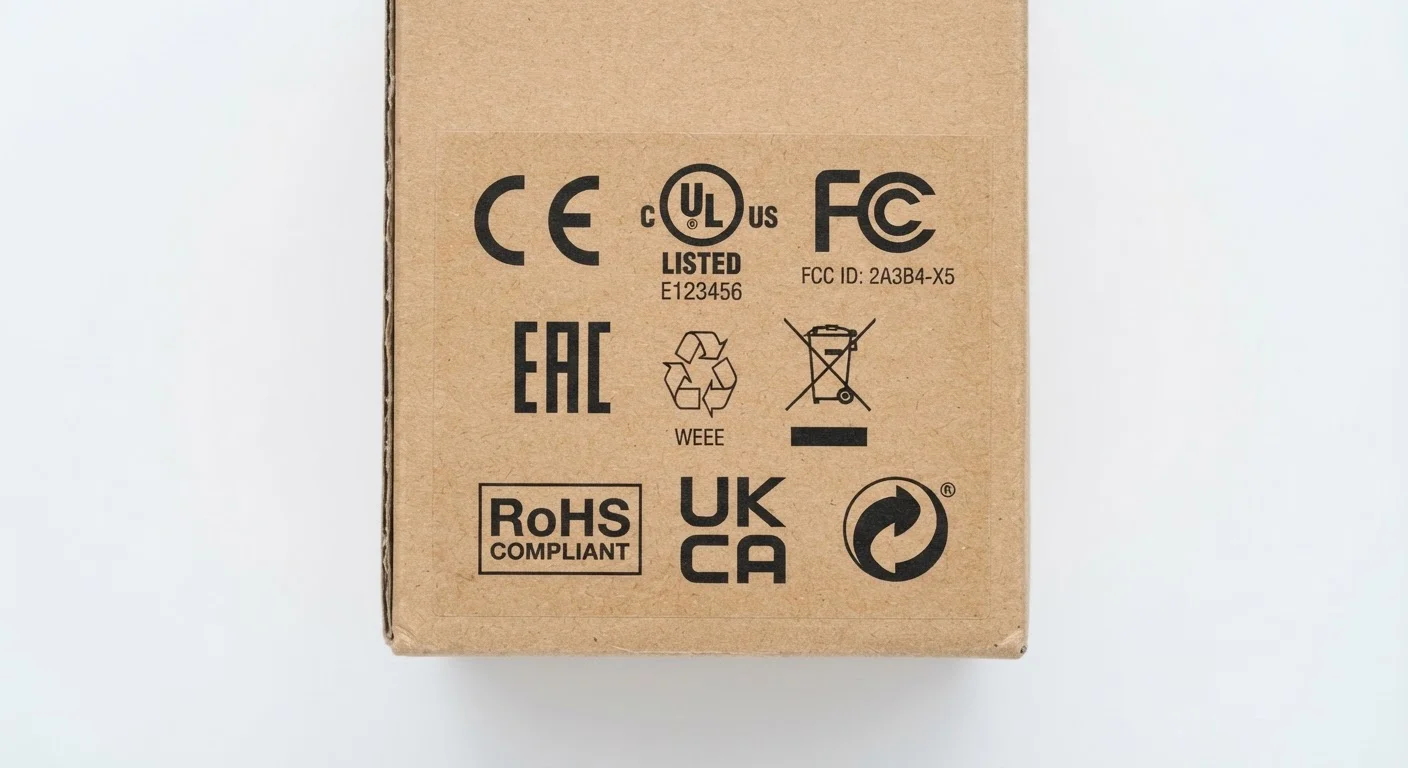
Why Safety Marks Don't All Mean the Same Thing
Walk down any store aisle or scan a product listing online and you'll see a cluster of logos, abbreviations, and compliance statements. Parents reasonably assume these marks signal that someone, somewhere, verified the product is safe. That assumption is partially correct - but the critical details lie in who tested it, what they tested for, and how that testing was enforced.
There are three broad categories of safety claims on consumer products:
- Mandatory regulatory compliance - required by law before a product can be sold in the U.S. (e.g., CPSC rules for children's products)
- Voluntary consensus standards - developed by expert bodies like ASTM International; manufacturers choose to meet them, but they're widely recognized and often referenced by regulators
- Third-party certification marks - issued by independent testing organizations like UL after a product passes their evaluation program
Understanding which category a mark falls into is the first step toward reading it accurately. For a broader look at how to evaluate products before purchase, see our family safety checklist.
~400
Product recalls issued annually by CPSC
The U.S. Consumer Product Safety Commission typically issues several hundred recalls per year across all consumer product categories, including children's items.
3rd-party
Testing required for all children's products under CPSC rules
Under the Consumer Product Safety Improvement Act (CPSIA), children's products subject to a mandatory standard must be tested by a CPSC-accepted third-party laboratory before being sold in the U.S.
100+
ASTM F963 toy safety requirements
ASTM F963, the standard specification for toy safety, covers more than 100 individual requirements spanning mechanical, electrical, flammability, and chemical hazards.
Decoding the Most Common Certifications
UL (Underwriters Laboratories)
The UL mark is one of the most recognized in North America. When a product displays UL Listed, it means UL - an accredited, independent safety science organization - tested the product against a specific standard, typically related to electrical or fire hazards. UL also conducts ongoing factory audits to verify continued compliance. The mark only covers the hazards addressed by that particular UL standard, so a UL-listed appliance isn't certified for, say, chemical safety.
CPSC and Children's Product Certification (CPC)
The U.S. Consumer Product Safety Commission sets mandatory federal safety rules. Children's products - broadly defined as items designed primarily for children under 12 - must carry a Children's Product Certificate (CPC) from the manufacturer, backed by testing at a CPSC-accepted third-party laboratory. This covers hazards including lead content, phthalates in plastics, and small-parts choking risks. Adult products face less stringent testing requirements under CPSC rules.
ASTM International Standards
ASTM develops voluntary consensus standards across hundreds of product categories. For families, the most relevant include ASTM F963 for toy safety and ASTM standards for playground and sports equipment. These standards are technically voluntary, but meeting them is often a practical requirement for market acceptance - and CPSC has incorporated some ASTM standards into mandatory regulations.
CE Marking
CE is a European regulatory conformity mark. It signals that a product meets EU directives for health, safety, and environmental protection. In the United States, CE has no regulatory standing. Its presence on a U.S.-sold product is informational at best and potentially misleading at worst. For a deeper look at how labels are routinely misread, see our guide on safety labels families commonly misread.
“Certification marks are starting points, not endpoints. They tell you a product passed a defined test - they don't tell you everything about how that product will perform in your home.”
— Nancy Cowles, Executive Director, Kids In Danger (KID), a nonprofit focused on children's product safety
Third-Party Testing vs. Self-Certification
One of the most important distinctions in product safety is who did the testing. Manufacturer self-certification means the company attests that its product meets a standard - sometimes based on internal testing, sometimes based on design review alone. Third-party certification means an accredited, independent laboratory conducted the testing with no financial stake in the outcome.
For children's products subject to CPSC mandatory standards, third-party testing at a CPSC-accepted lab is legally required - meaning self-certification is not an option in those categories. For adult products or those falling under voluntary standards, self-certification is more common. The difference between third-party testing and manufacturer claims is substantial when safety margins matter.
Practically speaking, a certification from an accredited third-party lab carries more verifiable weight than a manufacturer's compliance statement alone. When in doubt, look for marks from recognized organizations such as UL, Intertek (ETL), or Bureau Veritas alongside CPSC documentation.
What Certifications Cannot Tell You
Even a product that clears every applicable standard can present risks that fall outside the tested scope. Certifications are snapshots - they reflect performance against defined criteria at a point in time. They don't account for:
- Wear over time - a product may pass testing when new but degrade with use
- Misuse scenarios - standards typically test intended use, not every way a child might interact with a product
- Post-market issues - manufacturing defects or design problems may emerge after certification and trigger recalls
This is why checking the CPSC recall database (recalls.gov) after purchase - not just before - is a practical habit worth building. Certifications also don't address whether a product is developmentally appropriate; that's covered by age-grading, which is a separate and commonly misunderstood labeling system. See our article on what 'safety rated' actually means on family products for more on that distinction.
For an end-to-end view of product safety - from purchase through disposal - our guide on product safety from purchase to disposal covers the full picture.
Frequently Asked Questions
A UL (Underwriters Laboratories) mark means the product was tested against specific safety standards related to fire, electrical, and related hazards. It does not certify the product against every possible risk. Always check which UL standard applies to understand what was actually tested.
CPSC compliance means the product meets mandatory safety rules set by the U.S. Consumer Product Safety Commission. For children's products, this often includes testing for lead, phthalates, and structural hazards. Manufacturers are legally required to meet these standards, but compliance is verified in different ways - some products require third-party lab testing, others rely on manufacturer certification.
No. CE marking indicates conformity with European Union safety regulations and has no regulatory standing in the U.S. A CE mark on a product sold domestically tells you little about whether it meets American safety standards.
ASTM International publishes voluntary consensus standards developed by industry and safety experts across many product categories, including toys and playground equipment. UL is a safety certification organization that tests products against its own and other recognized standards. Both are credible, but they cover different hazards and product types.
The U.S. Consumer Product Safety Commission maintains a searchable recall database at recalls.gov. You can search by product type, brand name, or keyword. Signing up for CPSC recall alerts is a practical way to stay informed after purchase.
Not necessarily. Age grading and safety certifications address different things. Age labels indicate developmental appropriateness and choking-hazard risk thresholds, while safety certifications cover specific tested hazards. A product can carry both, either, or neither.
The content provided on our blog site traverses numerous categories, offering readers valuable and practical information. Readers can use the editorial team’s research and data to gain more insights into their topics of interest. However, they are requested not to treat the articles as conclusive. The website team cannot be held responsible for differences in data or inaccuracies found across other platforms. Please also note that the site might also miss out on various schemes and offers available that the readers may find more beneficial than the ones we cover.