

Option A
Third-Party Testing
Independent verification you didn't ask the seller to perform.
Best for: Families who need objective confirmation that a product meets safety or quality standards before buying.
Option B
Manufacturer Claims
The brand's own assertions about what their product does and how safe it is.
Best for: Getting a quick overview of a product's intended use and marketed features - with healthy skepticism applied.
What Each Approach Actually Means
When a brand says its stroller is "rigorously tested" or its supplement is "clinically proven," that language originates from the company itself. Manufacturer claims are marketing and product-description statements made by the entity with a direct financial interest in selling the item. They may be accurate - but they are not independently verified unless a separate organization also checked the work.
Third-party testing means an accredited laboratory or certification body that has no financial relationship with the manufacturer evaluated the product against a defined standard. The lab's income doesn't depend on whether the product passes. That independence is the core reason third-party results carry more weight.
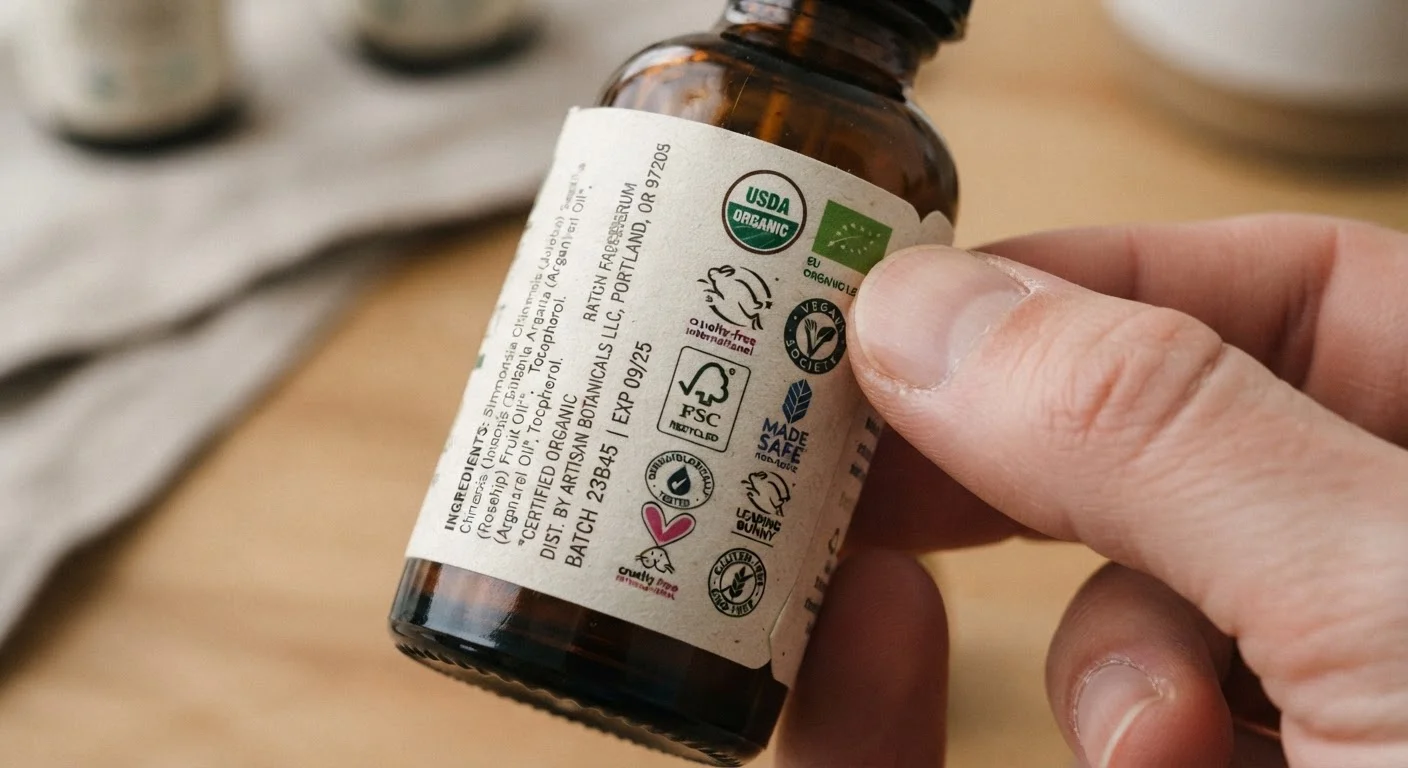
It's worth noting that "third-party tested" on a label is itself a claim - what matters is which third party conducted the testing and against which standard. See our breakdown of what product safety certifications actually mean for a closer look at recognized marks like UL, ASTM, and CPSC compliance.
| Criterion | Third-Party Testing | Manufacturer Claims |
|---|---|---|
| Who conducts it | Accredited independent laboratory | The brand's own team or internal process |
| Financial conflict of interest | None - lab paid for testing, not results | High - brand profits from favorable claims |
| Verifiability | Traceable to published standards and lab records | Rarely substantiated with accessible data |
| Required by law | Yes, for many children's products (CPSIA) | No independent requirement to validate claims |
| Scope of coverage | Limited to the specific standard tested | May exceed what any test actually confirms |
| Usefulness to shoppers | High for safety-critical decisions | Useful as a starting point only |
Where the Law Draws the Line
For certain product categories, the federal government removes the choice entirely. The Consumer Product Safety Improvement Act (CPSIA) requires mandatory third-party testing for many children's products - including toys, cribs, and car seat components - before they can be sold in the U.S. Manufacturers must obtain a Children's Product Certificate (CPC) backed by accredited lab results.
Outside those mandated categories, the landscape is more variable. Dietary supplements, for instance, do not require pre-market approval or third-party safety testing under current FDA rules. A manufacturer can make structure/function claims - statements about how an ingredient is said to support normal body functions - without independent verification. This is why families evaluating supplements often look for voluntary third-party programs such as NSF International or USP certification.
~15,000
Children's product recalls since CPSIA enacted
The CPSC has issued thousands of children's product recalls since mandatory third-party testing requirements took effect, illustrating that compliance processes, while protective, are not a complete guarantee.
~80%
Supplements sold without pre-market safety review
The FDA estimates the vast majority of dietary supplements enter the market without pre-market approval, making voluntary third-party certification programs particularly relevant for this category.
Over 40
CPSC-accepted third-party testing laboratories
The CPSC maintains a publicly searchable list of firewalled and accredited third-party labs approved to test children's products - a resource families can use to verify a manufacturer's testing source.
Understanding which rules apply to a product category helps you calibrate how much independent scrutiny already exists - and how much additional homework you may need to do yourself. Recognizing these gaps is part of avoiding the common patterns that lead families to overlook product safety.
Reading Claims and Certifications Side by Side
A useful habit is to treat manufacturer claims as a hypothesis and third-party certification as the evidence that supports or doesn't support it. Start with the packaging language to understand what the product is claiming to do, then look for the certification mark that corresponds to those claims.
Mismatches are informative. A car seat marketed as "the safest on the market" should carry FMVSS 213 compliance documentation - a federal safety standard. Language exceeding what certifications actually cover is a signal to dig deeper. Similarly, a certification mark that applies only to one component (say, the fabric's flammability rating) doesn't validate every other safety claim on the box.
For a practical cross-check, pair certification research with credible consumer feedback. Our guide on signals that a product review can actually be trusted explains what review patterns tend to reflect genuine experience versus manufactured consensus.
The goal isn't to distrust every brand - it's to know which claims have been checked by someone without a stake in the answer. That distinction, applied consistently, is one of the more reliable tools families have for making confident purchasing decisions.
The content provided on our blog site traverses numerous categories, offering readers valuable and practical information. Readers can use the editorial team’s research and data to gain more insights into their topics of interest. However, they are requested not to treat the articles as conclusive. The website team cannot be held responsible for differences in data or inaccuracies found across other platforms. Please also note that the site might also miss out on various schemes and offers available that the readers may find more beneficial than the ones we cover.