

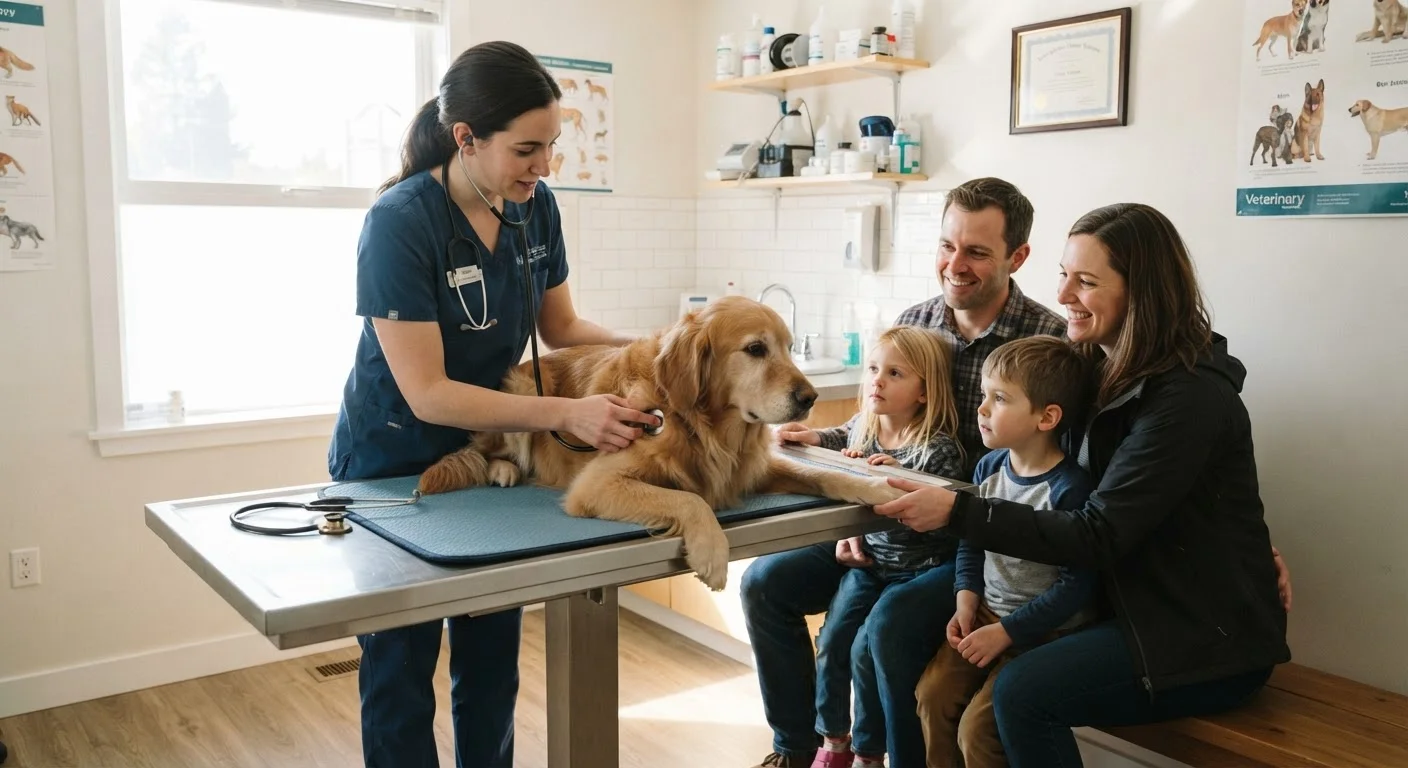
Why Annual Exams Leave Gaps - and How Families Widen Them
Annual wellness exams are a cornerstone of responsible pet ownership, but the appointment itself is only half the picture. The other half is what families bring - or don't bring - to the table. Vets are skilled at spotting physical signs of illness, but they can't ask about every detail of daily life at home. That's where prepared, engaged families make a real difference.
Most gaps at annual check-ups aren't caused by negligence. They happen because families don't realize certain topics are worth raising, or because a ten-to-fifteen minute appointment moves quickly. Understanding what tends to slip through the cracks helps you show up ready to fill those spaces. If you're new to navigating vet care, a walkthrough of what vets assess during a routine exam is a useful starting point.
Skipping the conversation about dental health.
Why it happens: Families often assume the vet will flag tooth problems automatically, or they don't realize how quickly oral disease progresses in cats and dogs.
Not mentioning behavioral changes because they seem minor.
Why it happens: Busy families often chalk up subtle shifts - a dog sleeping more, a cat grooming less - to personality quirks rather than potential health signals.
Assuming last year's parasite prevention plan still applies.
Why it happens: Once a routine is set, it's easy to auto-renew without considering that your pet's environment, travel habits, or regional parasite risks may have changed.
Treating the annual exam as a quick formality rather than a two-way conversation.
Why it happens: Clinic time can feel rushed, and many families wait to be asked questions instead of arriving prepared with their own.
Not asking whether once-a-year visits are still appropriate for the pet's age.
Why it happens: Many families follow the same check-up cadence for years without realizing that senior pets often need more frequent evaluations.
Making the Most of Every Minute in the Exam Room
Preparation is the single most effective way to improve an annual pet check-up. Before the appointment, spend five minutes jotting down anything that's changed since last year - eating habits, sleep patterns, weight shifts, new environments, or reactions to other animals. Even details that seem unrelated can provide context that changes a vet's assessment.
~80%
Dogs showing dental disease signs by age 3
Veterinary dental organizations have consistently reported that the majority of dogs show signs of periodontal disease by age three, making it one of the most prevalent conditions vets see.
1 in 3
Pets with a condition detectable via bloodwork
Routine bloodwork panels can surface early indicators of organ function changes, thyroid issues, and diabetes - conditions that may show no outward symptoms in early stages.
Keeping organized health records also helps. Vaccination history, prior bloodwork, and medication notes give the vet a baseline to work from rather than starting from scratch each year. A practical system for storing pet records as a family can make this effortless over time.
Finally, if your pet tends to feel anxious at the clinic, preparation pays off there too. Steps to reduce anxiety before and during vet visits benefit both your pet and the quality of the exam itself - a calmer animal is easier to assess thoroughly.
This article is for general informational purposes only and does not constitute veterinary advice. Always consult a qualified veterinarian for guidance specific to your pet's health needs.
Behavioral Changes Are Never 'Just Getting Older'
A common mistake is attributing changes in appetite, thirst, energy, or behavior to aging without consulting a vet. While some changes are age-related, many are early signs of treatable conditions. Always mention behavioral shifts - no matter how small - during the annual exam. Your vet can determine whether further evaluation or bloodwork is warranted.
The content provided on our blog site traverses numerous categories, offering readers valuable and practical information. Readers can use the editorial team’s research and data to gain more insights into their topics of interest. However, they are requested not to treat the articles as conclusive. The website team cannot be held responsible for differences in data or inaccuracies found across other platforms. Please also note that the site might also miss out on various schemes and offers available that the readers may find more beneficial than the ones we cover.