

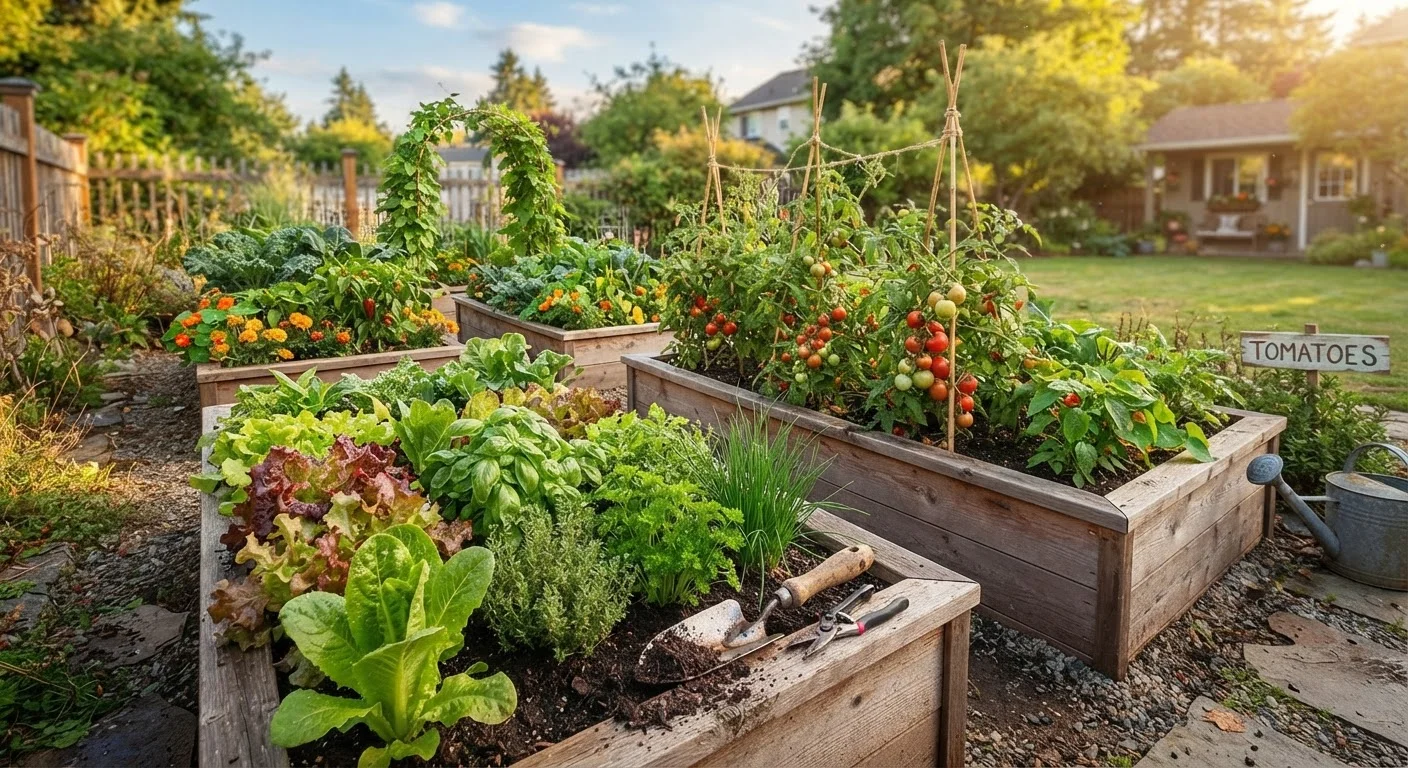
Why Most Family Gardens Fail Before They Start
The most common reason families abandon vegetable gardens isn't pests, drought, or poor soil - it's starting too big. An oversized plot becomes a weekend obligation that competes with everything else on your schedule. The fix is simple: decide upfront that your first garden will be intentionally small.
A 4×4-foot bed can produce a meaningful amount of food. A 4×8-foot bed is enough to keep a family of four supplied with salad greens and a few extras through much of the growing season. Once you've completed one successful season, expanding becomes exciting rather than stressful.
For a deeper look at how your vegetable garden fits into your broader outdoor maintenance picture, see our full-year backyard overview.
What you will need
Choosing Your Location and Garden Style
Most vegetables need at least six hours of direct sunlight per day - eight is better for fruiting crops like tomatoes and peppers. Before committing to a spot, observe your yard at midday on a clear day and note where shade falls. Avoid areas too close to large trees, whose roots compete for water and nutrients.
Once you've identified a sunny area, decide whether you'll garden in-ground or in a raised bed. Raised beds offer better drainage, fewer weeds, and easier soil control - particularly helpful if your native soil is compacted or clay-heavy. Raised beds vs. in-ground gardens breaks down how to think through that decision based on your specific yard and schedule.
Pick your plot and measure the space
Walk your yard during a sunny midday and identify the area that receives the most unobstructed light. Mark the boundaries with stakes or a garden hose and measure. Aim for no more than 4×8 feet your first season. Note proximity to a water source - dragging a hose long distances becomes a deterrent fast.
Test and improve your soil before planting
Inexpensive soil test kits are widely available at garden centers and measure pH and basic nutrient levels. Most vegetables grow well in soil with a pH between 6.0 and 7.0. If your soil is heavily compacted or very sandy, mix in a 2-3 inch layer of compost and work it into the top 8-10 inches. Good soil structure is the single biggest predictor of garden success.
Use a digging fork or spade to loosen the existing soil before adding amendments, and check for large rocks or debris that would block root growth.
Choose beginner-friendly crops for your first season
Focus on vegetables that germinate quickly and tolerate minor care inconsistencies. Good starting choices include:
- Lettuce and salad greens - harvest in 30-45 days, regrow after cutting
- Radishes - ready in as few as 25 days, great for kids
- Green beans (bush variety) - no staking needed, productive over several weeks
- Zucchini - prolific and forgiving, though give it room to spread
- Cherry tomatoes - more disease-resistant than large varieties, quicker to fruit
Limit yourself to 3-4 varieties your first season so maintenance stays manageable.
Plan your spacing and plant layout
Crowded plants compete for light, water, and nutrients - and are more prone to disease. Read the spacing guidelines on seed packets or transplant tags and follow them. Taller plants (like tomatoes) should go on the north side of the bed so they don't shade shorter crops. Group plants with similar water needs together to simplify irrigation.
Set up a simple watering routine
Consistent, deep watering beats frequent shallow watering. Most vegetable gardens need about one inch of water per week from rain or irrigation. A soaker hose or drip line placed at soil level is more efficient than overhead sprinklers and keeps foliage dry, reducing the risk of fungal disease. If you're hand-watering, water slowly at the base of plants and check that moisture reaches several inches deep.
Water in the morning when possible so the soil surface dries before evening.
Keeping It Growing: Soil, Water, and Weeds
After planting, three habits carry you through the season. First, check soil moisture every day or two during the growing season - most vegetables prefer consistently moist (not waterlogged) soil. A simple finger test works: press one inch into the soil; if it feels dry, water deeply at the base of plants rather than overhead to reduce disease risk.
Second, weed early and often. Young weeds pull out easily; established ones do not. A ten-minute walk through the garden twice a week is far more effective than an hour-long session once a month. For sustainable approaches the whole family can keep up with, practical weed control strategies offers realistic options.
Third, feed your soil. Compost is one of the most cost-effective improvements you can make to any garden bed. If you're not already composting kitchen and yard waste, composting at home walks you through a straightforward system for producing usable compost without a complicated setup.
Make It a Family Habit, Not a Chore
Assigning each family member a specific task - one person waters, another weeds, another harvests - distributes the work and builds shared ownership. Even young children can harvest radishes or check soil moisture with a finger test. When the whole family has a role, the garden is more likely to get consistent attention through the season.
The content provided on our blog site traverses numerous categories, offering readers valuable and practical information. Readers can use the editorial team’s research and data to gain more insights into their topics of interest. However, they are requested not to treat the articles as conclusive. The website team cannot be held responsible for differences in data or inaccuracies found across other platforms. Please also note that the site might also miss out on various schemes and offers available that the readers may find more beneficial than the ones we cover.