

Why One Overhead Light Is Almost Never Enough
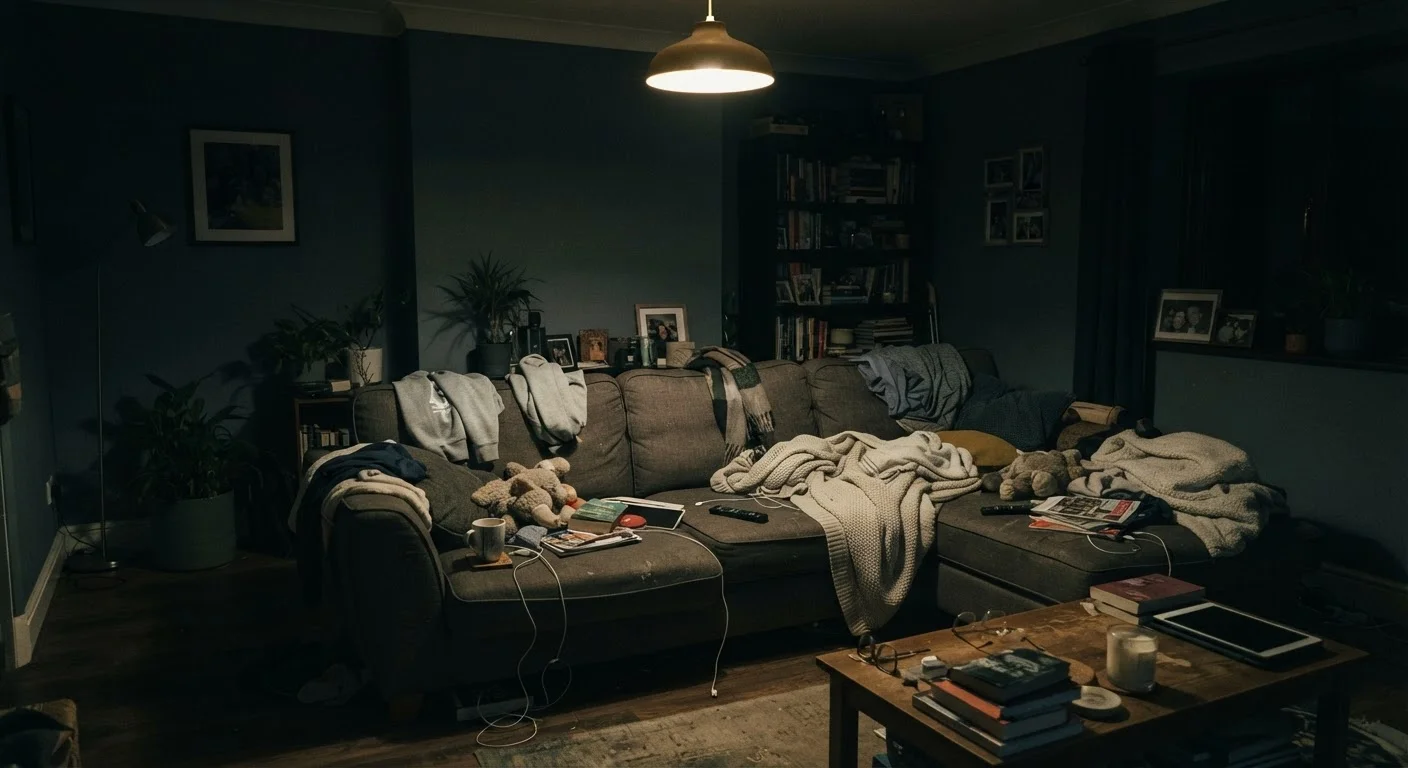
Walk into almost any room in a typical home and you'll find the same setup: a single ceiling fixture in the center of the room. It was installed by builders as a minimum-viable solution, not as a thoughtful lighting plan. The problem is that central overhead light creates a cone of brightness directly below it and leaves everything else - corners, countertops, reading chairs, faces - in relative shadow.
This is the core of under-lighting. It's rarely about having zero light. It's about having uneven, poorly placed light that doesn't match how the room is actually used. A child doing homework at a desk pushed against the wall, a parent reading in an armchair, or someone cooking at a kitchen counter - all of these activities need light directed at the task, not just somewhere in the general area.
Light also interacts with your room's other physical qualities. As explored in our guide on how paint affects a room's perceived size, dark wall colors absorb light rather than reflecting it, which compounds the effect of insufficient fixtures. Similarly, the balance between natural and artificial light plays a major role in whether a space feels functional at different times of day.
Lighting and Vision Change With Age
Adults over 50 typically need significantly more light to perform the same visual tasks as younger adults - some estimates suggest up to twice as much. If older family members are in your home regularly, it's worth factoring that into how you assess whether a room is adequately lit. What feels fine to a younger adult may feel quite dim to an older one.
The Real Costs: Eye Strain, Mood, and Productivity
The consequences of under-lighting are easy to dismiss because they creep up gradually. Eye strain is the most immediate effect - your eyes work harder to compensate for low contrast between a task (a page, a screen, a cutting board) and its surroundings. Over an evening, that effort accumulates into fatigue and often headaches.
Less obvious is the mood effect. Research in environmental psychology has consistently linked lighting quality to perceived comfort, alertness, and even emotional tone. Dim, poorly distributed light tends to signal to the brain that it's time to wind down - useful in a bedroom, but counterproductive in a kitchen where you're trying to prepare dinner or a living room where kids need to concentrate on homework.
68%
Workers reporting eye strain from poor lighting
A survey by the American Optometric Association found that a majority of people who work under inadequate lighting report digital eye strain or visual fatigue symptoms.
3x
More light needed for detailed tasks vs. general living
Lighting standards from the Illuminating Engineering Society indicate task areas like reading or food preparation typically require roughly three times the light level of general ambient zones.
Productivity is also affected, particularly for anyone working from home in a shared living space. Poor task lighting slows work, increases errors, and makes it harder to sustain focus - costs that rarely get traced back to the room's fixtures.
How to Layer Light Effectively
Lighting designers work with three layers: ambient (general room illumination), task (focused light for specific activities), and accent (directional light that adds depth and visual interest). Most homes only have the first layer - and often an inadequate version of it.
Ambient light comes from overhead fixtures, but also from floor lamps and wall sconces that bounce light off ceilings and walls. Task lighting means a dedicated lamp at a desk, under-cabinet strips over a kitchen counter, or a reading lamp positioned over a chair. Accent lighting - directed at artwork, shelves, or architectural features - isn't strictly necessary, but it helps a room feel finished and prevents the flat, institutional look of pure overhead illumination.
Start With Plug-In Lamps Before Rewiring
Before investing in new fixtures or calling an electrician, experiment with plug-in floor and table lamps placed in your problem areas. This costs relatively little, requires no installation, and gives you an immediate sense of whether additional light sources improve the room. Once you've confirmed where the gaps are, you can make more permanent decisions with confidence.
For families, the practical starting point is to identify the two or three spots in each room where actual activities happen, and make sure each one has its own dedicated light source. You can do this with plug-in lamps before committing to any wiring changes, making it a low-cost experiment before any larger investment.
Dimmers are also worth considering for overhead fixtures in living rooms and bedrooms. They let one fixture serve multiple purposes throughout the day without requiring separate installations.
What to Check Before Spending on New Fixtures
Before replacing any fixtures, audit what you already have. Note which areas feel consistently dim or cause you to squint. Check whether existing bulbs match their fixtures' intended output - a lamp designed for a 100W equivalent bulb running a 40W equivalent will always feel inadequate. Also check bulb color temperature: bulbs labeled "warm white" (around 2700K) create a cozy but lower-contrast environment, while "cool white" or "daylight" bulbs (4000-5000K) improve task visibility significantly.
Adding plug-in floor lamps or table lamps is the most accessible fix - no electrician, no permits, immediate results. Under-cabinet lighting in kitchens is another high-impact, relatively simple improvement that most families can install themselves using adhesive strip lights.
If you're considering recessed lighting, ceiling fan installations, or rewiring, those projects typically require a licensed electrician and may need permits under local building codes. Always verify requirements with your local authority before starting any electrical work.
Under-lighting is one of those home issues that doesn't announce itself loudly - it just makes daily life slightly harder and less comfortable than it needs to be. Addressing it doesn't have to be expensive or complicated, but it does require looking at each room through the lens of how your family actually uses it.
Frequently Asked Questions
Common signs include squinting or leaning closer to see tasks clearly, headaches after spending time in the room, and a general sense the space feels gloomy or uninviting. Shadows in work areas or corners that never get adequate light are also reliable indicators.
Prolonged exposure to insufficient light can contribute to eye strain, tension headaches, and disrupted sleep patterns, particularly if you're exposed to dim, warm-toned light at times when your body expects alertness. It may also affect mood, though individual responses vary. This is general information - consult a healthcare professional if you have specific concerns.
Not necessarily. Very bright, unshielded light sources can cause glare and discomfort. The goal is appropriate brightness for each activity, distributed well across the space. A mix of lower-intensity sources usually works better than one extremely powerful bulb.
Add a floor lamp or table lamp in corners or areas that feel dark. This simple addition introduces ambient light at a different height than overhead fixtures, making the room feel more balanced without any wiring changes.
Yes, significantly. Light, cool-toned walls reflect more light around a room, while dark or warm-toned walls absorb it. If you're already dealing with under-lighting, very dark walls can make the problem worse.
Not always. Adding plug-in lamps, under-cabinet lighting strips, or battery-powered fixtures requires no wiring. If you want recessed lighting or new ceiling fixtures, a licensed electrician is recommended - electrical work often requires permits depending on your local codes.
The content provided on our blog site traverses numerous categories, offering readers valuable and practical information. Readers can use the editorial team’s research and data to gain more insights into their topics of interest. However, they are requested not to treat the articles as conclusive. The website team cannot be held responsible for differences in data or inaccuracies found across other platforms. Please also note that the site might also miss out on various schemes and offers available that the readers may find more beneficial than the ones we cover.