

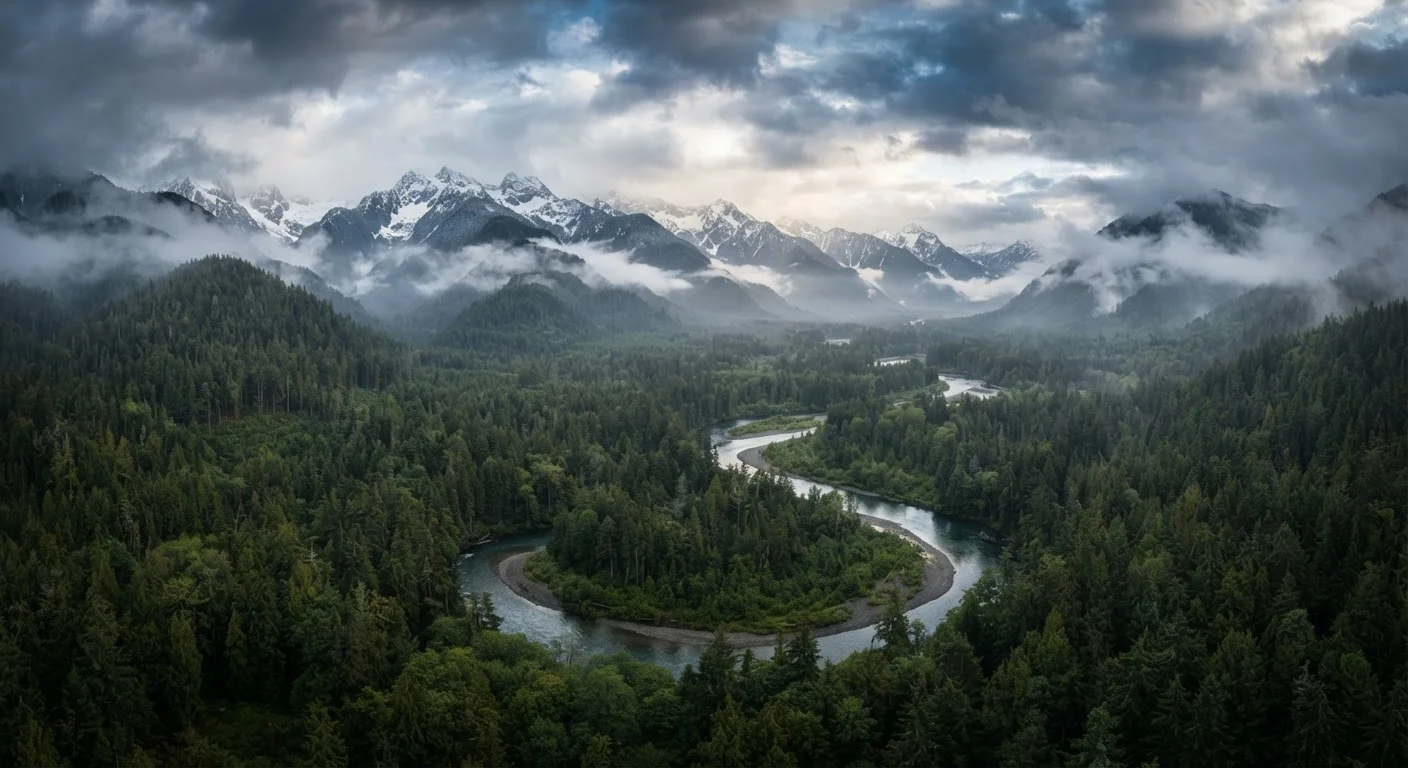
Why the Pacific Northwest Works for Families
Oregon and Washington have a quiet confidence about them as family destinations. They don't require a theme park to justify the trip. Instead, they offer forests you can actually walk through, coastlines that feel genuinely wild, cities with kid-friendly museums and food markets, and national parks that reward curiosity at every age. The region suits toddlers discovering tide pools as much as teenagers who want to summit something challenging.
The variety is the real selling point. A single week can move from Pike Place Market in Seattle to old-growth rainforest in Olympic National Park to a rocky beach on the Oregon Coast - and none of it feels forced. Families who enjoy mixing urban stops with outdoor time will find the Pacific Northwest especially well-matched to that rhythm.
For families thinking through the full planning process, our family trip planning guide covers how to structure decisions from destination choice through departure day.
Book summer campsite reservations as early as the reservation window opens - popular spots at Olympic and Mount Rainier fill months in advance, especially on weekends.
Summer is short in the Pacific Northwest, and high-demand campsites at national parks are released on a rolling basis that experienced travelers know to watch.
Pack rain layers even for July - coastal mornings are often cool and foggy before clearing, and mountain weather changes quickly regardless of what the lowland forecast says.
Families caught underprepared for Pacific Northwest microclimates often cut outdoor time short; having layers means you can adapt rather than retreat.
Seasons and Weather: The Honest Rundown
Weather is the central variable in any Pacific Northwest trip, and it deserves an honest look rather than optimistic glossing. The region's west side - including Seattle, Portland, and the coast - is wet and mild from October through May. Rain is rarely dramatic; it's persistent, gray, and capable of dampening outdoor plans if you're unprepared.
Summer (July-September) is the clear window for families. Temperatures are generally comfortable - highs in the 70s°F across most lowland areas - and extended dry stretches are common. This is when trails are accessible, campgrounds fill up, and the coastlines are actually inviting rather than just scenic.
Spring and fall offer thinner crowds and lower costs, with meaningful tradeoffs in weather reliability. Families comfortable with layers, rain gear, and indoor backup plans can find real value in shoulder seasons.
Winter works if your family skis - the Cascades get serious snow - but it's not ideal for general outdoor exploration at lower elevations.
Wildfire Smoke Can Affect Summer Plans
Eastern Washington and Oregon, and increasingly the western Cascades, can experience significant smoke events during dry summer months. Air quality can shift rapidly and may affect outdoor activity plans, particularly for children with respiratory sensitivities. Check air quality forecasts (AQI) through official sources like AirNow.gov before and during your trip, and have indoor backup plans in place.
Landscapes and What They Mean for Your Itinerary
The Pacific Northwest packs an unusual range of landscapes into a manageable driving radius. Understanding what's where helps you build a realistic itinerary rather than an overly ambitious one.
- Rainforests: Olympic National Park's Hoh Rain Forest is one of the few temperate rainforests in North America. The moss-draped trails are short enough for younger kids and visually unforgettable.
- Volcanoes: Mount Rainier and Mount St. Helens both offer family-accessible visitor areas. The landscape around St. Helens, still visibly shaped by the 1980 eruption, sparks genuine curiosity in kids.
- Coastlines: Oregon's coast is publicly accessible along its entire length - a remarkable and family-friendly fact. Beaches are rocky, dramatic, and dotted with tide pool areas.
- High desert: Eastern Oregon and Washington are dramatically different from the wet west - sunnier, warmer in summer, and home to landscapes like the Columbia River Gorge and Painted Hills.
Families who've enjoyed national park trips elsewhere will find strong options here. Our guide to family-friendly national parks can help you match the right park to your kids' ages and stamina.
73 miles
Length of Hoh River Trail in Olympic National Park
Olympic National Park contains over 600 miles of trails, ranging from short accessible loops to multi-day backcountry routes, per the National Park Service.
363 miles
Oregon's publicly accessible coastline
Oregon law designates the entire coastline as public, one of the few states in the US with this protection in place.
~3 hours
Drive time between Portland and Seattle
The I-5 corridor makes a two-city itinerary practical for families road-tripping through the region.
Cities: Seattle and Portland With Kids
Both cities are genuinely welcoming to families, though they have distinct personalities worth knowing before you arrive.
Seattle packs in the Pacific Science Center, the Seattle Aquarium, the Burke Museum of Natural History, and easy ferry access to Bainbridge Island - all manageable within a two- or three-day city stay. The waterfront is walkable, and the neighborhood variety means you can find calm pockets away from the tourist core.
Portland is often underestimated. The Oregon Zoo is well-regarded, Powell's Books has a dedicated kids' section that genuinely delights young readers, and the city's food cart culture makes feeding picky eaters far less stressful than sit-down dining. Portland also serves as a natural gateway to the Columbia River Gorge and Mount Hood.
Families debating between a city-focused trip and a nature-heavy one often find the Pacific Northwest resolves that tension naturally - the cities are close enough to wilderness that you don't have to choose. If you're comparing this style of trip to other urban family destinations, it's worth noting how the Pacific Northwest differs from something like a Washington D.C. trip, where the experience is almost entirely museum- and monument-driven.
Budgeting and Practical Logistics
The Pacific Northwest can be done affordably or expensively depending on choices around accommodation and activities. State parks throughout Oregon and Washington offer campgrounds at reasonable rates, and many national park sites are covered by the America the Beautiful annual pass - worth considering for families who visit multiple parks in a year.
City costs in Seattle and Portland are real - meals, parking, and attractions add up quickly. Prioritizing free or low-cost activities (public beaches, hiking trails, farmers markets, library events) can meaningfully offset urban spending. For a full framework on managing costs across the whole trip, our budget family travel guide walks through the process end to end.
Road-tripping makes particular sense here. The I-5 corridor connects Portland and Seattle in about three hours, and Highway 101 traces the Oregon and Washington coasts in a way that's designed for exploration. Renting a car or driving your own gives the flexibility that public transit can't fully replicate with young kids in tow.
How to Structure Your Trip
A week to ten days is enough to sample the region meaningfully without exhausting everyone. A workable structure for many families:
- Days 1-2: Arrive in Seattle, explore the city, take a ferry to Bainbridge Island.
- Days 3-4: Drive to Olympic Peninsula - Hoh Rain Forest, Hurricane Ridge, and the coast near Kalaloch.
- Day 5: Head south toward Portland, stopping at the Columbia River Gorge viewpoints along the way.
- Days 6-7: Portland base - zoo, Powell's, food carts, day trip to Mount Hood or the coast.
Families with less time can focus on one anchor city and its surrounding nature rather than trying to cover both states. Our short family trip guide has strategies for extracting real value from tighter windows without overpacking the schedule.
Whatever shape your trip takes, the Pacific Northwest tends to reward the families who leave a little room for unexpected detours - a waterfall trailhead that wasn't on the plan, a tidal flat perfect for crab spotting, a roadside farm stand that turns into a half-hour adventure. That flexibility is part of what makes this corner of the country genuinely special for travel with kids.
The content provided on our blog site traverses numerous categories, offering readers valuable and practical information. Readers can use the editorial team’s research and data to gain more insights into their topics of interest. However, they are requested not to treat the articles as conclusive. The website team cannot be held responsible for differences in data or inaccuracies found across other platforms. Please also note that the site might also miss out on various schemes and offers available that the readers may find more beneficial than the ones we cover.