

Why the Park You Choose Really Matters
Not all national parks are created equal - at least not when you're traveling with a five-year-old who needs a bathroom every 45 minutes or a toddler who cannot hike more than half a mile without declaring a full emergency. The experience of visiting a park with young children hinges on very specific factors: trail accessibility, shade, restroom availability, campsite proximity to facilities, and whether there's enough variety to hold everyone's attention.
That's what "family-friendly" should really signal - not just that kids are technically allowed, but that the infrastructure and experience genuinely supports them. The parks on this list each do that in distinct ways. Some shine for their jaw-dropping scenery at ground level; others win points for sheer variety. All of them have been recognized by families, park educators, and travel writers as particularly well-suited for the youngest visitors.
And since national park entry is one of the more budget-conscious outdoor experiences available to US families - especially with the America the Beautiful pass - these destinations deliver exceptional value alongside the adventure.
Acadia National Park, Maine
Acadia is one of the most accessible national parks in the country for young families. The carriage roads - 45 miles of smooth, crushed-stone paths closed to motor vehicles - are ideal for little legs, bikes, and strollers. The park is compact enough that you're never far from a parking area or visitor center, and the variety is excellent: tide pools, gentle summit walks, sandy beaches, and whale-watching boat tours nearby. Bar Harbor, the gateway town, is genuinely walkable and well set up for families. Altitude is a non-issue here, and the scale of the landscape feels approachable rather than overwhelming for young children.
Acadia's car-free carriage roads are perfect for strollers, bikes, and short-legged hikers alike.
Olympic National Park, Washington
Olympic is unusual because it packs three completely different ecosystems - temperate rainforest, rugged Pacific coastline, and alpine meadows - into one park. For families, this variety is a huge plus: if your kids are bored of one landscape, another is within reach. The Hoh Rain Forest offers flat, mossy trails that feel genuinely enchanting to young children, and the coastal strips like Rialto Beach have tide pools and sea stacks that hold attention for hours. Facilities are solid, and the park's size means you can find quieter corners even during peak summer. Planning around Pacific Northwest weather is key - summer visits are far drier and more predictable.
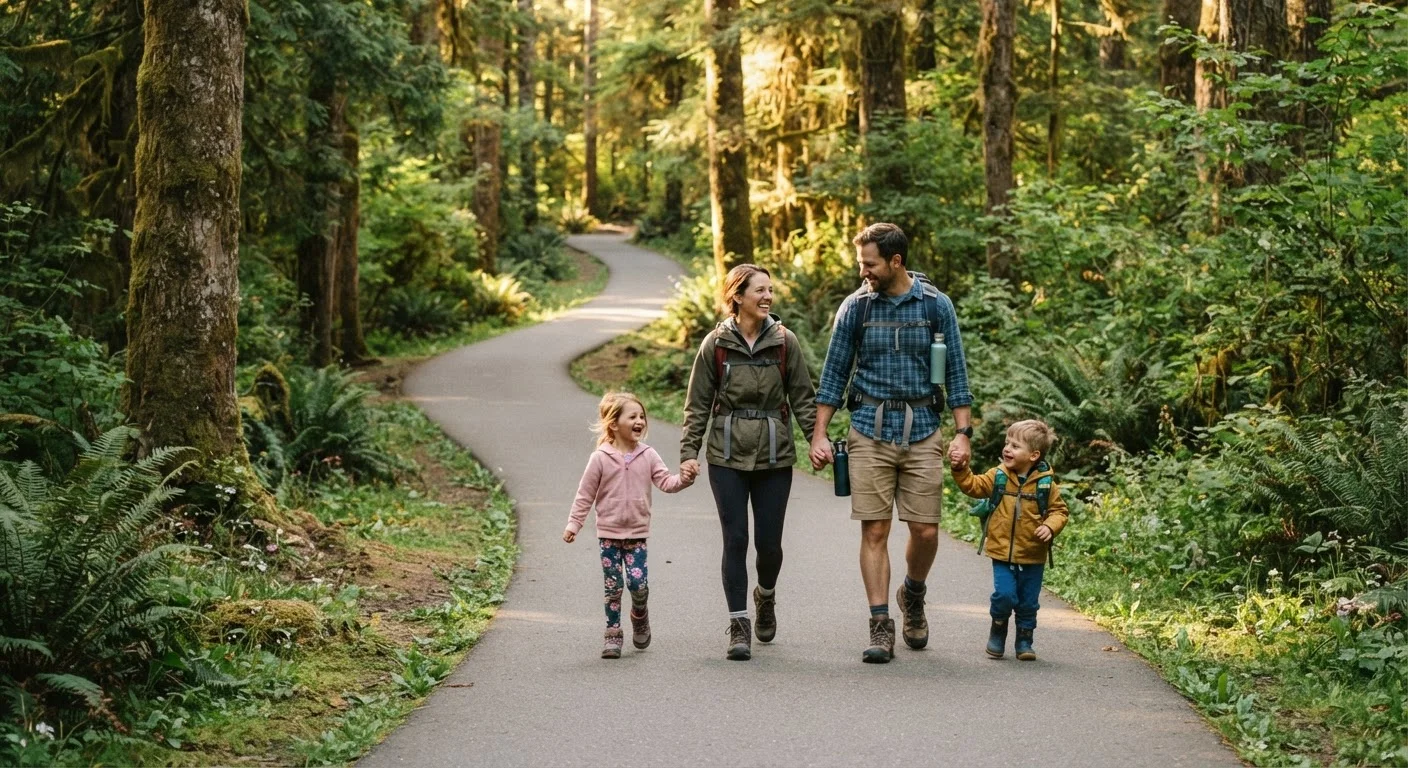
Three ecosystems in one park means something new to discover every single day.
Great Smoky Mountains National Park, Tennessee & North Carolina
The Smokies are consistently the most visited national park in the US, and a big reason is how well they work for families. Entry is free - no pass required - which makes it an especially strong choice for budget-conscious family travel. Trails range from paved, stroller-friendly paths like the Laurel Falls trail to longer backcountry routes for families ready for more. The park has multiple visitor centers, picnic areas, and campgrounds, and the surrounding gateway towns offer a full range of accommodations and dining. Wildlife sightings - especially black bears and white-tailed deer - are common enough to feel magical for kids without requiring a specialist guide.
No entry fee and incredible wildlife sightings make the Smokies a family value standout.
Rocky Mountain National Park, Colorado
Rocky Mountain rewards families who plan carefully around altitude. The park sits mostly above 8,000 feet, and altitude sickness is real - give yourselves a day to acclimatize in the Denver or Fort Collins area before heading up. Once adjusted, the payoff is enormous: accessible lakes like Bear Lake are a short walk from parking areas, the wildlife (elk, moose, marmots) is spectacular and visible from roadways, and Trail Ridge Road offers staggering scenery without hiking a single step. The Junior Ranger program here is particularly well-regarded. Families willing to prepare for the altitude will find Rocky Mountain genuinely unforgettable.
Acclimatize first and Rocky Mountain delivers some of the most spectacular family scenery in the country.
Shenandoah National Park, Virginia
Shenandoah is often underestimated because it lacks the dramatic desert cliffs or giant sequoias of its western counterparts. But for East Coast families with young children, it's extraordinarily well-suited. Skyline Drive runs the entire length of the park, meaning you can experience sweeping Appalachian ridge views entirely from the car if needed - a genuine lifesaver with tired toddlers. There are also dozens of short, manageable hiking trails, multiple picnic areas, and friendly visitor centers at Dickey Ridge and Byrd. The park is within a day's drive of the mid-Atlantic and Southeast, lowering the logistical burden considerably. Fall foliage visits are particularly stunning.
Skyline Drive lets families enjoy spectacular views even when legs - big and small - need a rest.
Zion National Park, Utah
Zion requires a bit more planning than some parks on this list, but the investment pays off. The park runs a free shuttle system that eliminates most driving stress, and the canyon floor - where most families spend their time - is flat and well-maintained. The Riverside Walk, a paved 2.2-mile round-trip trail at the end of the main canyon road, is genuinely doable for children of all ages and ends at the beginning of the famous Narrows slot canyon wading experience. Even young kids can wade a short distance into the Narrows in warmer months, making it feel adventurous without being dangerous. Keep the higher-elevation, chain-required trails for a future trip when kids are older.
Zion's free shuttle and flat canyon floor make it far more manageable than its dramatic scenery suggests.
Getting the Most Out of Your Visit
Whichever park you choose, a few habits consistently separate smooth family visits from stressful ones. Arrive early - parking fills fast at popular parks, and early morning light is genuinely magical. Pack more snacks than you think you need. Download offline maps before you lose cell signal. And lean hard into the free Junior Ranger program, which is available at virtually every park and gives kids a structured sense of purpose that keeps them motivated on the trail.
Use the America the Beautiful Pass
If your family visits two or more national parks in a year, the America the Beautiful annual pass typically pays for itself quickly. It covers entry for the pass holder and accompanying passengers at hundreds of federal lands. You can purchase it at any park entrance or online through the U.S. Geological Survey's store. For families making national parks a regular habit, it's one of the more straightforward ways to reduce trip costs.
If you're looking beyond the parks themselves, free and low-cost activities at nearby towns and gateway communities can round out a trip beautifully. And for families drawn to the Pacific Northwest options on this list, our deeper guide to the Pacific Northwest as a family destination covers seasonal planning in detail. The parks here aren't the only way to build an unforgettable family trip - but for a mix of accessibility, awe, and genuine kid-appeal, they're a hard group to beat.
The content provided on our blog site traverses numerous categories, offering readers valuable and practical information. Readers can use the editorial team’s research and data to gain more insights into their topics of interest. However, they are requested not to treat the articles as conclusive. The website team cannot be held responsible for differences in data or inaccuracies found across other platforms. Please also note that the site might also miss out on various schemes and offers available that the readers may find more beneficial than the ones we cover.