

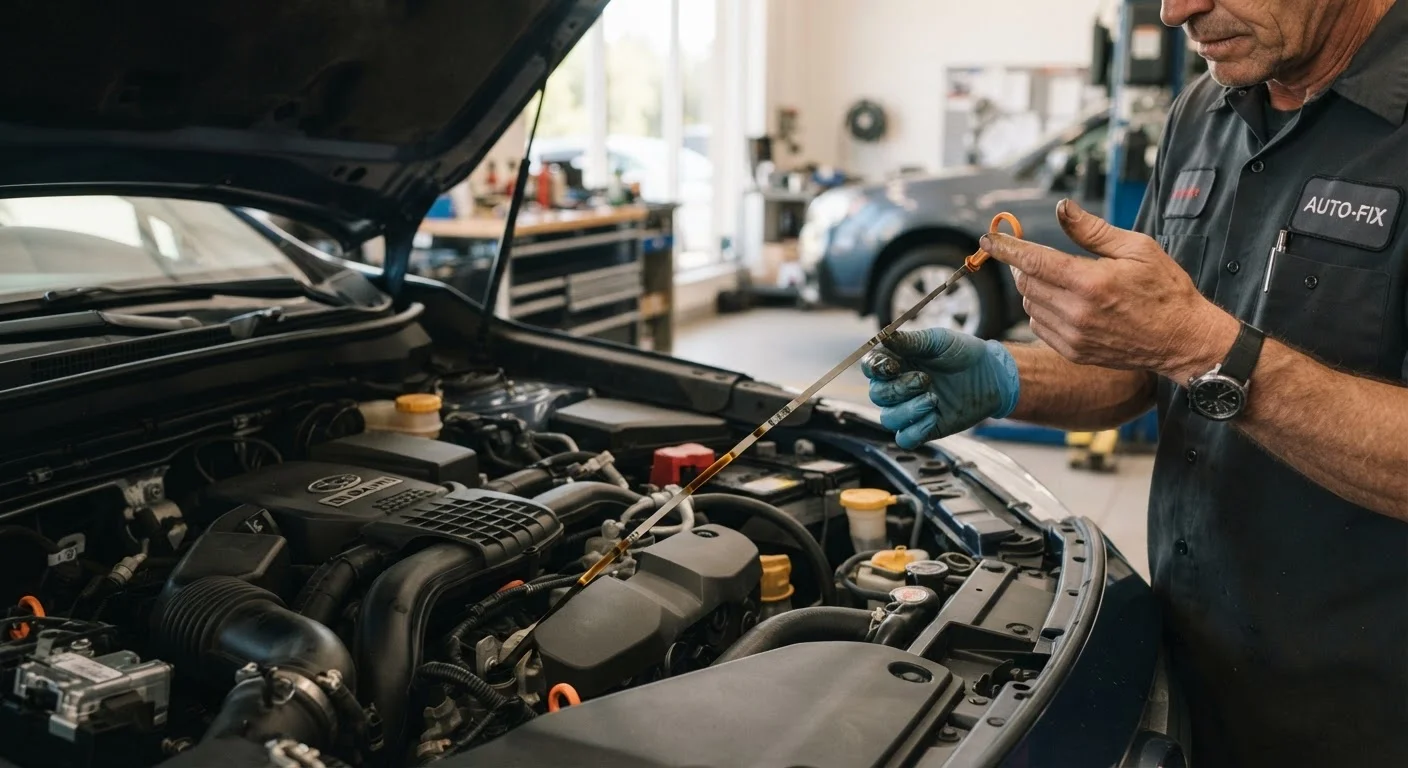
Why Car Maintenance Myths Persist - and What They Cost You
Automotive advice passed down from parents, shop waiting rooms, and well-meaning friends can feel like common sense. But a lot of it is rooted in how cars worked decades ago - before fuel injection, synthetic oils, and computerized engine management became standard. Acting on outdated guidance costs U.S. families real money every year, whether through unnecessary service visits or damage caused by skipping genuinely important maintenance.
The good news: your vehicle's owner's manual, not internet folklore, is your most reliable guide. Cross-referencing manufacturer recommendations with current mechanic consensus puts you in control of your maintenance budget. See our guide to maintaining a family car on a tight budget for a broader framework.
Myth
You need to change your oil every 3,000 miles, no matter what.
Fact
Most modern vehicles using conventional oil are engineered for 5,000-7,500-mile intervals; those using full synthetic oil often go 10,000-15,000 miles between changes.
The 3,000-mile rule made sense for older engine designs and lower-grade lubricants. Today, engine tolerances are tighter and oil formulations are significantly more durable. Your owner's manual specifies the correct interval for your vehicle under normal and severe driving conditions - that's the number to follow. Over-changing oil wastes money and generates unnecessary waste oil. For a deeper look at oil types, see what actually matters when choosing engine oil.
Myth
You should let your engine idle to warm up before driving in winter.
Fact
Fuel-injected engines - standard on virtually every vehicle built since the early 1990s - warm up faster and more efficiently under a light driving load than while idling.
Extended idling in cold weather can actually wash oil off cylinder walls with unburned fuel, increasing wear over time. A brief 30-second idle to allow oil to circulate is reasonable in extreme cold; beyond that, driving gently is the most effective warm-up strategy. Prolonged idling also wastes fuel and, in enclosed spaces, poses a carbon monoxide risk.
Myth
Premium gasoline gives every car better performance and engine protection.
Fact
Premium fuel only benefits engines specifically engineered to require or recommend it - using it in a standard engine produces no measurable performance or longevity gain.
Premium fuel has a higher octane rating, which resists engine knock in high-compression or turbocharged engines designed for it. If your owner's manual says "regular unleaded," that's what your engine's computer is calibrated to run on. Paying extra for premium in a regular-fuel vehicle is money spent for no return. Check your fuel cap or owner's manual - not the pump marketing copy - to confirm what your vehicle actually requires.
Myth
Inflate your tires to the maximum pressure printed on the sidewall.
Fact
The correct tire pressure for your vehicle is found on the door jamb placard or in the owner's manual - the sidewall figure is the tire's maximum rated pressure, not the recommended operating pressure.
Overinflating tires reduces the contact patch with the road, leading to reduced traction, harsher ride quality, and accelerated center-tread wear. The vehicle manufacturer specifies the pressure that balances handling, fuel economy, and tire longevity for your specific car and load. Check pressures when tires are cold - ideally before the first mile of driving - for the most accurate reading. Regularly overlooked maintenance like tire pressure is covered in our guide to easy-to-overlook routine maintenance.
Myth
If a dashboard warning light comes on but the car seems fine, you can ignore it.
Fact
Many warning lights signal developing problems that are far cheaper to address early - some indicate conditions that can leave you stranded or pose a safety risk if left unattended.
A check engine light, for example, can indicate anything from a loose gas cap to a catalytic converter problem or misfiring cylinder. Running an engine with an active fault code can cause secondary damage. Understanding what your dashboard warning lights mean helps you judge urgency accurately rather than guessing.
Myth
You only need to service your car when something feels wrong.
Fact
Many of the most costly mechanical failures develop gradually and silently - by the time symptoms are noticeable, preventable damage has often already occurred.
Coolant, brake fluid, and transmission fluid degrade over time regardless of mileage-based symptoms. Timing belts, serpentine belts, and spark plugs have defined replacement intervals because failure is often sudden and expensive. Manufacturer maintenance schedules exist precisely because vehicles require periodic attention before problems announce themselves. Treating your owner's manual service schedule as optional rather than advisory is one of the more reliable ways to turn a small cost into a large one.
What These Myths Mean for Your Wallet
The financial impact of following outdated advice adds up faster than most families expect. Over-servicing - changing oil more frequently than necessary, buying premium fuel your engine doesn't need, or replacing parts on arbitrary schedules - diverts money that could cover genuinely important repairs.
$1,200+
Average annual cost of unnecessary over-servicing
Industry estimates suggest families following outdated service rules - such as the 3,000-mile oil change - can spend over $1,200 per year more than manufacturer schedules require.
26%
Vehicles found with significantly underinflated tires
According to the National Highway Traffic Safety Administration (NHTSA), a substantial share of passenger vehicles on U.S. roads are driven with tires inflated well below the recommended pressure.
8¢-10¢
Extra cost per mile from over-frequent oil changes
Changing oil every 3,000 miles in a vehicle rated for 7,500-mile intervals can add roughly 8-10 cents per mile in unnecessary service costs over a vehicle's lifetime.
Under-servicing carries its own risks: ignoring tire pressure leads to uneven wear and reduced fuel efficiency, while skipping fluid checks can allow minor issues to escalate into costly repairs. Routine maintenance genuinely prevents expensive repair bills, but only when it's based on accurate information rather than myth.
If you're unsure which tasks you can confidently handle at home versus which require a professional, our DIY car maintenance guide breaks it down clearly. And for a look at other money-saving car tips that don't hold up under scrutiny, see common myths about saving money on cars.
Your Owner's Manual Is the Authoritative Source
No general advice - including this article - replaces the maintenance schedule and fluid specifications in your vehicle's owner's manual. Manufacturers engineer these intervals based on your specific engine, transmission, and operating environment. When in doubt, follow the manual first, and consult a qualified mechanic for any concerns about your vehicle's condition.
The content provided on our blog site traverses numerous categories, offering readers valuable and practical information. Readers can use the editorial team’s research and data to gain more insights into their topics of interest. However, they are requested not to treat the articles as conclusive. The website team cannot be held responsible for differences in data or inaccuracies found across other platforms. Please also note that the site might also miss out on various schemes and offers available that the readers may find more beneficial than the ones we cover.