

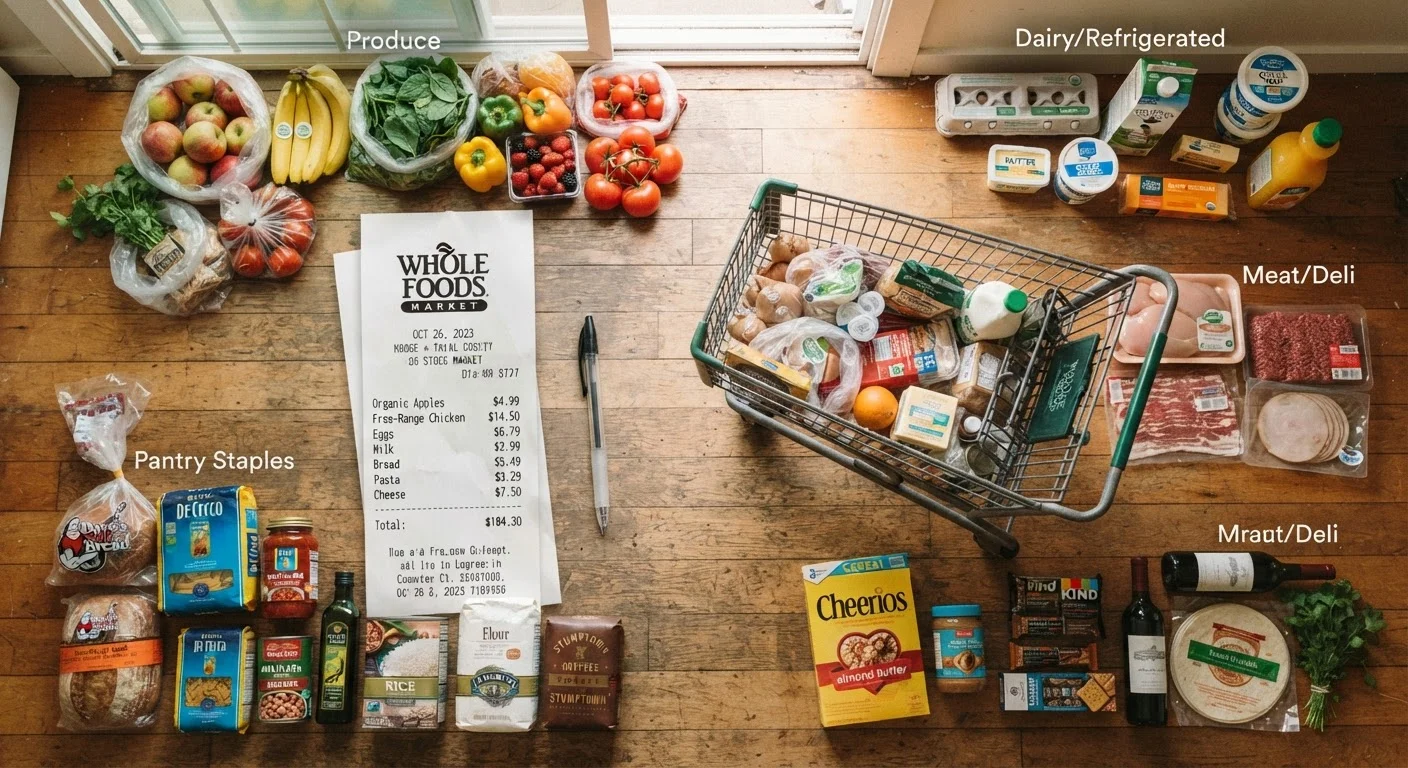
The Categories That Actually Drain Your Cart
Most families think of their grocery budget as one number. In practice, it's five or six distinct spending streams that behave very differently - and respond to very different strategies. If you've ever wondered why your totals keep climbing even when you're being careful, the answer is almost always hidden inside one or two specific categories.
Meat, poultry, and seafood typically claim the largest single share of a household food budget. Protein-dense foods carry some of the highest per-pound costs in the store, and family-size quantities amplify that quickly. A household eating animal protein at most meals can spend more on this one category than on produce and dairy combined.
Convenience and pre-prepared foods are the second major drain - and the trickiest, because they appear scattered across the store rather than in one aisle. Pre-cut vegetables, marinated proteins, meal kits, rotisserie items, single-serve snack packs, and heat-and-eat entrees can each seem modest individually while adding up to a significant premium. Per-serving, these formats routinely cost two to four times more than their whole-ingredient equivalents.
~$1,000+
Monthly food spend for a moderate-cost family of four
Based on USDA official food-cost reports for a moderate-cost plan covering two adults and two school-age children.
2-4×
Premium paid for convenience-packaged vs. whole ingredients
General industry estimate comparing cost-per-serving for pre-cut, marinated, or single-serve formats against equivalent whole-food preparation.
15-20%
Share of grocery receipts that are non-food items
Household surveys consistently show cleaning supplies, paper goods, and personal care products represent a substantial portion of supermarket spending.
Understanding these patterns is the foundation of any honest grocery plan. If you're newer to household budgeting overall, building a budget from scratch covers the broader framework these categories fit into.
The Overlooked Expenses Hidden in Every Grocery Run
Beverages deserve their own line in any family budget. Juice, soda, flavored water, sports drinks, and coffee pods accumulate quietly - each purchase feels small, but a family that buys several varieties per week is often spending $60-$100 monthly just on drinks. Switching even partially to water and home-brewed coffee is one of the highest-leverage adjustments available with no nutritional downside.
Non-food items are the other hidden inflator. Cleaning products, paper goods, personal care items, and over-the-counter medications purchased during grocery trips are often mentally filed as "groceries" but may represent 15-20% of the receipt. Tracking these separately lets families see their actual food costs clearly - and often reveals that food spending is more reasonable than it looked.
Separate Food from Non-Food on Your Receipt
Before setting a grocery budget, spend two weeks logging your receipts split into food versus non-food items. Most families discover their actual food spending is 10-20% lower than their total grocery spend - which changes the conversation about where to cut. Apps that allow custom categories make this easier to maintain consistently.
Retail store design also plays a role. Spending traps built into the shopping environment - from product placement to end-cap promotions - are engineered to encourage unplanned additions. Recognizing them is the first step to resisting them.
Building a Category-Aware Grocery Strategy
The most effective grocery strategies work at the category level, not the total level. That means knowing roughly what you spend on protein, produce, dairy, packaged goods, beverages, and non-food items separately - and deciding deliberately where to flex and where to hold firm.
Protein is usually where families find the most room. Shifting some meals toward eggs, legumes, canned fish, or less expensive cuts can meaningfully reduce the monthly total without eliminating meat. Buying in bulk works particularly well for proteins that freeze reliably, though it requires upfront cost and adequate freezer space.
Pantry structure matters more than most families realize. A well-organized stock of staples - grains, canned goods, dried legumes, oils - reduces the frequency of expensive last-minute purchases and makes meal planning more flexible. Pantry stocking principles outlines how to build this foundation without overbuying.
For households looking to sharpen their number literacy at the shelf, understanding unit pricing and hidden costs explains why the sticker price is rarely the whole story. And if your household size significantly affects your buying patterns, how family size changes the buying calculus is worth reviewing before building your category targets.
This article is for general informational purposes only and does not constitute personalized financial advice. For guidance specific to your household's situation, consider consulting a qualified financial professional.
Frequently Asked Questions
There is no single correct figure, but common personal finance guidance suggests 10-15% of take-home pay for food at home. The USDA's food-cost reports offer tiered benchmarks by family size and age composition that can help calibrate a realistic target for your household. Consulting a financial adviser can help you set a figure that fits your full budget picture.
Meat, poultry, and seafood consistently rank as the highest single food expenditure for most US households. Even modest reductions - such as adding one or two plant-based meals per week - can produce noticeable monthly savings without eliminating protein.
Shifting from convenience-packaged formats to whole or minimally processed ingredients delivers the most savings without compromising nutrition. Planning meals before shopping, using a structured list, and building a functional pantry reduces impulse purchases and last-minute takeout costs.
They can, but the savings depend heavily on whether the discounts apply to items you would buy anyway. Loyalty pricing often incentivizes higher quantities or premium tiers, so it's worth comparing the member price per unit against standard pricing at other stores before assuming a deal exists.
The most common culprits are non-food items folded into grocery trips, unplanned convenience purchases, and underestimating how frequently the household shops. See <a href="/family-finances/family-budgeting/why-families-who-budget-still-end-up-overspending">why budgets quietly fail</a> for a broader look at this pattern.
Not always. Bulk purchasing works well for shelf-stable staples with predictable consumption but can backfire for perishables or items the household uses irregularly. Spoilage and storage costs can quickly erase any per-unit savings.
The content provided on our blog site traverses numerous categories, offering readers valuable and practical information. Readers can use the editorial team’s research and data to gain more insights into their topics of interest. However, they are requested not to treat the articles as conclusive. The website team cannot be held responsible for differences in data or inaccuracies found across other platforms. Please also note that the site might also miss out on various schemes and offers available that the readers may find more beneficial than the ones we cover.