

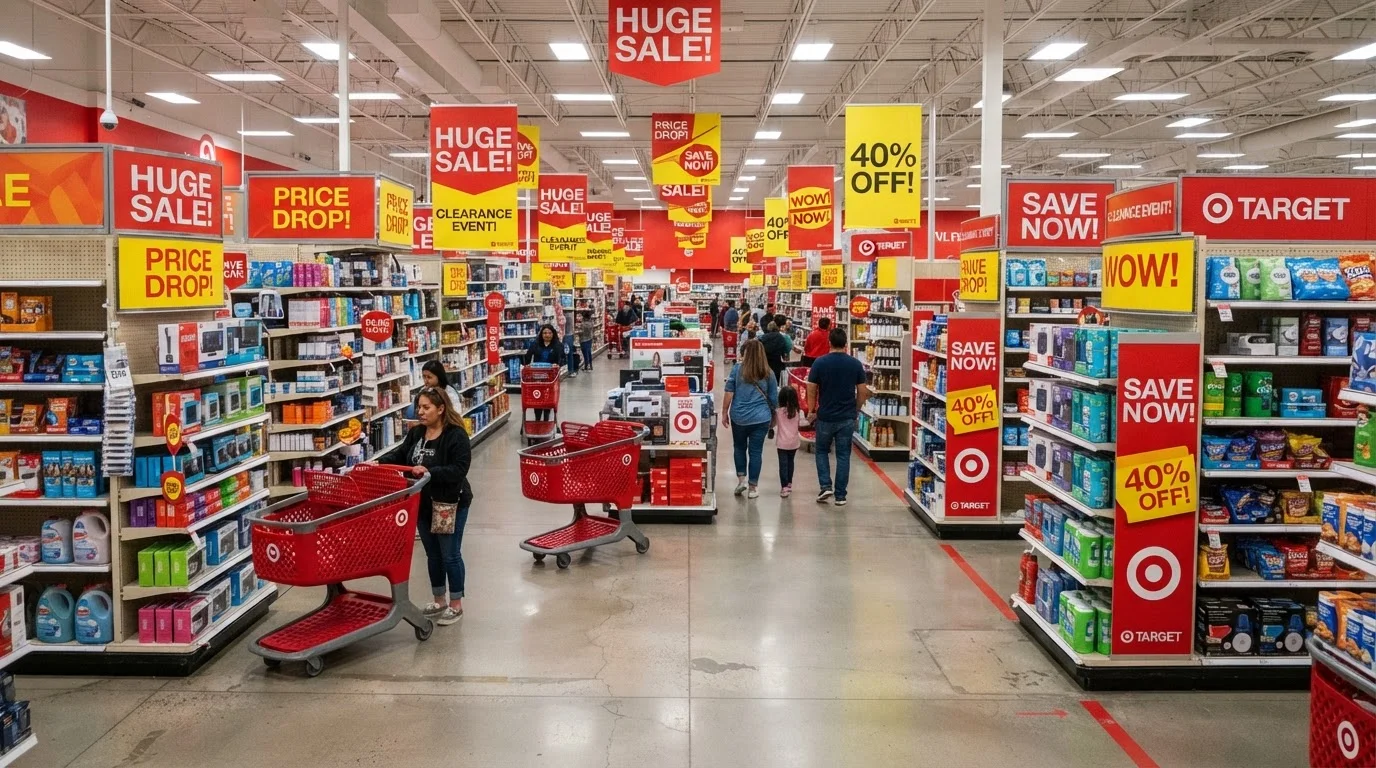
Why Stores Are Designed Against Your Budget
Retail environments - whether physical aisles or digital storefronts - are not neutral spaces. They are deliberately engineered to extend your time in-store, increase the number of items in your cart, and lower your resistance to unplanned purchases. This isn't speculation; it's an established field of study known as retail psychology, and its findings are applied everywhere from grocery chains to e-commerce checkout flows.
For families managing tight household budgets, understanding these tactics isn't about distrust - it's about leveling the playing field. The same way you'd read a nutrition label before buying a processed food, it pays to recognize the structural pressure points built into the shopping experience before you walk through the door (or open an app). These traps are consistent, repeatable, and avoidable once you know what to look for. See how these dynamics connect to spending traps across the full purchase journey for a broader picture.
The Decoy Price Anchor
Retailers frequently place a high-priced item next to a mid-priced one to make the latter feel like a bargain - even if that mid-priced item is still more than you need or intended to spend. This technique, known as price anchoring, shifts your reference point away from your actual budget and toward the retailer's preferred comparison.
The fix: before shopping, decide your price ceiling for a category independently, not in response to what's on the shelf. What you're willing to pay should come from your budget, not from the item displayed next to the one you're considering.
Your price ceiling should come from your budget, not from what's displayed on the shelf beside it.
Free Shipping Thresholds
Online retailers set free-shipping minimums - often $25, $35, or $50 - at a level just above the average order value. When your cart sits at $28 and free shipping kicks in at $35, the temptation to add another item rather than pay a $5.99 shipping fee feels like rational math. But you've just spent $7 to avoid a $6 fee, often on something you didn't plan to buy.
Before adding filler items, calculate whether the shipping cost is actually less than the unneeded purchase. Sometimes paying for shipping is the cheaper choice.
Paying a shipping fee is often cheaper than adding an unneeded item to hit a free-shipping minimum.
Strategic Product Placement
In physical stores, the most profitable items are placed at eye level, at the end of aisles (called endcaps), and near checkout lines. Staple goods - the things you actually came for - are often placed at the back of the store, requiring you to walk past higher-margin products to reach them. This is not accidental; store layouts are regularly tested and revised to maximize exposure to specific items.
Shopping with a list and moving directly to those sections reduces dwell time in high-pressure zones. Looking at shelves above and below eye level also reveals options that may not be featured because they carry lower margins for the retailer.
Staple goods are placed at the back of the store deliberately - you must pass profitable items to reach them.
Bundling and Multi-Buy Offers
"3 for $9" sounds better than $3 each - but only if you were going to buy three in the first place. Many multi-buy promotions don't require you to purchase multiple units to get the per-unit price, yet the phrasing nudges shoppers toward buying more than they need. Others do require the full quantity, effectively using a modest discount to generate significant volume.
Read the fine print on any bundle. If the per-unit price is the same whether you buy one or three, buy only what you need. If you genuinely use the product regularly, bulk buying may represent real value - but that judgment should be deliberate, not reactive.
Many multi-buy promotions don't require multiple units to access the advertised per-unit price.
Urgency and Scarcity Cues
"Only 4 left in stock," countdown timers, and flash-sale end times are all designed to compress the time you have to think. Urgency is one of the most well-documented psychological levers in retail, and it works by triggering a fear of loss that overrides deliberate decision-making. Online retailers can display these cues dynamically, sometimes regardless of actual inventory levels.
A useful practice: if an urgency cue is the primary reason you're considering a purchase right now, wait 24 hours. If the need is real, you'll still want the item tomorrow. If the impulse fades, the urgency did its job - and you've avoided an unplanned expense. This connects directly to the patterns explored in deal-hunting habits that quietly cost more than they save.
If urgency is the main reason you're buying right now, waiting 24 hours is the most reliable filter.
Loyalty Programs That Incentivize Overspending
Points, rewards, and cashback programs are genuinely valuable when used on purchases you were already planning to make. They become spending traps when the pursuit of points motivates purchases beyond your budget. Earning $5 in rewards by spending $80 on items you didn't need is a net loss, not a win.
Treat loyalty rewards as an incidental bonus on planned spending, not as a target to chase. If a program requires significant additional spending to unlock a reward tier, model whether the spending required actually costs more than the reward is worth - it often does. For a broader look at how these kinds of patterns affect family budgets, underestimated spending categories are worth reviewing.
Loyalty rewards are a bonus on planned spending - not a reason to spend more than you intended.
Spending Smarter Starts With Knowing the Game
None of these tactics are secret, but they work precisely because they operate below conscious attention. The goal isn't to become a suspicious or joyless shopper - it's to make the decisions that actually reflect your family's priorities rather than a retailer's revenue goals. A written shopping list, a set mental budget, and a brief pause before checkout are low-effort habits that counter most of what's covered above.
The 24-Hour Rule for Unplanned Purchases
Before adding any item not on your original list, give yourself a 24-hour waiting period. For most impulse purchases, the desire fades significantly by the next day - and if it doesn't, you can buy with more confidence that it reflects a genuine need. This one habit counters urgency cues, anchor pricing, and bundling pressure simultaneously.
If you're finding that grocery runs or online orders consistently exceed what you planned, it may be worth reviewing where your grocery budget is actually going - the patterns there often overlap with the traps described here. And for families wondering why savings goals stay just out of reach, these hidden savings habits may offer useful context.
This article is for general informational and educational purposes. It does not constitute financial advice. Readers should consider their own circumstances and, where appropriate, consult a qualified financial professional.
The content provided on our blog site traverses numerous categories, offering readers valuable and practical information. Readers can use the editorial team’s research and data to gain more insights into their topics of interest. However, they are requested not to treat the articles as conclusive. The website team cannot be held responsible for differences in data or inaccuracies found across other platforms. Please also note that the site might also miss out on various schemes and offers available that the readers may find more beneficial than the ones we cover.