

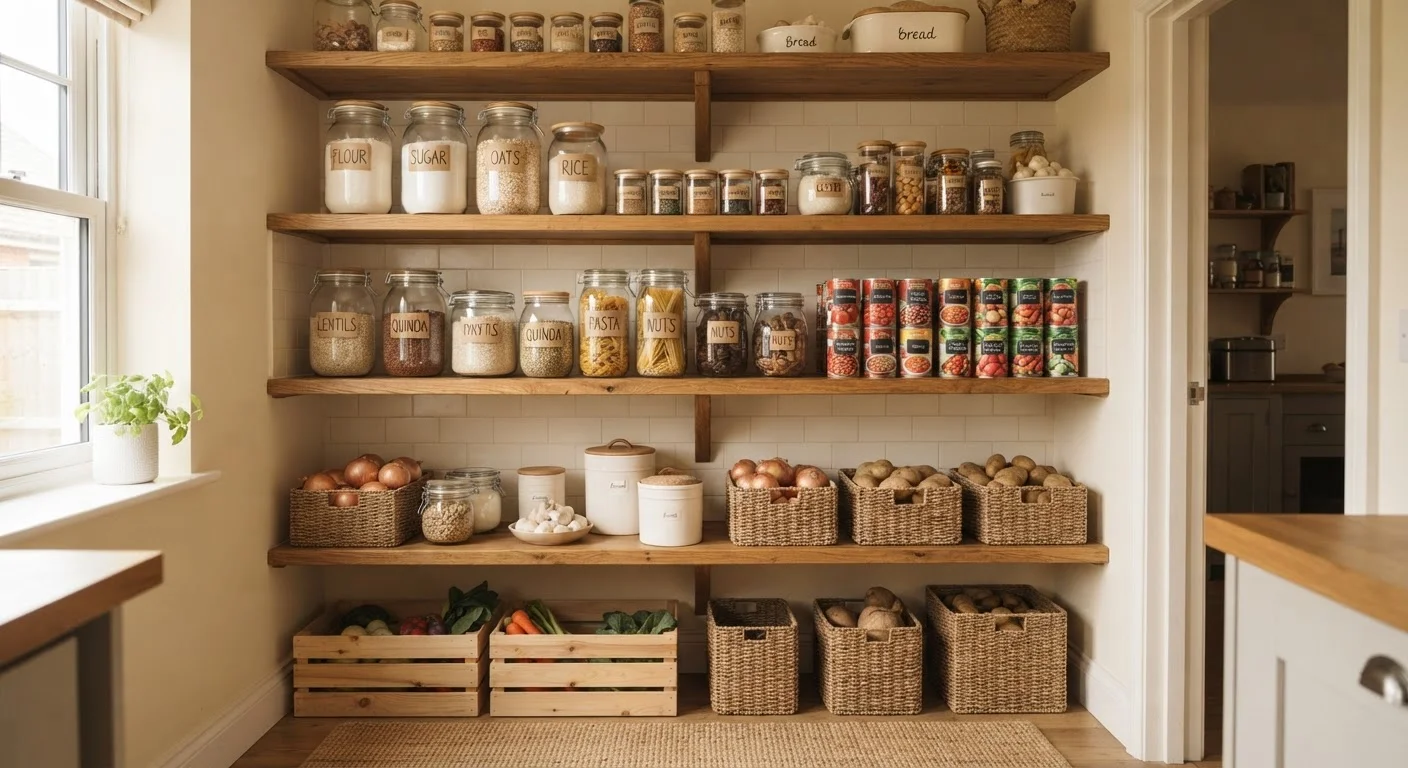
Why a Stocked Pantry Is a Financial Strategy
Most families don't think of their pantry as a budgeting tool - but it is. Every last-minute dinner decision made without pantry resources costs money: the convenience-store run, the takeout order, the full-price emergency grocery trip. A well-maintained pantry interrupts that spending pattern at its source.
The connection between pantry habits and household finances is documented in consumer spending research. Families who shop with a list and plan meals around existing inventory consistently report lower grocery bills than those who shop reactively. Understanding where grocery money actually goes is the first step - a stocked pantry is often how families take back control of those patterns.
This isn't about hoarding or buying in bulk indiscriminately. It's about building a reliable foundation of ingredients that lets you cook flexibly, shop intentionally, and avoid paying a premium for convenience.
Core Principles for Smarter Pantry Stocking
These practices apply regardless of household size, kitchen space, or budget level. Start with the ones most relevant to your current pain points.
Audit your pantry before every shopping trip
Shopping without knowing what you already have leads to duplicate purchases and wasted food. A quick scan before each trip prevents redundant spending and helps you build meals around what's already available.
Stock ingredients, not just finished meal kits
Versatile base ingredients - canned beans, dried grains, olive oil, canned tomatoes - serve multiple meals across the week. Meal kits and pre-packaged dinners carry a convenience premium and limit your flexibility.
Rotate stock using a first-in, first-out system
Placing newly purchased items behind older ones ensures nothing expires unused. Food waste is a direct financial loss - estimates from USDA research suggest households discard a significant share of the food they purchase.
Build your pantry list around meals your family actually eats
Generic pantry lists you find online may include items your household will never use. A pantry stocked to your family's actual meal rotation eliminates waste and ensures everything purchased gets used.
Set a monthly pantry replenishment budget separate from weekly groceries
Mixing pantry-stocking purchases into the weekly grocery budget distorts your spending picture and makes it harder to track where money goes. A dedicated pantry fund treated as a household investment keeps your weekly grocery list focused on fresh items.
Track what you waste, not just what you spend
Most families focus on reducing spending at the point of purchase, but waste happens after. Monitoring what gets thrown away reveals which items aren't earning their pantry space and allows you to adjust stocking decisions accordingly.
For families looking to connect pantry habits with a broader household budget, exploring budgeting methods designed for families can help you allocate a monthly pantry-stocking fund that reduces weekly grocery variability.
Quick Actions You Can Take This Week
You don't need to overhaul your entire kitchen to start saving. A few targeted actions this week can meaningfully reduce next week's grocery spend.
Bulk Buying: The Exception, Not the Rule
Bulk buying is frequently cited as a pantry strategy, but it works best as a selective tool rather than a default approach. Purchasing large quantities of items your household uses predictably - dried pasta, rice, canned tomatoes, cooking oil - can reduce per-unit costs meaningfully. But bulk buying perishables, specialty items, or anything tied to a passing preference often creates waste that erases any savings.
30-40%
Share of US food supply wasted at consumer level
According to the USDA Economic Research Service, food loss at the consumer and retail level represents a substantial portion of the overall food supply, much of it preventable through better storage and planning.
$1,500+
Estimated annual food waste cost per household
Research from ReFED and similar food waste organizations has estimated that the average American household discards hundreds of dollars worth of food per year, with some estimates exceeding $1,500 annually.
A detailed look at when bulk buying helps and when it backfires can help families decide which categories make sense for their household specifically.
The principle is straightforward: buy in larger quantities only for items with long shelf lives that your family already consumes regularly. Everything else should be purchased in amounts matched to realistic near-term use.
Storage Space Doesn't Have to Be a Barrier
A well-stocked pantry doesn't require a large dedicated space. Small apartments and compact kitchens can use under-bed storage, cabinet organizers, or a single dedicated shelf to hold core staples. The goal is intentional curation - a small, well-chosen selection of versatile ingredients you rotate through consistently - rather than volume for its own sake.
For families building a complete savings approach beyond the pantry, the full household saving roadmap covers how small weekly wins compound into significant annual savings.
The content provided on our blog site traverses numerous categories, offering readers valuable and practical information. Readers can use the editorial team’s research and data to gain more insights into their topics of interest. However, they are requested not to treat the articles as conclusive. The website team cannot be held responsible for differences in data or inaccuracies found across other platforms. Please also note that the site might also miss out on various schemes and offers available that the readers may find more beneficial than the ones we cover.