

Why Bringing Kids Into Training Makes Sense
Most families think of pet training as an adult job - something to tackle after the kids are in bed or during a quiet weekend hour. But leaving children out of the process can actually work against you. Dogs, cats, and other trainable pets learn from everyone they interact with regularly, which means a pet who responds beautifully to a parent may completely ignore a child who hasn't learned the same cues and signals.
Involving kids in training also pays dividends beyond pet behavior. Research in child development consistently links age-appropriate responsibility - including caring for animals - to growth in empathy, self-regulation, and confidence. When a seven-year-old successfully asks the family dog to "sit" and gets a wagging tail in response, that's a real, concrete achievement worth celebrating.
The key is knowing how much to involve each child and where to draw clear boundaries. The tips below are organized by developmental stage so you can assign roles that stretch your child just enough without overwhelming them - or putting anyone at risk. Before diving in, it helps to have your basic training approach already in place; our readiness checklist for new pet owners can help you confirm you're set up for success.
Keep Sessions Short for Everyone's Sake
Children and pets both have short attention spans, and training sessions that drag on tend to produce frustration rather than progress. Aim for three to five minutes per session when kids are involved - ending on a success so everyone feels good about it. Frequent, brief sessions are far more effective than occasional long ones.
Age-Appropriate Roles for Kids in Pet Training
Toddlers (Ages 2-3): Observers and Treat Deliverers
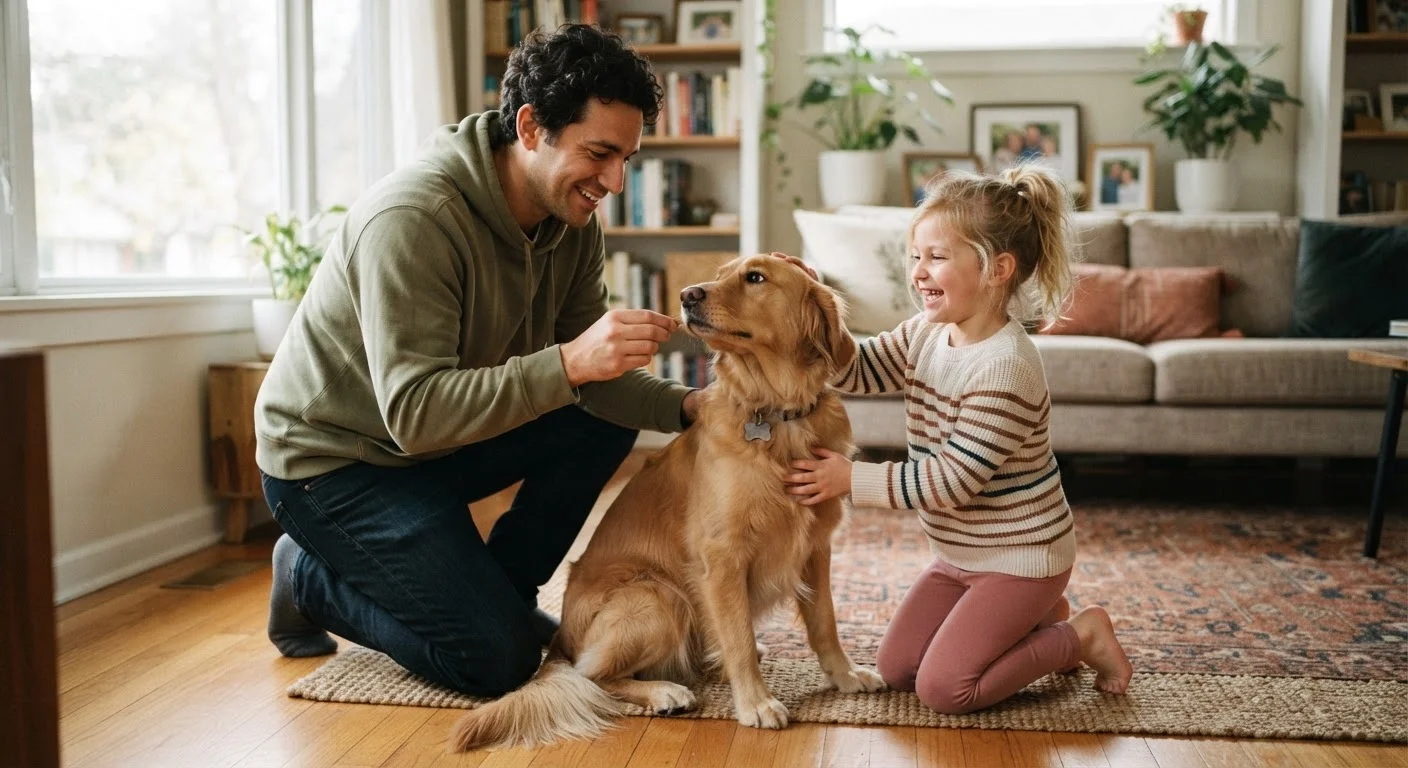
Very young children aren't developmentally ready to issue commands or read an animal's body language reliably, but they can absolutely be part of the experience. The best role for a toddler is treat deliverer - with a parent guiding their hand. An adult gives the cue, the pet responds, and the toddler places a small treat in the pet's vicinity (not dangled from their fingers, which can lead to accidental nips).
This creates a positive association between the child and the pet without asking either one to do more than they're capable of. Keep sessions very brief - two or three repetitions - and always have an adult physically present and engaged, not just nearby.
Even toddlers can participate safely as treat deliverers with a parent guiding every interaction.
Preschool and Kindergarten (Ages 4-6): Learning One Cue at a Time
By ages four to six, most children can memorize a single hand signal or verbal cue and repeat it consistently - the two ingredients that matter most in training. Start with one foundational behavior, typically "sit," and practice it together until your child can deliver the cue clearly and wait for the response before rewarding.
The adult's role here shifts from hands-on helper to coach. Stand close, narrate what's happening ("See how she sat? Now reward her right away"), and gently intervene if the child repeats a cue too quickly or moves to pet the animal before it settles. Praise the child's patience as enthusiastically as the pet's response - both are learning.
Ages four to six is the ideal window for a child to master their very first training cue from start to finish.
Early Elementary (Ages 7-9): Taking on Real Responsibility
Children in this range are ready for a more active role: they can learn two or three commands, participate in short daily training sessions, and begin to understand the logic of positive reinforcement - rewarding a behavior you want to see more of, rather than punishing what you don't. This age group often responds well to a simple written chart tracking what cues the pet has practiced each day.
That said, adult supervision remains essential. A seven-year-old cannot yet reliably recognize the early signs of stress in a dog - a tucked tail, whale eye (where whites of the eyes are visible), or stiff body posture - so a parent should always be present to read the pet's emotional state and step in if needed.
Seven-to-nine-year-olds can run short training sessions, but reading pet stress signals still requires adult eyes.
Tweens (Ages 10-12): Partners in the Process
By around age ten, many children are ready to become genuine training partners. They can learn the principles behind reward timing, understand why consistency across family members matters, and even help teach younger siblings what to do. A tween who has been involved from an earlier age may be ready to lead short sessions with a parent in the room but not necessarily directing every moment.
This is also a good age to introduce the idea that training is ongoing - it doesn't stop once a pet "knows" a command. Practicing known behaviors regularly and in new environments (a different room, the backyard, a quiet street) helps pets generalize what they've learned, making their good behavior reliable rather than situational.
Tweens can lead training sessions and help reinforce consistency across the whole family.
Teens (Ages 13+): Building Real Skills and Judgment
Teenagers who are interested can take on nearly the full scope of training responsibilities - researching techniques, planning session goals, tracking progress over time, and adapting their approach when something isn't working. This is also the age where a teen could benefit from attending a group class alongside a parent, observing a professional trainer, or reading about animal behavior more deeply.
The one non-negotiable at any age: if a pet ever displays growling, snapping, resource guarding, or fearful reactions, training should pause and an adult should consult a certified professional trainer or veterinary behaviorist. No family member - teen or adult - should try to work through aggression without professional guidance.
Teens can take on nearly all training responsibilities, but aggressive behavior always calls for professional support.
Consistency Across the Family Is Non-Negotiable
One of the most common training pitfalls in family homes is inconsistency - the dog learns "down" from Dad but hears "off" from the kids and "no jumping" from Mom. Before involving children in training, align the whole household on the exact words and hand signals you'll use for each behavior. Post a simple reference card on the fridge if it helps. Pets aren't stubborn when they seem confused - they're often just responding to mixed signals.
Once you see which roles resonate with your kids, it's worth checking out our guidance on reward-based training for busy families - short, focused sessions work especially well when children are involved, since both kids and pets have limited attention spans. If your household has more than one pet, training multiple pets in the same household offers practical strategies for keeping everyone on track.
Setting the Right Expectations for Everyone
Even with a clear plan, family training sessions can unravel quickly without a few ground rules. Pets read energy and inconsistency - a child who giggles and repeats a cue five times while the pet jumps around is reinforcing the wrong behavior, even with the best intentions. Adults need to coach kids through these moments without criticism, redirecting them calmly and demonstrating the right approach.
It's also worth having an honest conversation with your children about what training actually is: it's not a performance or a game of control - it's a way of communicating clearly with an animal so everyone in the house feels safe and comfortable. Framing it that way tends to produce kids who are genuinely patient and attentive rather than frustrated when a pet doesn't cooperate immediately.
If your pet is struggling with impulse control around children specifically, our article on teaching a dog to stay calm around young children covers that challenge in depth. And if you've run into conflicting advice about training methods, pet training myths families should stop believing can help you separate fact from fiction.
This article is for general informational purposes. Always supervise children around pets and consult a certified professional trainer or veterinary behaviorist if your pet shows signs of aggression or anxiety.
The content provided on our blog site traverses numerous categories, offering readers valuable and practical information. Readers can use the editorial team’s research and data to gain more insights into their topics of interest. However, they are requested not to treat the articles as conclusive. The website team cannot be held responsible for differences in data or inaccuracies found across other platforms. Please also note that the site might also miss out on various schemes and offers available that the readers may find more beneficial than the ones we cover.