

Our Verdict
Group classes and private sessions each have a genuine place in a family dog's training journey. Group classes shine for socialization, foundational skills, and budget-conscious families, while private sessions are better suited to dogs with specific behavioral challenges or households with complex needs. For many families, starting with private guidance and transitioning to group reinforcement - or vice versa - delivers the strongest long-term results.
| Best for | Recommended |
|---|---|
| Families on a tighter training budget with a sociable, calm dog | Group Classes |
| Dogs with reactivity, anxiety, or specific behavior problems | Private Sessions |
| Puppies needing socialization alongside basic manners | Group Classes |
| Families with complex schedules or multiple household needs | Private Sessions |
What Each Format Actually Looks Like
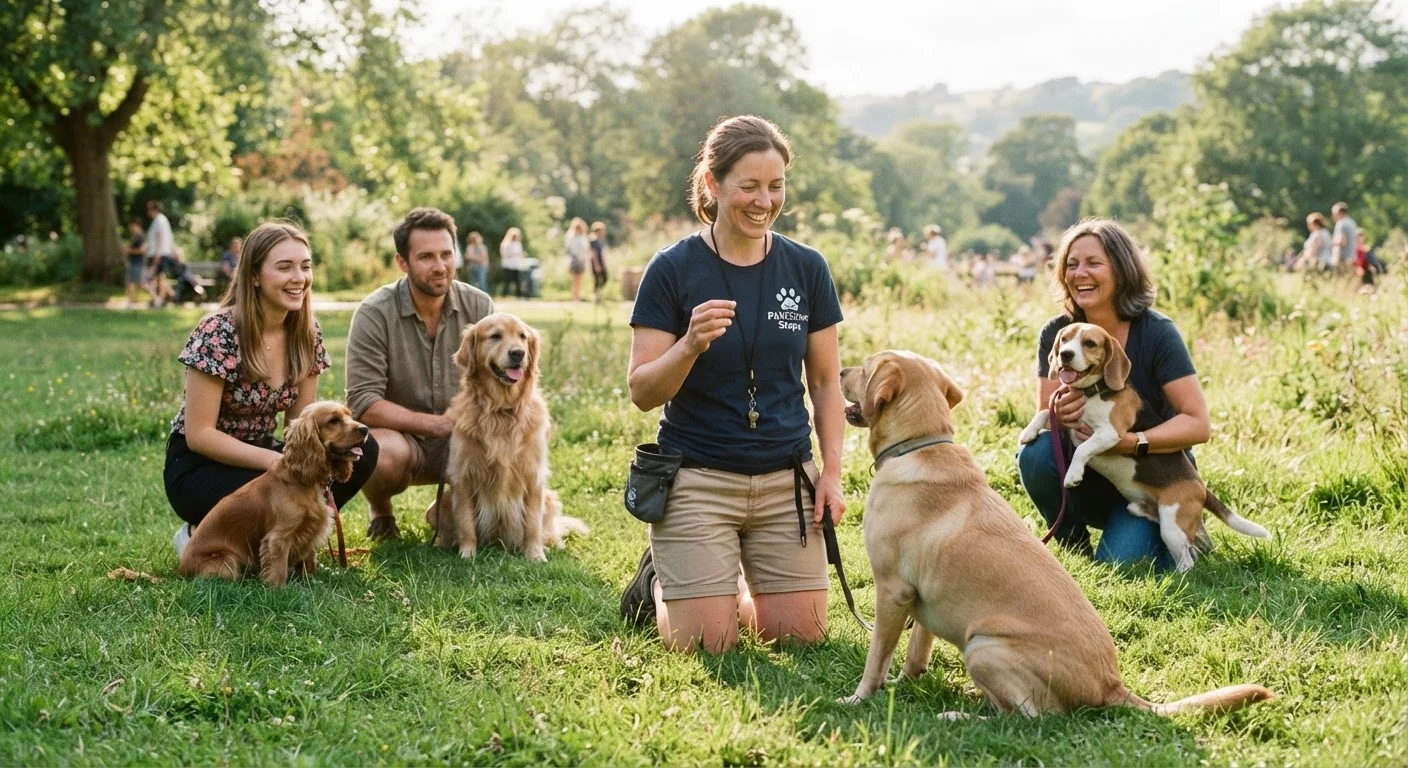
Group obedience classes typically bring together several dogs and their owners - often six to twelve pairs - for weekly sessions in a shared space. A certified trainer leads the class through foundational skills like sit, stay, loose-leash walking, and recall. Everyone works on the same exercises, and the presence of other dogs is part of the point: your dog learns to focus on you even with distractions nearby.
Private sessions, by contrast, take place one-on-one between your family, your dog, and a trainer. These can happen in your home, a training facility, or wherever a specific problem occurs - like a park where your dog pulls on the leash. The trainer designs the session entirely around your dog's current needs, adjusting pace and technique in real time.
Understanding this structural difference helps clarify why each format suits different situations, rather than one being simply "better" than the other.
Where Group Classes Have the Edge
Group classes offer two benefits that private sessions simply can't replicate in the same way: socialization and real-world distraction training. For puppies especially, regular exposure to unfamiliar dogs and people during a critical developmental window can shape confident, well-adjusted adult behavior. Trainers often describe this as one of the most underrated advantages of the group format.
Cost is another significant factor. Group sessions are generally more accessible than private instruction, making them a practical entry point for families exploring training for the first time. They also create a built-in sense of community - many families find encouragement in seeing other dogs work through the same challenges their own dog faces.
Group settings also work well when your dog is sociable, reasonably calm around other animals, and learning foundational manners. If your goal is a dog who responds reliably in everyday environments - walks, parks, family gatherings - group classes build exactly that kind of real-world reliability. See our guide to reward-based training for busy families for strategies that complement the group class format.
Ask Before You Enroll
Before signing up for any group class, ask the trainer whether there are prerequisites - such as a temperament assessment or basic vaccination requirements. A good trainer will also describe how they handle a dog who becomes overwhelmed or disruptive mid-class. This tells you a lot about their approach and whether the environment will be safe and productive for your dog.
When Private Sessions Make More Sense
Some dogs genuinely struggle in group environments. A dog who is highly reactive to other animals, anxious in new spaces, or dealing with a specific behavior like resource guarding or separation distress will not thrive - and may actually regress - when placed in a busy class setting before those issues are addressed.
Private sessions give a trainer the full picture: your home layout, your family's routines, the specific triggers that set your dog off. That level of context allows for targeted problem-solving that a group class instructor simply doesn't have time to provide. It's also easier to involve the whole family - including children - in a private setting, where a trainer can coach each person individually on technique and timing. Our article on involving kids in pet training explores how to make that work safely across different ages.
Families managing multiple pets may also find private sessions more practical, since a trainer can help design a household-wide approach. For more on that, see our guide to training multiple pets.
| Group Classes | Private Sessions | |
|---|---|---|
| Typical cost | Lower per session | Higher per session |
| Socialization opportunity | High - built into format | Low - must be arranged separately |
| Customization | Limited - shared curriculum | Full - tailored to your dog |
| Best for reactive dogs | Not ideal initially | Well suited |
| Family involvement | Possible but less guided | Trainer coaches each family member |
| Schedule flexibility | Fixed weekly schedule | Arranged around your availability |
| Real-world distraction training | Strong - other dogs present | Requires trainer to stage scenarios |
Making the Right Call for Your Family
The honest answer is that the "best" format is the one your family will follow through on consistently. A private session plan that never gets practiced at home is less effective than a weekly group class you actually attend. Commitment and repetition drive results more than the format itself.
A useful starting point: if your dog has no significant behavioral concerns and is reasonably comfortable around other dogs, group classes are a logical, cost-effective first step. If your dog has specific challenges, or if your family needs individualized coaching to build confidence with training techniques, start with private sessions - then consider joining a group class once the foundational issues are addressed.
It's also worth asking any trainer about their credentials, methods, and how they handle dogs who show stress during sessions. Look for trainers who use positive, reward-based approaches, which are consistently supported by animal behavior research. Not sure what to watch out for? Our article on pet training myths families should stop believing covers common misconceptions that can lead families toward outdated or counterproductive methods. You may also find it helpful to read our piece on weighing professional training against self-teaching before committing to either path.
This article is for general informational purposes only. For dogs with significant behavioral or anxiety issues, consult a certified veterinary behaviorist or qualified professional trainer for guidance tailored to your dog's specific needs.
The content provided on our blog site traverses numerous categories, offering readers valuable and practical information. Readers can use the editorial team’s research and data to gain more insights into their topics of interest. However, they are requested not to treat the articles as conclusive. The website team cannot be held responsible for differences in data or inaccuracies found across other platforms. Please also note that the site might also miss out on various schemes and offers available that the readers may find more beneficial than the ones we cover.