

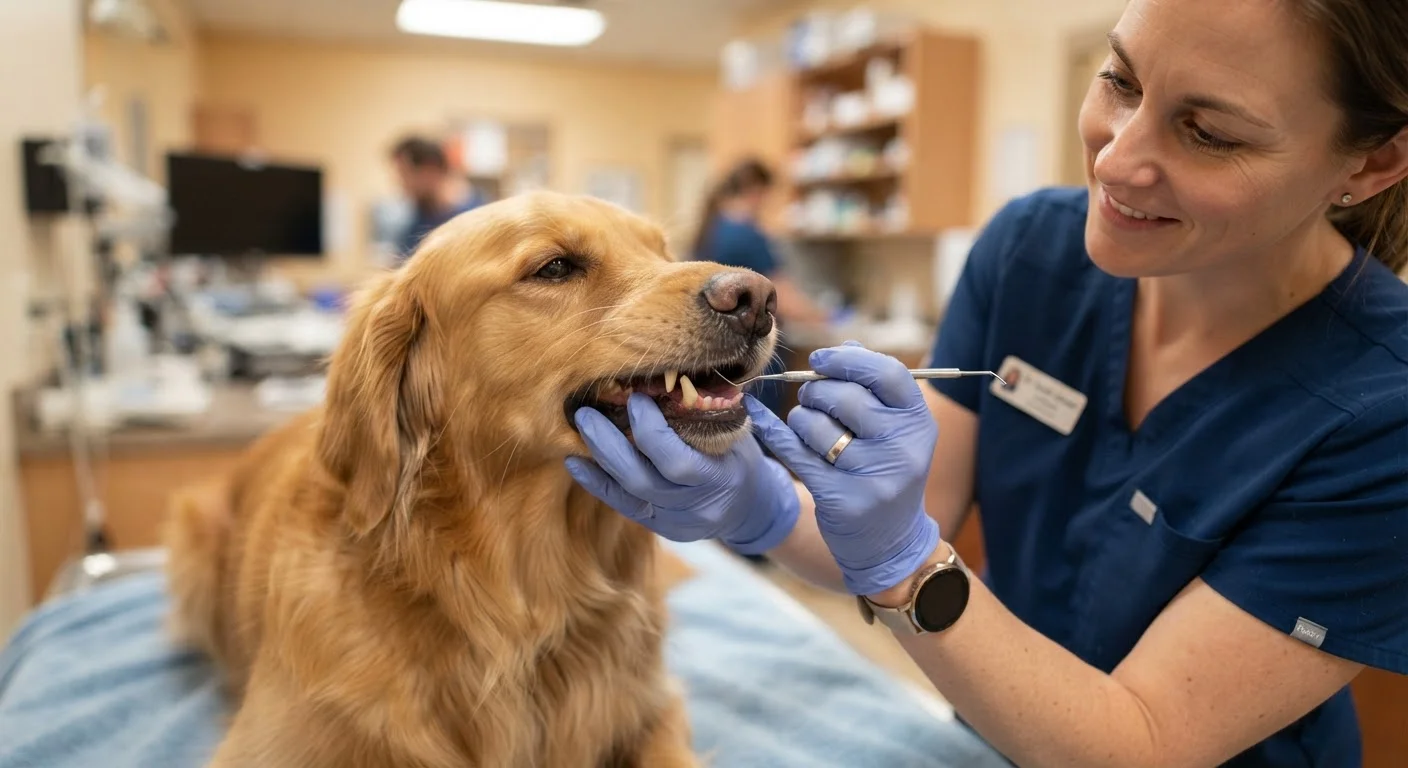
Why Pet Dental Health Gets Overlooked
It's easy to focus on vaccines, flea prevention, and annual weight checks while dental health quietly falls through the cracks. Pet mouths are harder to inspect than a dog's coat or a cat's eyes, and unless something is visibly wrong, most families assume everything is fine. The problem is that dental disease rarely announces itself dramatically - it builds slowly, under the gum line, largely out of sight.
According to the American Veterinary Dental College, periodontal disease is the most common clinical condition seen in adult cats and dogs. By the time pets reach three years of age, many already have some degree of gum inflammation or tartar buildup that needs attention. That doesn't mean families are doing anything wrong - it means dental disease progresses faster in pets than most people realize.
As part of a broader preventive care routine, dental health deserves a dedicated spot on your pet's health checklist - not an afterthought.
What Healthy Pet Teeth Actually Look Like
Knowing what to look for is the first step. Healthy teeth in cats and dogs should be white to slightly off-white, with no visible brown or yellow crust along the gum line. Gums should be pink and firm - not red, puffy, or receding. And while your pet's breath won't be pleasant, a sharp or foul odor is a red flag, not a given.
Signs that something may be wrong include:
- Yellow or brown tartar buildup along the teeth, especially near the gums
- Red, swollen, or bleeding gums (gingivitis)
- Loose or missing teeth
- Difficulty chewing, dropping food, or favoring one side of the mouth
- Excessive drooling or pawing at the face
- Noticeable change in appetite
Pets are instinctively good at masking pain, so behavioral clues - like becoming less interested in toys or chews they previously loved - can be easy to miss. Our guide on how pets communicate pain and discomfort explains these subtle signals in more detail.
~80%
Dogs with dental disease by age 3
The American Veterinary Dental College estimates around 80% of dogs show signs of periodontal disease by their third birthday.
~70%
Cats affected by dental disease by age 3
Similar estimates suggest the majority of cats also develop periodontal changes within the first few years of life.
#1
Most common condition diagnosed in adult pets
Periodontal disease consistently ranks as the most frequently diagnosed condition in veterinary practice across both cats and dogs.
The Hidden Health Risks of Untreated Dental Disease
Dental disease isn't just a mouth problem. When bacteria from infected gums enter the bloodstream - a process called bacteremia - they can travel to and damage major organs. Veterinary research has linked severe periodontal disease to changes in the heart, kidneys, and liver, though the exact nature of these relationships is still being studied. What's clear is that leaving dental disease untreated creates health risks well beyond a sore tooth.
This systemic connection is one reason vets take dental health seriously even in otherwise healthy-seeming pets. It's also why dental assessments are a standard part of annual pet check-ups - even when an owner hasn't raised any concerns.
Dental Health Matters More as Pets Age
Older pets are at higher risk for advanced periodontal disease and may also be taking medications that affect oral tissues. If your senior cat or dog hasn't had a dental assessment recently, it's worth raising specifically at their next appointment - don't assume the vet will always bring it up unprompted. Early intervention is almost always less invasive and less expensive than treating advanced disease.
Prevention: What Families Can Do at Home
The most effective tool available to pet owners is also the simplest: a toothbrush. Daily brushing with pet-safe toothpaste removes plaque before it hardens into tartar. Starting early - ideally when a pet is still young - makes the habit much easier to build. Adult pets can be gradually conditioned to accept brushing too, though it takes patience.
Practical starting points for home dental care:
- Use the right products. Pet toothpastes come in flavors animals tolerate (poultry, malt) and are safe to swallow. Never use human toothpaste.
- Start slow. Let your pet sniff and lick the toothpaste first, then introduce a finger brush, then a toothbrush over several sessions.
- Be consistent, not perfect. Even three or four brushings per week provide meaningful plaque control.
- Add supplemental tools. Dental chews, water additives, and specific dental diets can help reduce plaque between brushings - ask your vet which carry a veterinary oral health endorsement.
Keep in mind that some common beliefs about pet health - like assuming hard kibble cleans teeth adequately - don't hold up to veterinary scrutiny. Kibble has minimal mechanical cleaning effect on the parts of the tooth where disease starts.
Make Tooth-Brushing a Family Routine
If your household already has a before-bed teeth-brushing habit for the kids, add the pet to the routine at the same time. The consistency helps your pet learn what to expect, and having children involved can make it feel like less of a chore. Even 30 seconds of gentle brushing on the outer surfaces of the teeth makes a measurable difference over time.
Professional Cleanings: What to Expect
At-home care slows plaque accumulation, but it rarely eliminates it entirely. Professional dental cleanings - performed under general anesthesia - allow your vet to scale tartar above and below the gum line, probe each tooth for pockets or damage, take dental X-rays, and extract any teeth that can't be saved. This level of assessment simply isn't possible on an awake, moving animal.
Anesthesia understandably makes many pet owners nervous. Your vet will typically perform a physical exam and pre-anesthetic bloodwork beforehand to identify any risks. Anesthetic protocols have improved significantly, and the procedure is considered routine across the veterinary profession. The risks of untreated dental disease generally outweigh the risks of a properly managed cleaning.
How often a professional cleaning is needed varies by individual - some pets need one annually, others less frequently. Your vet is best placed to advise based on your pet's specific oral health status, age, and breed. Smaller dog breeds and brachycephalic (flat-faced) breeds like Bulldogs and Persian cats tend to be more prone to dental disease due to tooth crowding. As pets age, this becomes even more relevant - see our overview of how senior pet health needs shift for context.
This article is for general informational purposes only and does not constitute veterinary advice. Always consult a licensed veterinarian for guidance specific to your pet's health and needs.
Frequently Asked Questions
Common signs include bad breath, yellow or brown buildup on teeth, red or swollen gums, drooling more than usual, and reluctance to eat hard food. Because pets often hide discomfort, even a seemingly normal pet may have significant disease - a vet exam is the only reliable way to assess oral health.
No - persistent bad breath is not normal and is usually a sign of bacterial buildup, gum disease, or tooth decay. While a pet's breath will never smell minty fresh, a noticeably strong or foul odor warrants a dental checkup.
Yes. Cats are equally susceptible to periodontal disease and also develop a painful condition called tooth resorption, where the tooth structure breaks down from the inside. Dental care is just as important for cats, though they can be harder to brush at home.
Professional dental cleanings for pets require general anesthesia so the mouth can be fully examined and cleaned above and below the gum line. Your vet will typically run pre-anesthetic bloodwork to assess your pet's fitness for the procedure. Risks exist with any anesthesia, but the procedure is considered routine and widely performed.
Daily brushing is the gold standard recommended by veterinary dentists. Even a few times per week provides meaningful benefit. Use toothpaste formulated for pets - human toothpaste contains ingredients that are harmful if swallowed.
Dental chews and toys can help reduce plaque between brushings, but they don't replicate the mechanical effect of bristles on the tooth surface. They work best as a supplement to brushing, not a replacement. Look for products carrying a veterinary oral health seal of acceptance.
The content provided on our blog site traverses numerous categories, offering readers valuable and practical information. Readers can use the editorial team’s research and data to gain more insights into their topics of interest. However, they are requested not to treat the articles as conclusive. The website team cannot be held responsible for differences in data or inaccuracies found across other platforms. Please also note that the site might also miss out on various schemes and offers available that the readers may find more beneficial than the ones we cover.