

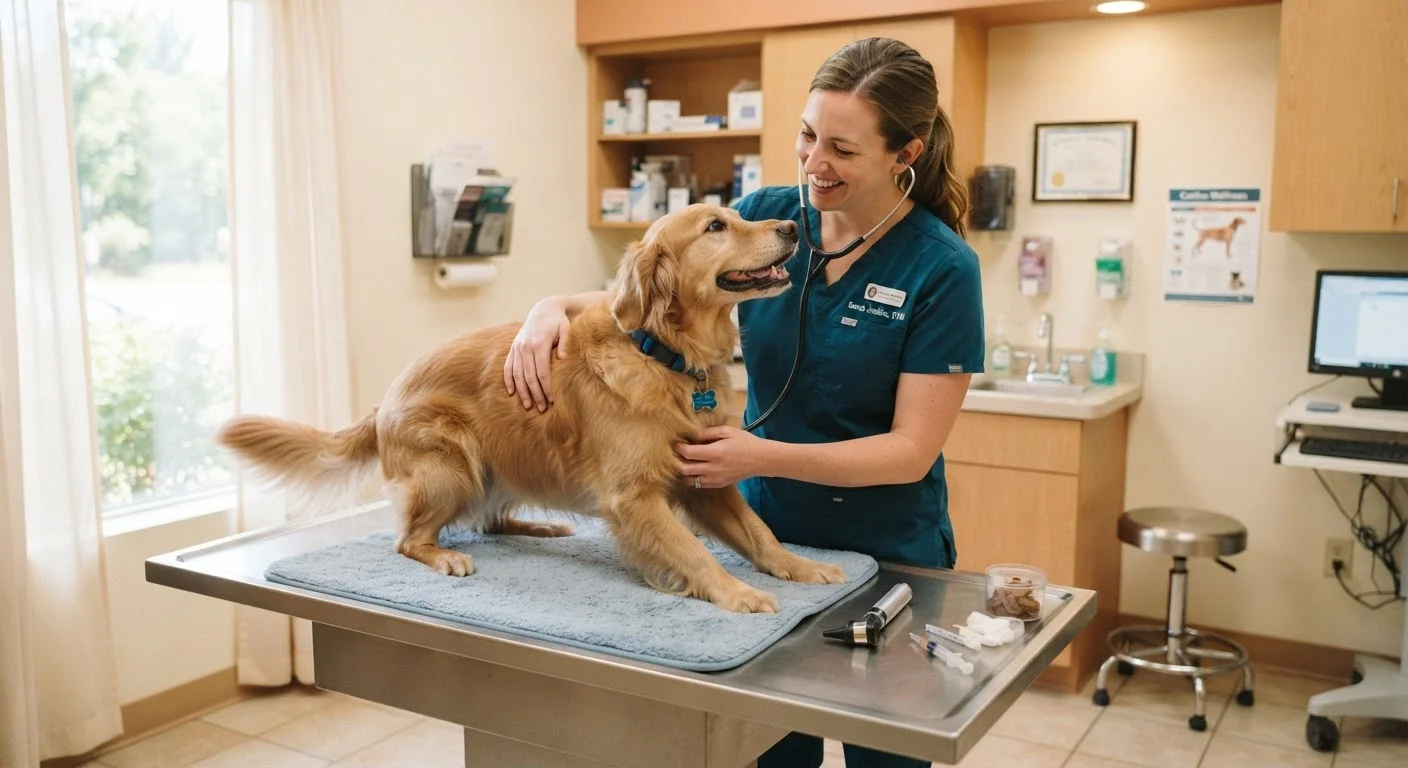
Option A
Annual Wellness Exam
The proactive, head-to-tail prevention appointment.
Best for: Healthy pets due for routine screening, vaccines, and a full physical assessment on a scheduled basis.
Option B
Sick Visit
The focused, symptom-driven diagnostic appointment.
Best for: Pets showing signs of illness, injury, behavioral change, or any concern that needs prompt veterinary attention.
Why the Distinction Actually Matters
Most pet owners know to call the vet when something seems off - but fewer realize that the type of appointment they schedule shapes everything that happens once they walk through the door. A wellness exam and a sick visit are structured around fundamentally different goals, and confusing them can leave gaps in your pet's care.
Think of it like the difference between a routine annual physical for yourself and a doctor's visit because you've developed a fever. Both matter. Neither is a substitute for the other. The same logic applies to your dog, cat, or other companion animal.
Understanding the distinction also helps you communicate more clearly with your veterinary team - and that clarity genuinely affects the quality of care your pet receives. For a broader look at how preventive care fits into the bigger picture, see our guide on preventive care for pets.
| Criterion | Annual Wellness Exam | Sick Visit |
|---|---|---|
| Primary purpose | Prevention and early detection | Diagnosis and treatment of a concern |
| Scheduling | Planned in advance, recurring | Unplanned, as needed |
| Scope of assessment | Full head-to-tail physical | Focused on reported symptom |
| Vaccines given | Yes, if due | Generally deferred if pet is unwell |
| Bloodwork / screening | Routine panels based on age/risk | Ordered to investigate specific issue |
| Time typically allocated | 30-45 minutes | Varies; focused on the problem |
| Cost structure | Predictable; often covered by wellness plans | Variable; depends on tests needed |
What Happens at Each Appointment
Annual wellness exams are comprehensive by design. The vet follows a systematic head-to-tail assessment - checking eyes, ears, teeth, coat, weight, heart, lungs, abdomen, joints, and lymph nodes. Vaccines are reviewed and updated as needed. Parasite prevention is discussed. The vet may recommend bloodwork or other screening tests depending on your pet's age and history. There's also time for you to raise questions about nutrition, behavior, or anything you've noticed at home.
Because so much ground is covered, these appointments are typically scheduled in advance and given adequate time - usually 30-45 minutes. If you've never experienced one before, our article on what actually happens during a vet exam walks you through the process in detail.
Sick visits are purposefully narrower. The vet zeroes in on the reported concern - a limp, a digestive upset, unusual lethargy, a lump - and works to understand its cause. Diagnostic tests like bloodwork, urinalysis, imaging, or cultures are often ordered on the spot. The appointment may be shorter or longer depending on the complexity of the issue, but the focus stays tight. Preventive tasks like vaccines are rarely completed at a sick visit; they get deferred to a wellness appointment once the animal has recovered.
1 in 3
Pets showing hidden illness at annual exams
Veterinary professional organizations note that routine wellness exams frequently detect conditions owners had not noticed at home, underscoring the value of preventive visits.
~30-45 min
Typical duration of a wellness exam
Most veterinary practices allocate significantly more time for wellness appointments than for focused sick visits, reflecting the broader scope of preventive care.
Common Mistakes Families Make
One of the most frequent mix-ups is assuming that a sick visit doubles as the annual check-up. It doesn't. When a vet is investigating a specific symptom, there simply isn't time or clinical focus to run through the full preventive checklist. Vaccines may be withheld if the pet is unwell, and a thorough physical assessment of every body system isn't appropriate when the priority is diagnosis and treatment.
The reverse happens too: families sometimes delay calling about a worrying symptom because they think they should wait for the scheduled wellness exam. Some symptoms - difficulty breathing, sudden collapse, inability to urinate, suspected poisoning - need same-day or emergency attention, not a spot on next month's calendar.
It's also common to underestimate how much ground a wellness exam can cover. Many important health areas get missed when owners aren't prepared to raise them. Dental health, weight trends, joint mobility in older pets, and behavioral changes are all fair game at a wellness exam - but the vet can only address what comes up in conversation.
This article is for general informational purposes only and is not a substitute for professional veterinary advice. Always consult your veterinarian about your pet's specific health needs.
The content provided on our blog site traverses numerous categories, offering readers valuable and practical information. Readers can use the editorial team’s research and data to gain more insights into their topics of interest. However, they are requested not to treat the articles as conclusive. The website team cannot be held responsible for differences in data or inaccuracies found across other platforms. Please also note that the site might also miss out on various schemes and offers available that the readers may find more beneficial than the ones we cover.