

Why Electrical Myths Are Especially Dangerous
Most home improvement myths cost you time or money. Electrical myths can cost lives. Because household wiring is hidden behind walls and controlled by switches that feel reassuringly simple, it's easy to underestimate what's actually happening inside those circuits. Overconfidence - fueled by incomplete information - is one of the leading contributors to residential electrical fires and electrocution injuries in the U.S.
This article separates the most persistent misconceptions from the facts, so families can make clear-headed decisions about what they can safely handle themselves and when calling a licensed electrician is the only responsible choice. For a broader framework on that decision, see our guide to weighing DIY against professional help.
Myth
If I flip the breaker off, the wires are safe to touch.
Fact
Turning off a breaker de-energizes that circuit, but other live conductors - including the main service lines feeding the panel - remain energized and can cause fatal shock.
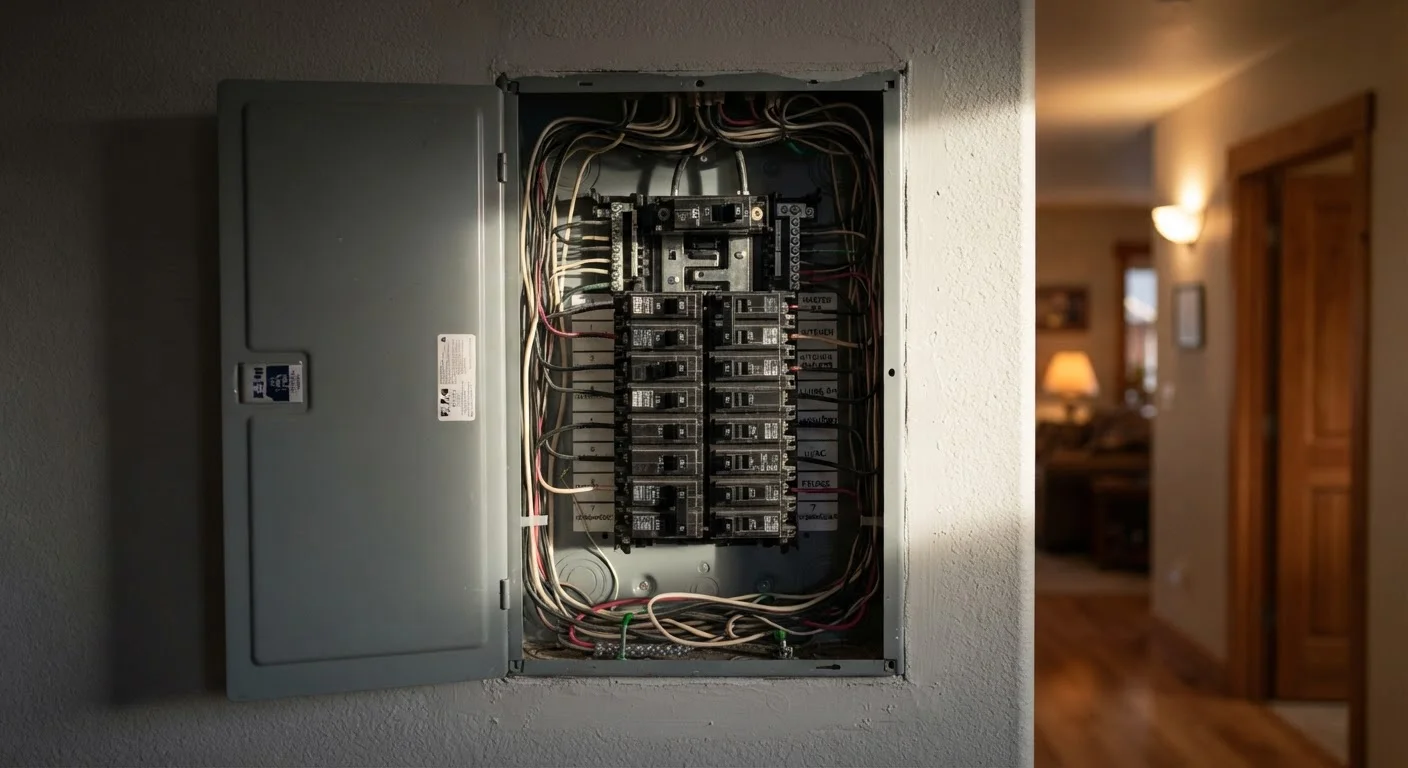
A breaker controls only the branch circuit it's assigned to. The wires entering your electrical panel from the utility are always live, regardless of breaker position. Even within a circuit, a miswired or double-tapped breaker means the wires you expect to be dead may not be. Always verify with a non-contact voltage tester before touching any wire - never rely solely on a breaker label.
Myth
Rubber-soled shoes and rubber gloves protect you from electrical shock.
Fact
Standard rubber-soled footwear and household rubber gloves offer no reliable insulation against household voltages and are not rated for electrical work.
True electrical insulation requires gloves rated and tested to specific voltage classes by standards organizations. Household rubber gloves - including dish gloves - are too thin, may contain conductive materials, and are not manufactured or tested for shock protection. Similarly, the rubber in most sneaker soles is composite and provides only marginal, unreliable resistance. Proper personal protective equipment for electrical work is specialized and expensive - another reason many tasks belong with licensed professionals who have it.
Myth
Low-voltage wiring like doorbells or thermostats is basically risk-free.
Fact
While low-voltage systems rarely deliver a dangerous shock directly, miswiring them can damage equipment, create fire hazards, or interact with line-voltage components in unpredictable ways.
Doorbell transformers and smart thermostat wiring still draw power from a 120V source. A mistake in a low-voltage circuit can short-circuit the transformer, cause overheating, or - in the case of modern smart home devices - send unexpected signals through connected systems. Miswired thermostats, for example, have been linked to HVAC control board failures and, in rare cases, equipment fires. Treat low-voltage work with care rather than dismissing it as completely trivial.
Myth
As long as nothing sparks or trips the breaker, the wiring is fine.
Fact
Many dangerous wiring faults - including loose connections, aluminum-to-copper contact, and overloaded circuits - produce no immediate visible warning before causing a fire.
Electrical fires frequently start inside walls, at junction boxes, or within fixtures, long before any tripped breaker or visible spark signals a problem. A loose wire nut on a splice may arc intermittently for months before igniting surrounding insulation. The absence of an obvious symptom is not confirmation that a repair was done correctly. This is one of the strongest arguments for having any non-trivial DIY electrical work inspected by a qualified professional.
Myth
Electrical codes are just bureaucratic red tape - experienced DIYers don't need them.
Fact
Electrical codes, primarily the National Electrical Code (NEC) in the U.S., encode decades of lessons from fires, injuries, and fatalities - they exist specifically to protect families.
The NEC is updated regularly based on investigation findings from electrical incidents across the country. Requirements like arc-fault circuit interrupters (AFCIs) in bedrooms and ground-fault circuit interrupters (GFCIs) in wet areas have measurably reduced injury and death rates. Skipping code-required components to save money or time transfers risk directly to everyone living in the home. Unpermitted work that bypasses these requirements also creates legal and financial exposure. See our overview of how families underestimate product and installation safety risks for related patterns worth recognizing.
What the Law Actually Requires
Beyond personal safety, there's a regulatory dimension most families don't think about until it's too late. In the majority of U.S. states and municipalities, electrical work beyond simple fixture replacements requires a permit and must be inspected by a local authority. Work done without permits can create serious problems:
- Homeowner's insurance may deny claims arising from fires or damage linked to unpermitted work.
- Home sales can stall or fall through when inspectors flag unpermitted electrical modifications.
- Liability shifts to you if unpermitted wiring harms someone else in your home.
Permit requirements vary by location, so always verify with your local building department before starting any electrical project - even one that sounds minor. A licensed electrician will typically pull the necessary permits as part of the job.
Unpermitted Work Can Void Your Insurance
If a fire or injury results from unpermitted electrical modifications, your homeowner's insurance provider may refuse to cover the claim. Before starting any electrical project beyond the simplest fixture swaps, contact your local building department to determine what permits are required. This step protects your family and your financial investment in your home.
Tasks Families Can Usually Handle Safely
This article isn't meant to make every homeowner afraid to touch a light switch. There are genuinely low-risk tasks that most adults can perform safely with the right precautions:
- Replacing a like-for-like light fixture (same wiring configuration, breaker off and verified dead with a non-contact voltage tester)
- Swapping a standard outlet cover plate
- Resetting a tripped GFCI outlet by pressing the test/reset button
- Replacing a plug on a lamp cord using a manufacturer-approved replacement plug
Even on these simpler tasks, always use a non-contact voltage tester - not just your eyes or the breaker switch - to confirm a circuit is de-energized before touching any wiring. The same spirit of knowing your limits applies in other home contexts too; our DIY car maintenance guide explores a parallel set of boundaries for vehicle upkeep.
This article is for general informational purposes only and does not constitute professional electrical, legal, or safety advice. Always consult a licensed electrician and your local building authority before undertaking any electrical work in your home.
The content provided on our blog site traverses numerous categories, offering readers valuable and practical information. Readers can use the editorial team’s research and data to gain more insights into their topics of interest. However, they are requested not to treat the articles as conclusive. The website team cannot be held responsible for differences in data or inaccuracies found across other platforms. Please also note that the site might also miss out on various schemes and offers available that the readers may find more beneficial than the ones we cover.