

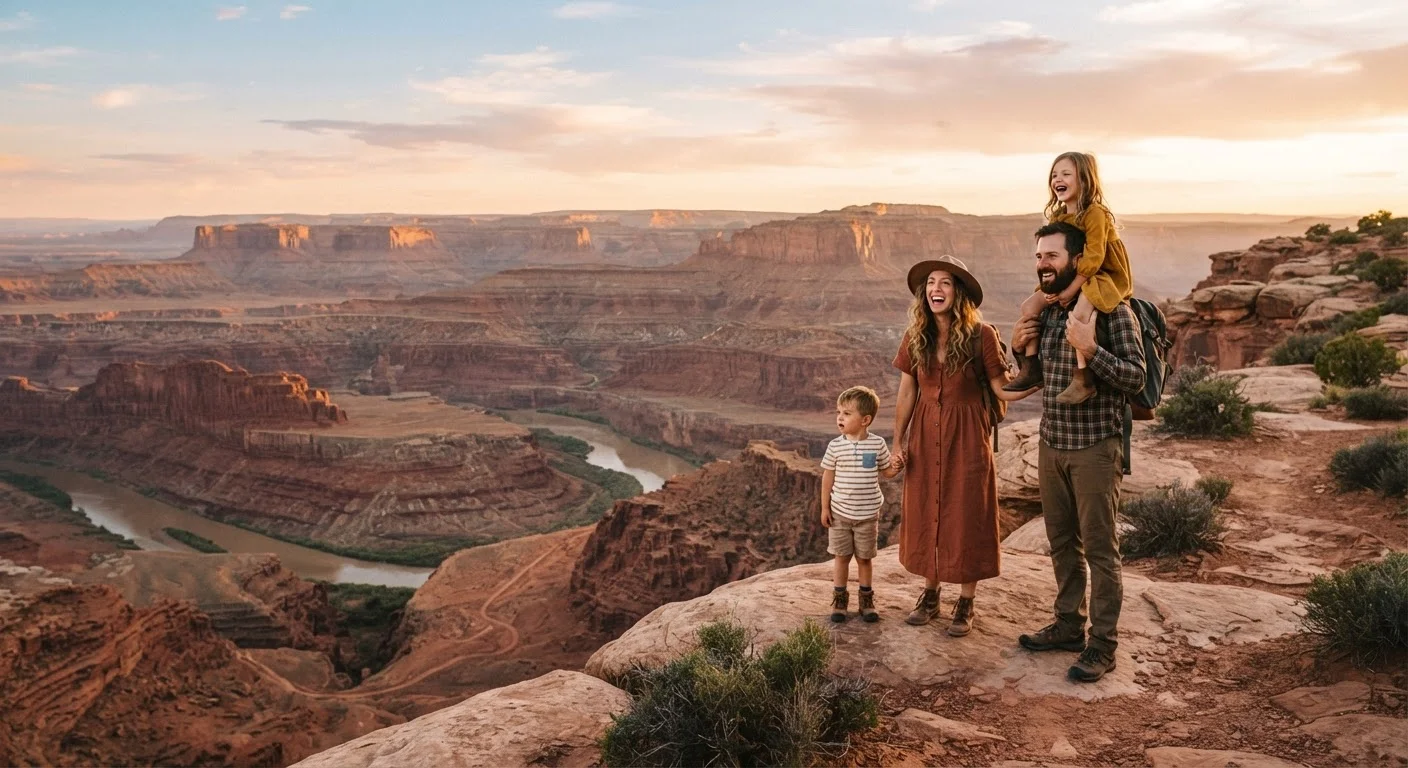
Why the Southwest Works So Well for Families
Few regions in the United States pack as much variety into a single road trip as the American Southwest. Within a few days of driving, families can move from towering red sandstone arches to ancient pueblo villages, from cool pine forests to starlit desert nights. The scale is dramatic - and surprisingly manageable for families with kids of all ages.
The Southwest's road trip infrastructure is genuinely family-friendly: rest stops are reasonably spaced, national park visitor centers offer Junior Ranger programs, and most gateway towns have solid lodging and dining options. That said, heat, altitude, and long stretches between services demand real preparation. Before hitting the road, build your itinerary carefully - our family trip planning guide walks you through the full process without the overwhelm.
Region by Region: What to Expect
Colorado Plateau (Utah & Northern Arizona)
This is the headline region for most Southwest road trips - Zion, Bryce Canyon, Arches, Canyonlands, and the Grand Canyon all sit within this broad plateau. Families with mobile kids (roughly ages 5+) will find accessible trails at every park. Bryce Canyon's Navajo Loop is a favorite for its hoodoo formations and manageable length. The Grand Canyon South Rim has paved viewpoints and easy walks suitable even for strollers. Summer temperatures can exceed 100°F in canyon bottoms - spring and fall are considerably more comfortable for hiking with children.
New Mexico's Cultural Corridor
Running roughly along I-25 and US-550, this region offers a different kind of richness: indigenous history, Spanish colonial heritage, and genuine small-town character. Bandelier National Monument protects ancestral Puebloan cliff dwellings with a kid-friendly trail system. Santa Fe's museums - including a dedicated children's museum - pair well with the surrounding high desert scenery. Altitudes here range from 5,000 to over 7,000 feet; give young children and adults a day to acclimatize before strenuous activity.
Southern Utah's Scenic Byways
Highway 12, often cited among the most scenic drives in the country, connects Bryce Canyon to Capitol Reef and is punctuated by state parks, historic ranch sites, and roadside geology that doubles as accidental science class. Kodachrome Basin State Park offers peaceful camping and short trails ideal for younger kids. Crowds are lighter here than at the marquee national parks, and costs are generally lower too.
Nevada's Eastern Corridor & Great Basin
Less visited but genuinely rewarding, Great Basin National Park in eastern Nevada features ancient bristlecone pine forests and Lehman Caves - a guided cave tour that kids consistently rate a highlight. The drive across Nevada is long and remote; fuel up and carry extra water. This region suits families comfortable with long-distance driving safety practices.
Practical Planning Notes for the Whole Route
A cross-Southwest loop typically runs 1,500-2,500 miles depending on your starting point and chosen stops. Most families find a 10-14 day window gives enough time to explore without exhausting everyone. Build in buffer days - the Southwest has a way of slowing you down in the best possible sense.
Key logistics to sort in advance: America the Beautiful annual passes provide access to all national parks and many federal recreation sites, potentially offering significant savings for families visiting multiple parks. Reservations for campgrounds and lodges inside national parks often fill months ahead, especially in peak summer season. Verify current entry requirements and conditions directly with each park before departure, as these can change.
If you're weighing whether a road trip is even the right call for your family, our breakdown on driving vs. flying with kids covers the honest trade-offs. And for keeping energy and morale high across long driving days, keeping kids engaged on long journeys is worth a read before you leave the driveway.
This article is for general informational purposes only. Travel conditions, park fees, entry requirements, and accessibility details change - always verify with official sources before your trip.
The content provided on our blog site traverses numerous categories, offering readers valuable and practical information. Readers can use the editorial team’s research and data to gain more insights into their topics of interest. However, they are requested not to treat the articles as conclusive. The website team cannot be held responsible for differences in data or inaccuracies found across other platforms. Please also note that the site might also miss out on various schemes and offers available that the readers may find more beneficial than the ones we cover.