

Our Verdict
A fall trip to New England with kids can be genuinely memorable - the scenery, the harvest activities, and the crisp outdoor energy are hard to match anywhere in the country. That said, peak-season crowds and elevated costs mean families who go in eyes-open - flexible on dates, realistic about driving times, and selective about activities - will enjoy it far more than those chasing a postcard-perfect fantasy on a tight weekend.
Families with school-age kids who can handle some driving, appreciate outdoor exploring, and have flexibility to travel mid-week or in early October rather than peak Columbus Day weekend.
What Actually Makes Fall in New England Worth the Trip
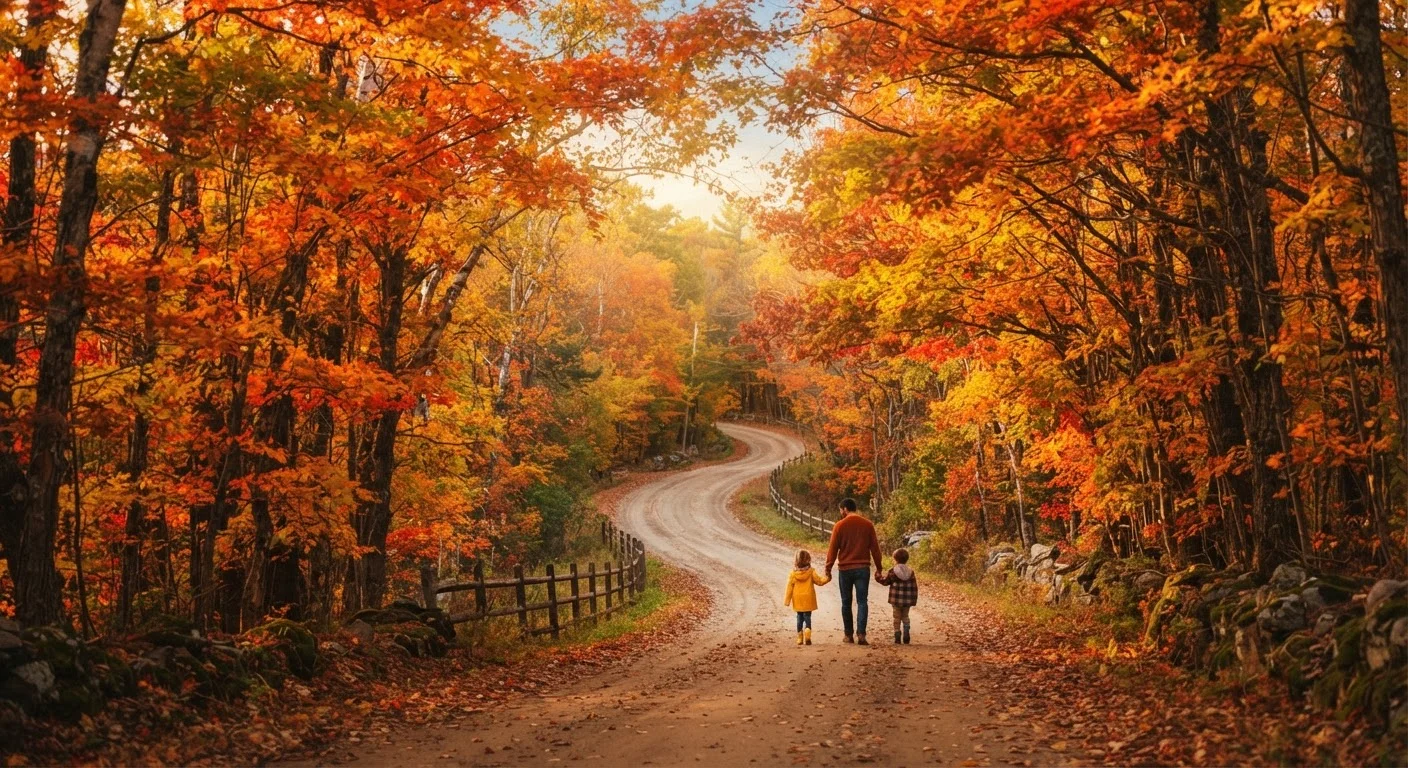
Let's start with what genuinely delivers. The foliage is real - and it really is that beautiful. A drive through Vermont's Mad River Valley or along Maine's coastal Route 1 during peak color offers scenery that kids and adults alike will actually stop scrolling for. Beyond the views, the harvest culture in New England is uniquely family-friendly in a way that few regions match.
Apple orchards are everywhere, most offer pick-your-own experiences, hayrides, and cider donuts that kids request for months afterward. Farm stands overflow with pumpkins, squash, and local produce. Covered bridges, village greens, and general stores give even jaded tweens something genuinely interesting to photograph. State parks like Vermont's Quechee Gorge or New Hampshire's Franconia Notch are accessible, relatively short hikes with dramatic payoffs - perfect for mixed-age families.
Foliage scenery is genuinely spectacular and family-memorable
The combination of hardwood forests, rural landscapes, and clear autumn light creates scenery that impresses across age groups - not just adults who planned the trip.
Harvest activities are tailor-made for families with kids
Apple picking, hayrides, pumpkin patches, and cider mills are plentiful, affordable, and naturally engaging for children of all ages without requiring advance tickets or special equipment.
Compact geography suits multi-destination family road trips
Multiple states, landscapes, and town characters are accessible within a few hours of each other, reducing the need to choose between Vermont, New Hampshire, or Maine.
Mild fall temperatures are ideal for active outdoor families
Daytime highs typically in the 50s-60s°F during peak season make hiking, walking, and exploring comfortable without the humidity of summer or the cold of winter.
Many top experiences are low-cost or free
State parks, scenic drives, farm stands, and covered bridge hunts deliver high-quality family time without requiring significant spending.
The region is also compact enough that several states are reachable from a single home base, which suits families who prefer fewer hotel moves. If you're weighing this against a coastal option, the Pacific Northwest also rewards fall family travel in a very different way - worth comparing depending on your family's priorities.
Where the Hype Runs Ahead of Reality
Here's the honest part. The same qualities that make fall in New England magical also make it one of the most crowded and expensive domestic travel windows of the year. Columbus Day weekend - often the peak color period across much of the region - sees accommodation rates spike sharply, scenic routes clog with leaf-peeper traffic, and popular orchard towns become genuinely difficult to navigate with a stroller or a tired seven-year-old.
Peak-weekend crowds significantly degrade the experience
Popular destinations like Woodstock, VT and North Conway, NH become genuinely congested on Columbus Day weekend, making simple activities - parking, lunch, orchard visits - far more stressful with kids in tow.
Accommodation costs spike dramatically during peak foliage
Inns, B&Bs, and vacation rentals in sought-after towns often command premium pricing during October weekends, and desirable properties book months in advance.
Traffic on scenic routes can be brutal for families
Driving times between towns regularly double or triple on peak weekends, which can exhaust kids and drain the enjoyment from what should be relaxed scenic travel.
Foliage timing is unpredictable and hard to guarantee
Drought, warm temperatures, or early storms can mute or shorten peak color in any given year, meaning you may not arrive to the exact display you're picturing.
Limited public transit makes most itineraries car-dependent
Families without a vehicle - or those who'd prefer to skip driving - have few alternatives for reaching most of New England's celebrated fall destinations.
Driving times between destinations routinely double or triple on weekends. A 45-minute trip can become two hours, which erodes the patience of even enthusiastic young travelers. And because so much of New England's appeal is road-trip-based, there's no easy public transit shortcut for most itineraries.
Families who pack too many stops into each day also tend to leave frustrated. Overpacking a family itinerary is one of the most common travel mistakes, and fall in New England - with its tempting density of cute towns - amplifies that risk considerably.
Timing, Costs, and Getting the Most From Your Trip
Foliage peaks move roughly north-to-south and higher-to-lower elevation across September and October. Northern Vermont and New Hampshire often see peak color in late September; coastal Maine and southern Connecticut tend to follow in mid-to-late October. This means families have more flexibility than the "one magic weekend" mythology suggests.
~3 weeks
Typical window of peak foliage across the region
Foliage season spans roughly late September through mid-October across New England, shifting by latitude and elevation rather than arriving all at once.
Late Sept
Peak timing for northern VT and NH
Northern New England typically sees peak leaf color in the final week of September, offering families an earlier, often less-crowded alternative to the Columbus Day rush.
Traveling mid-week - even during peak weeks - makes a measurable difference in both crowd levels and accommodation pricing. If school schedules allow, an early October weekday trip to Vermont or a late September visit to the White Mountains can feel almost serene compared to the same roads on a Saturday.
Budget-conscious families should know that many of the genuinely best fall experiences cost very little: state park entry fees, farm stand visits, and scenic drives. Where costs mount quickly are lodging (inns and B&Bs in popular towns book months in advance at premium rates) and restaurant waits in foliage hot spots. Understanding the real trade-offs of budget family travel can help you decide where to spend and where to save. Also worth noting: smaller New England towns that aren't on the main leaf-peeping circuit often offer surprisingly rich family experiences at a fraction of the cost.
The content provided on our blog site traverses numerous categories, offering readers valuable and practical information. Readers can use the editorial team’s research and data to gain more insights into their topics of interest. However, they are requested not to treat the articles as conclusive. The website team cannot be held responsible for differences in data or inaccuracies found across other platforms. Please also note that the site might also miss out on various schemes and offers available that the readers may find more beneficial than the ones we cover.