

The Appeal of the Overlooked City
When families start planning a vacation, the same shortlist tends to appear: New York, Orlando, Chicago, San Francisco. These cities carry undeniable energy - but they also carry serious logistical weight. Long lines, premium hotel pricing, packed sidewalks, and overstimulated kids are genuine features of those trips, not just unlucky flukes.
Mid-sized and smaller US cities - think Asheville, NC; Boise, ID; Chattanooga, TN; or Traverse City, MI - tend to get dismissed before they're even considered. The assumptions families make about these places are often flat-out wrong, and that gap between perception and reality is costing families some genuinely great vacations.
For practical planning ideas that work no matter where you land, the Travel Planning Tips hub is a solid starting point. And if you're balancing limited time with high hopes, Making the Most of a Short Family Trip to a New City covers exactly how to stretch a two- or three-day window without overloading the schedule.
Myth
Small cities don't have enough to keep kids entertained for more than a day or two.
Fact
Many mid-sized cities have natural landscapes, hands-on museums, and cultural districts that fill three to five days easily.
This assumption underestimates how much smaller cities have invested in arts, outdoor recreation, and family infrastructure over the past two decades. Cities like Chattanooga, TN boast world-class aquariums and extensive riverfront trails. Boise, ID sits at the edge of river canyon trails and has a strong children's museum scene. The activities are there - they're just not marketed with a $50-million advertising budget.
Myth
You'll need a rental car the whole time because small cities have poor public transit and walkability.
Fact
Many mid-sized US cities are more walkable and bikeable than their larger counterparts, with compact downtowns designed for pedestrians.
Large cities often have sprawling footprints that require transit or rideshares to navigate effectively. Smaller cities frequently concentrate their most family-friendly attractions within a manageable radius. Many have invested in greenways, bike-share programs, and pedestrian-friendly infrastructure specifically because they don't have the density to rely on heavy transit systems. Families with strollers or kids who tire easily often find this compactness to be a significant relief.
Myth
Smaller cities lack good food options - especially for picky eaters.
Fact
Regional food cultures in mid-sized cities are often more distinctive and family-friendly than the generic tourist-zone restaurants in major metros.
Major tourist destinations tend to concentrate restaurant options near high-traffic zones, which can mean inflated prices and menus built for quick turnover rather than quality. Smaller cities, by contrast, often have food scenes built primarily for locals - regional flavors, farm-to-table sourcing, and casual family-friendly spots that aren't on national review platforms but are beloved by the community. That also tends to mean more flexibility for picky eaters who need a simple pasta or grilled cheese alongside more adventurous options.
Myth
Flights to smaller cities are expensive and inconvenient, making them impractical.
Fact
Many mid-sized cities are drivable from major population centers, and regional airports have expanded significantly in recent years.
For families in the eastern US, cities like Asheville or Chattanooga are within a comfortable driving range of Atlanta, Charlotte, and Nashville. In the Midwest, cities like Grand Rapids or Madison are straightforward drives from Chicago or Minneapolis. The assumption that a smaller city requires a complicated multi-leg flight often doesn't hold. And when driving is viable, families avoid the stress of airports entirely - which is its own meaningful benefit when traveling with children.
Myth
Small cities are fine for adults but won't excite kids the way major theme-park destinations do.
Fact
Children respond strongly to hands-on, exploratory environments - which smaller cities often provide more authentically than crowded marquee attractions.
Theme parks deliver a specific type of excitement, but they also deliver hours of queuing, overstimulation, and a price tag that can strain most family budgets. Smaller cities often offer children's science centers, interactive history museums, nature preserves, and splash pads that generate genuine curiosity and engagement without the sensory overwhelm. Many families report that kids talk about a kayaking afternoon or a hands-on pottery class longer than they discuss waiting 90 minutes for a theme-park ride.
What Families Actually Find When They Arrive
Families who do take the leap on a smaller city often report the same surprise: there was more to do than they expected, the pace felt manageable, and everyone was less exhausted at the end of each day. That's not a coincidence - it's a function of scale.
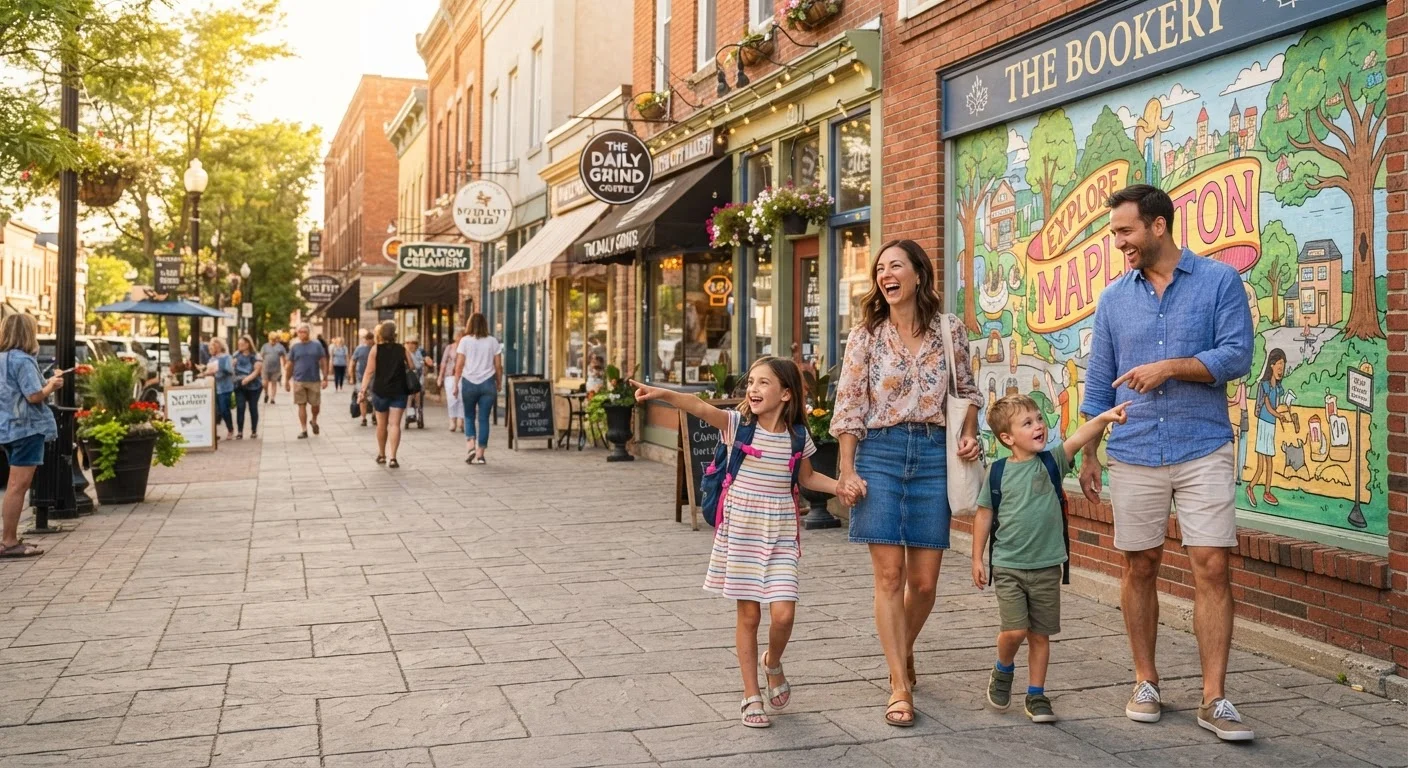
Walkability is a genuine advantage in many mid-sized cities. When a children's museum, a riverside trail, a good lunch spot, and an ice cream shop are all within a half-mile of each other, the trip stops feeling like a logistical operation. That compactness matters especially when you're managing a wide age range, from a toddler in a stroller to a teenager who wants some independence.
30-50%
Typical hotel savings vs. major metro areas
Industry lodging data consistently shows mid-sized US cities running significantly lower average nightly rates than the top ten tourism metros.
72%
Families citing crowds as a top travel stressor
Surveys by family travel research groups regularly identify crowd management as one of the leading sources of vacation dissatisfaction among parents.
Budget is another area where smaller cities quietly win. Hotel rates, parking, restaurant meals, and attraction tickets all tend to run lower than in major metros. The Budget Family Travel hub offers broader strategies, and for destination-specific budgeting thinking, Destinations That Genuinely Suit Families Travelling on a Modest Budget is worth reviewing. Many smaller cities also have a surprising number of free or low-cost options - something explored in depth in Making the Most of Free and Low-Cost Activities at Any Destination.
Don't Skip the Research Phase
Smaller cities vary enormously in what they offer families. Before booking, check whether the city has a children's museum, accessible outdoor spaces, and accommodation options near the main attractions. A little upfront research - beyond a single Google search - can mean the difference between a hidden gem and a disappointing detour. Local convention and visitors bureau websites are often the most reliable starting point for current, family-specific information.
Of course, smaller cities aren't universally better - the right fit depends on your family's interests, travel style, and the ages of your kids. If your crew is drawn to wide-open outdoor space, it's worth comparing options: Beach Town or Mountain Town: Which Family Vacation Style Fits You? breaks down how different settings stack up across cost, pacing, and kid-friendliness.
The content provided on our blog site traverses numerous categories, offering readers valuable and practical information. Readers can use the editorial team’s research and data to gain more insights into their topics of interest. However, they are requested not to treat the articles as conclusive. The website team cannot be held responsible for differences in data or inaccuracies found across other platforms. Please also note that the site might also miss out on various schemes and offers available that the readers may find more beneficial than the ones we cover.